
Topic Battle

Where Everything Fights Everything

Money

Money

Abstract concept that runs the world.

VS
Tesla

Tesla

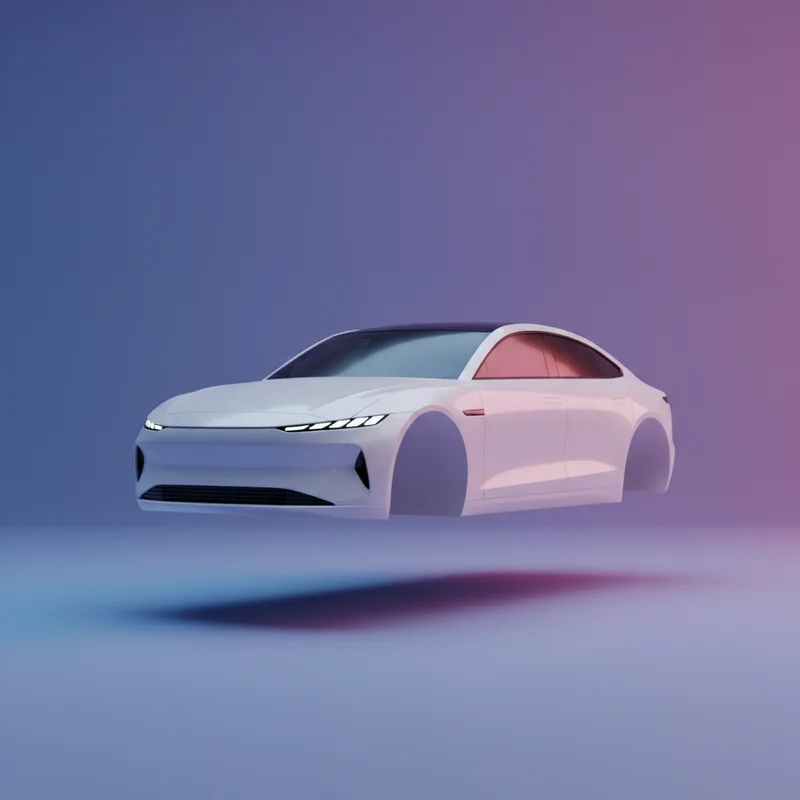
Electric vehicle manufacturer disrupting the automotive industry.

Battle Analysis

Reliability Money Wins
70%
30%
Money Tesla

Money

Money demonstrates remarkable functional reliability as a medium of exchange. Barring extraordinary circumstances such as hyperinflation or regime collapse, currency units maintain their essential utility day after day. The global financial system processes trillions of transactions daily with vanishingly small error rates. Notes may tear and coins may tarnish, but the underlying concept continues functioning without interruption.

Indeed, money has proven reliable through world wars, pandemics, and technological revolutions that rendered countless other human systems obsolete.

Tesla

Tesla vehicles occupy a complex position in reliability rankings. Consumer satisfaction surveys indicate owners report exceptional enthusiasm for their vehicles, yet independent reliability assessments have historically placed the brand below industry averages. Common concerns include panel alignment, electronic glitches, and inconsistent service experiences.

More recent models demonstrate improved build quality, though the marque continues to occupy middle-tier positions in objective reliability metrics compiled by automotive publications.

VERDICT

Five millennia of consistent functionality outweighs a decade of automotive production.
Adaptability Money Wins
70%
30%
Money Tesla

Money

Money has demonstrated extraordinary adaptability across human history. From cowrie shells to gold coins to paper notes to purely digital entries, the concept has successfully migrated through every technological paradigm. Cryptocurrency represents merely the latest iteration of humanity's endless experimentation with exchange media.

This adaptability extends to function as well as form. Money serves simultaneously as store of value, medium of exchange, and unit of account, flexing between roles as circumstances demand.

Tesla

Tesla displays considerable adaptability within its automotive domain. The company's over-the-air update capability allows vehicles to improve after purchase, adding features and refining performance without physical modification. This represents a genuine paradigm shift in consumer durables.

However, a Tesla remains fundamentally a motor vehicle. It cannot transform into housing during accommodation shortages or food during famines. Its adaptability operates within strict functional boundaries that money effortlessly transcends.

VERDICT

Money adapts across millennia and contexts; Tesla adapts across software versions.
Symbolic value Tesla Wins
30%
70%
Money Tesla

Money

Money carries extraordinary symbolic weight across virtually all human cultures. It represents security, freedom, power, and status in varying proportions depending on context. The accumulation of money serves as the primary measure of success in market economies, whilst its absence generates anxiety that psychologists have extensively documented.

Religious traditions from Christianity to Buddhism have grappled with money's symbolic significance for millennia, typically warning against its seductive properties whilst simultaneously accepting donations.

Tesla

Tesla ownership has evolved into a potent signifier of particular values and aspirations. The vehicle communicates environmental consciousness, technological enthusiasm, and sufficient disposable income to afford premium pricing. In certain professional circles, a Tesla in the car park speaks as loudly as any verbal declaration.

The brand has achieved that rare status where ownership constitutes an identity statement, though critics suggest this may reveal more about marketing effectiveness than genuine virtue.

VERDICT

Tesla transforms transportation into tribal affiliation with remarkable efficiency.
Global recognition Money Wins
70%
30%
Money Tesla

Money

The concept of money enjoys what can only be described as universal recognition across human societies. From the bustling markets of Marrakech to the digital trading floors of Singapore, the fundamental understanding of monetary exchange transcends language, culture, and political ideology. Archaeological evidence suggests humans have employed some form of currency for approximately five thousand years, establishing money as one of civilisation's most enduring concepts.

Remarkably, even isolated communities with minimal external contact grasp the basic principle of exchange value, suggesting money may be one of humanity's most instinctive abstractions.

Tesla

Tesla has achieved remarkable brand recognition within a remarkably compressed timeframe. The company's distinctive logo appears on vehicles traversing motorways from California to Copenhagen, whilst its founder's social media pronouncements generate headlines with metronomic regularity. Market research indicates brand awareness exceeding ninety percent in developed economies.

However, vast populations remain unfamiliar with the marque. Rural communities in developing nations, representing billions of individuals, would struggle to distinguish a Tesla from any other automobile, let alone explain its significance.

VERDICT

Money's five-thousand-year head start in human consciousness proves insurmountable.
Environmental impact Tesla Wins
30%
70%
Money Tesla

Money

Money itself possesses no inherent environmental footprint, being fundamentally an abstract concept. However, the pursuit of money has demonstrably shaped the planet's ecology more than perhaps any other human motivation. Forests have fallen, mountains have been hollowed, and oceans have been plundered in currency's name. The carbon footprint of global financial infrastructure, including server farms and banking facilities, runs to hundreds of millions of tonnes annually.

Paradoxically, money also funds nearly all environmental conservation efforts, making it simultaneously destroyer and potential saviour.

Tesla

Tesla's environmental credentials form the cornerstone of its brand identity. The company's vehicles produce zero direct emissions, and its energy division promotes solar generation and battery storage. Life cycle analyses suggest Tesla vehicles produce approximately half the lifetime emissions of comparable combustion vehicles.

Yet manufacturing electric vehicles requires substantial mineral extraction, particularly lithium and cobalt, with documented environmental consequences in mining regions. The full ecological accounting remains contentious among experts.

VERDICT

Tesla offers tangible emissions reductions despite imperfect supply chains.
👑

The Winner Is

Money

58 - 42

This examination reveals an asymmetric contest between abstraction and instantiation. Money, as the conceptual lubricant of human civilisation, operates at a level of fundamental importance that no single company or product can challenge. Tesla, despite its genuine innovations and cultural significance, remains ultimately one expression of what money makes possible.

Yet dismissing Tesla as merely subordinate misses the larger point. The company represents humanity's capacity to direct accumulated resources toward ambitious visions, for better or worse. Money provides the means; Tesla demonstrates one possible end.

The final tally of 58-42 acknowledges money's foundational supremacy whilst recognising Tesla's remarkable achievement in commanding such cultural and economic attention in so brief a time.

Money
58%
Tesla
42%

Share this battle

More Comparisons