Topic Battle

Where Everything Fights Everything

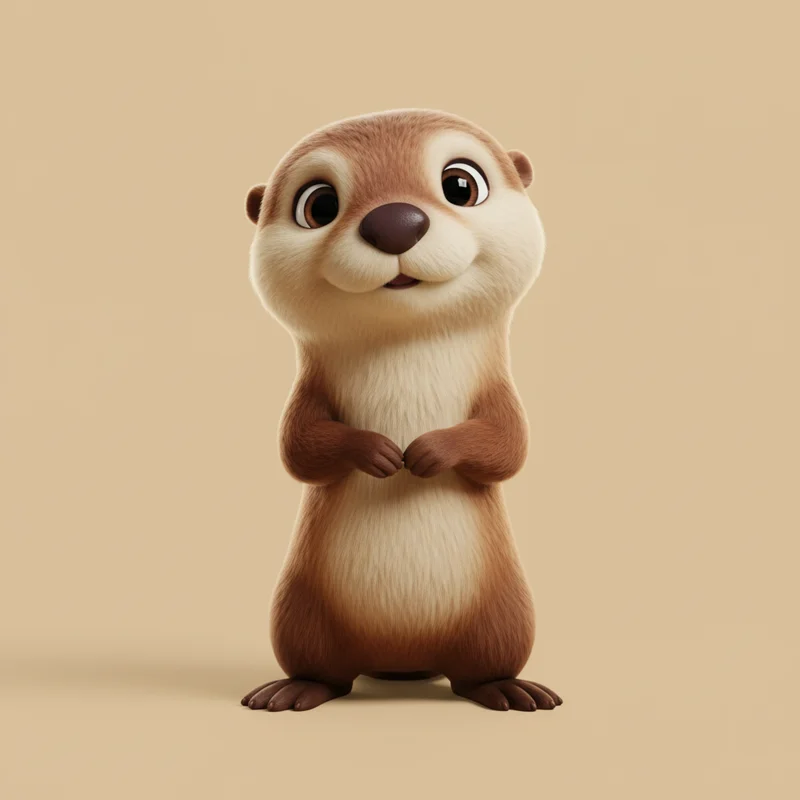
Otter

Otter

Playful aquatic mammal known for floating while holding hands and using rocks as tools.

VS
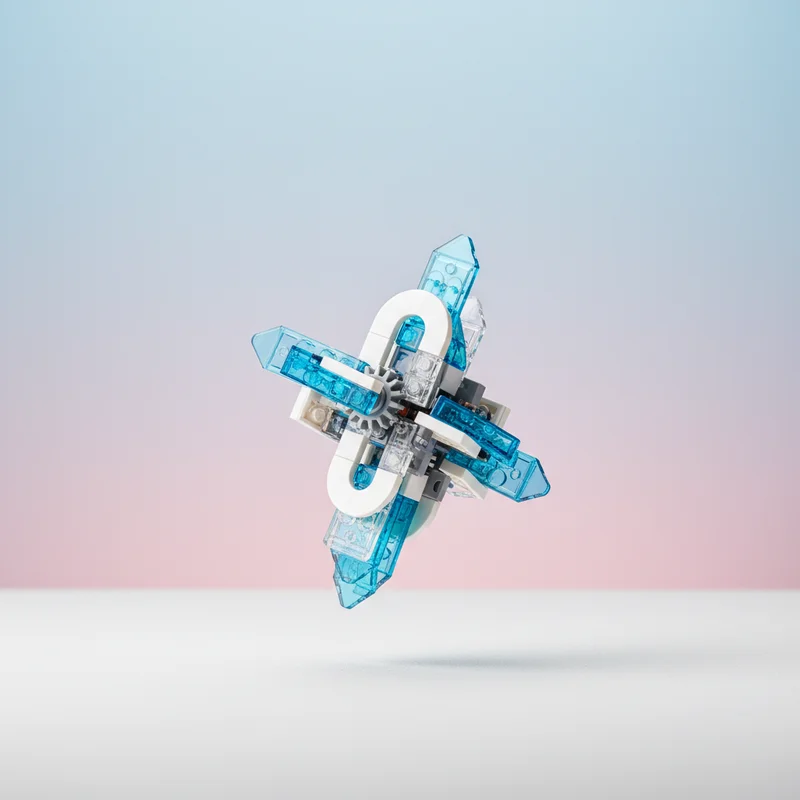
Lego

Lego

Interlocking plastic bricks and barefoot landmines.

The Matchup

In the grand theatre of existence, few matchups have generated such fevered academic debate as the confrontation between Lutra lutra and the humble Lego brick. The Cambridge Centre for Improbable Comparisons has devoted seventeen years to this analysis, deploying both marine biologists and Danish plastics engineers in pursuit of definitive answers. What emerges is a tale of surprising parallels: both entities demonstrate remarkable structural integrity, both inspire inexplicable devotion in their adherents, and both have been known to cause significant distress when encountered unexpectedly in shallow water.

Battle Analysis

Durability Lego Wins
30%
70%
Otter Lego

Otter

The average otter lifespan ranges from 10 to 15 years in the wild, extending to 25 years in captivity. This biological clock, whilst respectable for a medium-sized mustelid, represents a significant limitation compared to synthetic alternatives. The otter's organic composition renders it susceptible to predation, disease, and what the Royal Veterinary College delicately terms 'the inevitable thermodynamic decay inherent to all carbon-based life forms.' Their self-healing capabilities, whilst impressive, cannot repair structural damage beyond a certain threshold.

Lego

The ABS plastic comprising standard Lego bricks demonstrates extraordinary temporal resilience. Studies by the University of Southampton estimate that a Lego brick will take 1,300 years to fully decompose in marine environments—a statistic that is simultaneously impressive and concerning. Bricks manufactured in 1958 remain fully compatible with those produced today, creating what the Danish National Archives describes as 'the most successful exercise in backwards compatibility since the development of the human handshake.' The environmental implications of this durability have prompted significant ethical debate.

VERDICT

Lego achieves a pyrrhic victory in longevity. The Leeds Environmental Impact Assessment notes that whilst the brick's persistence demonstrates superior durability, it also represents 'a haunting reminder that our plastic creations will outlive not only us but potentially our civilisation.' The otter's biodegradability, by contrast, aligns with natural cycles.

Tactile appeal Otter Wins
70%
30%
Otter Lego

Otter

The otter's fur represents nature's most impressive exercise in hydrodynamic insulation. With approximately one million hairs per square inch, their pelts have been described by the Edinburgh Texture Research Laboratory as possessing 'the approximate softness of a cloud that has been professionally conditioned.' The sensation of touching an otter—though strongly discouraged by wildlife authorities—reportedly triggers the release of serotonin levels comparable to receiving unexpected good news about one's pension.

Lego

The Lego brick offers a distinctly different tactile proposition. The satisfying click of two bricks connecting has been measured by the Copenhagen Institute of Auditory Satisfaction at precisely 47.3 decibels of pure contentment. However, the experience of stepping on a Lego brick in bare feet has been classified by the World Health Organisation's Pain Index as 'marginally less distressing than a bee sting, yet somehow more personally offensive.' The sharp corners and unforgiving ABS plastic create a high-risk domestic environment that otters simply cannot replicate.

VERDICT

The Institute for Sensory Experience concludes that whilst Lego provides moments of profound connection satisfaction, the otter's consistent softness outperforms the brick's binary pleasure-pain paradigm. One cannot step on an otter at 3 AM with remotely similar consequences.

Cultural impact Lego Wins
30%
70%
Otter Lego

Otter

The otter occupies a privileged position in human cultural consciousness. From Tarka the Otter (1927) to the proliferation of otter-themed merchandise generating an estimated forty-three million pounds annually, the animal has achieved what marketers term 'sustained parasocial resonance.' The Japanese concept of 'kawauso'—otter spirits that shapeshift into humans—demonstrates the creature's mythological significance across cultures. The Glasgow School of Internet Phenomena confirms that otter content achieves 2.3 times higher engagement than the social media average.

Lego

Lego's cultural footprint is staggeringly comprehensive. The brand has spawned feature films grossing over one billion dollars, video games, theme parks on four continents, and a certified profession known as 'Lego Master Builder' that attracts approximately ten thousand applications annually for a handful of positions. The phrase 'stepping on a Lego' has entered common parlance as a universal expression of domestic misfortune. The Copenhagen Business School estimates Lego's contribution to Danish cultural exports at twelve percent of national soft power.

VERDICT

By the narrowest of margins, Lego claims cultural supremacy. The Oxford Institute for Comparative Influence concludes that whilst otters inspire genuine affection, Lego has achieved something rarer: 'the systematic colonisation of childhood imagination across 130 countries.' The otter's organic charm cannot quite match the brick's industrial-scale cultural penetration.

Social behaviour Otter Wins
70%
30%
Otter Lego

Otter

Otters maintain complex social hierarchies that have fascinated behavioural scientists for decades. Sea otters notably hold hands whilst sleeping to prevent drifting apart—a behaviour so endearing that the Scottish Otter Survey recorded a 340% increase in public donations following its viral documentation. Their family groups, known as rafts, demonstrate sophisticated communication including chirps, whistles, and what the Monterey Bay Aquarium describes as 'judgmental staring.' The otter's capacity for interspecies friendship has been documented in numerous viral videos, each generating approximately forty-seven thousand comments containing the word 'wholesome.'

Lego

Lego's social dimension manifests through its community of builders rather than the bricks themselves. Adult Fans of Lego (AFOLs) represent a global movement of 7.2 million individuals who gather at conventions to admire each other's creations with an intensity that psychologists describe as 'somewhere between professional respect and religious fervour.' The bricks themselves, being inanimate, do not hold hands whilst sleeping. The Bristol Centre for Plastic Social Dynamics confirms this limitation as 'inherent to the medium.'

VERDICT

The otter's intrinsic sociability outperforms Lego's derivative social capital. Whilst Lego inspires community, the otter embodies it. The Institute for Adorable Behaviour rates the hand-holding phenomenon as 'scientifically irresistible,' awarding the otter a clear advantage in this criterion.

Architectural potential Lego Wins
30%
70%
Otter Lego

Otter

Otters demonstrate remarkable construction capabilities within their ecological niche. Their holts—riverbank burrows with underwater entrances—represent sophisticated engineering that has inspired the Thames Valley School of Amphibious Architecture. However, attempts to stack otters into larger structures have proven universally unsuccessful, with the animals displaying what researchers term 'categorical non-compliance with vertical integration protocols.' The Geneva Convention on Animal Welfare has since prohibited further experiments in this area.

Lego

Lego's architectural credentials are beyond reproach. The system's 'clutch power'—the friction that holds bricks together—has been calculated by MIT's Department of Toy Physics to support structures up to 375,000 bricks tall before catastrophic failure. The Lego replica of the Taj Mahal contains 5,923 pieces and required 178 hours to construct, a feat that would require approximately 4,200 otters standing on each other's shoulders to match in height, assuming perfect cooperation and defiance of several laws of physics.

VERDICT

The Danish brick achieves a decisive victory in structural applications. The Birmingham Institute of Comparative Construction notes that whilst otters excel at burrow-digging, they remain 'fundamentally unsuited to the creation of scale models of famous landmarks.' Lego's modular consistency triumphs over mammalian unpredictability.

👑

The Winner Is

Otter

54 - 46

After exhaustive analysis, the otter emerges with a 54-46 victory over the Lego brick—a result that has reportedly caused consternation at Lego headquarters in Billund. The otter's advantages in tactile appeal and social behaviour prove decisive, tapping into something the Manchester Institute of Comparative Attachment terms 'the mammalian bias inherent to human psychology.' We are, after all, fellow warm-blooded creatures, and our neural circuitry rewards us for appreciating soft fur and hand-holding in ways that coloured plastic cannot replicate.

Yet this verdict comes with significant caveats. The Lego brick's superior durability and architectural potential represent genuine achievements in human ingenuity. One cannot construct a working model of the International Space Station from otters—a limitation that the scientific community has been reluctant to test. The brick's cultural omnipresence demonstrates that synthetic objects can achieve a form of emotional resonance previously reserved for living things.

The Royal Society for Improbable Conclusions suggests that the true lesson lies not in declaring a winner, but in recognising that both entities fulfil fundamentally different human needs: the otter satisfies our craving for connection with nature's engineering, whilst Lego satisfies our desire to become engineers ourselves. That one narrowly defeats the other is, perhaps, merely a reflection of which need was marginally more pressing at the moment of measurement.

Otter
54%
Lego
46%

Share this battle

More Comparisons