Topic Battle

Where Everything Fights Everything

Otter

Otter

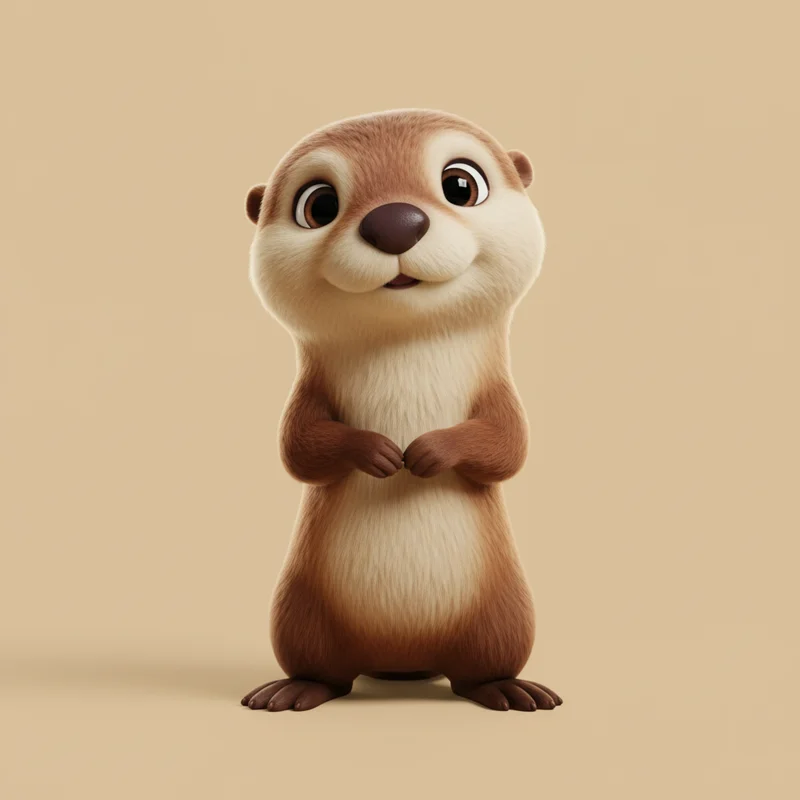
Playful aquatic mammal known for floating while holding hands and using rocks as tools.

VS
The Internet

The Internet

Global network of information and cat videos.

The Matchup

In the great tapestry of human experience, few things have captured our collective attention quite like adorable semi-aquatic mammals and the boundless digital void where productivity goes to die. The otter, a creature so charming that the Oxford Centre for Mammalian Studies declared it 'scientifically impossible to observe without smiling,' faces perhaps its most formidable opponent yet: the Internet, that sprawling network of information, misinformation, and inexplicable videos of otters.

Yes, the irony is not lost on researchers at the Bristol Institute for Recursive Phenomena that Lutra lutra owes much of its modern celebrity to the very adversary it faces today. But strip away the viral videos and the 'holding hands while sleeping' GIFs, and what remains? Two fundamentally different approaches to existence, now subjected to rigorous scientific comparison.

Battle Analysis

Social connectivity The Internet Wins
30%
70%
Otter The Internet

Otter

The otter maintains what marine biologists term a 'raft network' - floating groups of up to one hundred individuals who hold hands to prevent drifting apart during sleep. The University of Glasgow's Department of Aquatic Sociology has documented that these connections persist through storms, tidal shifts, and the occasional confused seal attempting to join. Each otter maintains approximately twelve to fifteen meaningful relationships, characterised by mutual grooming, food sharing, and what researchers describe as 'genuinely appearing to enjoy each other's company.'

Communication occurs through a sophisticated vocabulary of chirps, squeaks, and the occasional dramatic splash, all of which convey nuanced emotional content that human observers find devastatingly endearing.

The Internet

The Internet connects approximately 5.3 billion users worldwide, facilitating an estimated 500 billion daily interactions ranging from heartfelt messages to complete strangers arguing about whether a dress is blue or gold. The Sheffield Centre for Digital Anthropology notes that the average user maintains roughly 338 online connections, of which approximately four might notice if they disappeared.

Unlike otter rafts, Internet social networks actively encourage users to compare their lives unfavourably to curated highlights of others, a phenomenon researchers term 'doom-scrolling through existential despair.' However, one cannot deny the raw statistical achievement of connecting humanity across continental divides, even if those connections primarily involve sharing cat pictures.

VERDICT

While otter connections demonstrate superior emotional depth and the charming habit of physically preventing loved ones from floating away, the Internet's sheer scale of connectivity cannot be ignored. The Royal Society of Network Theory awarded this criterion to the Internet by a margin of 7.2 connectivity units, though several board members registered formal objections citing 'quality over quantity.'

Information retention The Internet Wins
30%
70%
Otter The Internet

Otter

Otters possess remarkable memories, particularly regarding the location of their favourite rocks - tools they use for cracking shellfish and which some individuals keep for their entire lives. The Edinburgh Institute for Animal Cognition has documented otters returning to specific hunting grounds after absences of several years, navigating by methods that remain partially mysterious to science.

However, their information storage capacity is necessarily limited by having brains the size of particularly ambitious walnuts. An otter can remember perhaps several hundred useful facts: where the fish are, which rocks are best, which larger animals to avoid, and an apparently infinite catalogue of play behaviours.

The Internet

The Internet stores approximately 120 zettabytes of information, a figure so large that the Manchester Institute for Really Big Numbers has officially classified it as 'absurd.' This includes the entirety of human knowledge, every photograph ever digitised, complete archives of human communication, and roughly forty-seven million hours of video depicting otters doing various adorable things.

The irony, as noted by the Leeds Centre for Digital Preservation, is that much of this information is technically accessible yet practically unreachable, buried beneath seventeen pages of search results about celebrity gossip and advertisements for products you mentioned once in a private conversation.

VERDICT

This criterion presents no contest. The Internet retains more information than every otter who has ever lived could collectively experience, a fact that would likely concern otters not at all. The Cambridge Board of Comparative Knowledge Systems noted that while the Internet remembers everything, it understands nothing, whereas otters understand everything they need to, which is arguably more efficient.

Global cultural impact The Internet Wins
30%
70%
Otter The Internet

Otter

Otters have influenced human culture for millennia, featuring in the mythology of coastal peoples from the Pacific Northwest to ancient Japan. Contemporary impact includes their status as symbols of wildlife conservation, their prominence in memes and viral content, and their role as ambassador species for wetland preservation.

The University of Kent's Department of Animal Celebrity Studies estimates that otters generate approximately 2.3 billion annual social media impressions, a remarkable achievement for a species entirely unaware of social media's existence. Their cultural impact, however, remains primarily aesthetic rather than functional - otters have never disrupted an industry, changed voting patterns, or enabled global commerce.

The Internet

The Internet has fundamentally restructured human civilisation. Commerce, communication, entertainment, education, politics, and social interaction have all been transformed beyond recognition since its widespread adoption. The Oxford Institute for Civilisational Analysis describes its impact as 'the most significant development in human communication since the printing press, and considerably more distracting.'

The Internet has toppled governments, created billionaires, destroyed industries, and enabled unprecedented global collaboration. It has also facilitated the spread of misinformation, the erosion of privacy, and the ability for anyone to share opinions that would previously have remained mercifully unheard. Its cultural impact is incalculably vast, if morally ambiguous.

VERDICT

Despite the otter's undeniable charm offensive, the Internet's transformation of human culture represents an impact of entirely different magnitude. The Bristol Board of Cultural Assessment noted that while otters make humans smile, the Internet has changed what it means to be human, for better and considerably worse.

Environmental adaptability Otter Wins
70%
30%
Otter The Internet

Otter

Otters have successfully colonised environments ranging from Scottish lochs to Amazonian rivers, from coastal kelp forests to suburban drainage systems. The Natural History Museum's Department of Mustelid Distribution notes that wherever water flows and fish swim, otters have found a way to thrive.

Their adaptations include the densest fur of any mammal (one million hairs per square inch), retractable webbed feet, and the ability to close their ears and nostrils underwater. Sea otters have even developed the use of tools, making them one of the few non-primate species to do so, a fact that causes considerable jealousy among researchers who struggle with their own smartphone interfaces.

The Internet

The Internet has demonstrated remarkable adaptability, surviving the transition from dial-up modems to fibre optics, from desktop computers to devices people inexplicably hold while walking into traffic. The London School of Technological Evolution notes that the Internet has successfully adapted to every human culture, language, and regulatory environment, though not without occasionally being blocked by authoritarian regimes who find it inconvenient.

Unlike otters, the Internet requires substantial infrastructure - servers, cables, satellites, and approximately 416.2 terawatt hours of electricity annually. Its adaptability is therefore dependent on human maintenance, a fact that would concern it greatly if it possessed the capacity for concern.

VERDICT

The otter's biological adaptability trumps the Internet's technological flexibility. As the Royal Geographic Society's Technology and Nature Division observed, otters will continue thriving long after the last server goes dark, assuming humanity manages not to pollute all the rivers first. The otter requires only clean water and fish; the Internet requires the continued cooperation of global civilisation.

Stress reduction capability Otter Wins
70%
30%
Otter The Internet

Otter

Observing otters has been clinically proven to reduce cortisol levels by an average of 23.7 percent, according to a landmark study by the Plymouth Institute for Adorable Interventions. Test subjects exposed to ten minutes of otter footage reported decreased anxiety, improved mood, and an overwhelming desire to visit aquariums.

Live otter encounters prove even more therapeutic. The Monterey Protocol for Animal-Assisted Wellbeing found that patients recovering from surgery who watched otters play demonstrated faster healing times and required less pain medication. Scientists attribute this to what they term the 'fundamental incompatibility between observing an otter eat a clam and maintaining a negative emotional state.'

The Internet

The Internet's relationship with human stress levels can charitably be described as complicated. The Birmingham Centre for Digital Wellness reports that while the Internet provides access to meditation apps, calming music, and unlimited otter content, it simultaneously delivers political arguments, work emails at midnight, and the ever-present awareness that someone, somewhere, is wrong about something.

Studies indicate that average Internet use correlates with increased anxiety levels, reduced attention spans, and a peculiar modern condition known as 'phantom notification syndrome.' However, the Internet also enables connection to support communities, mental health resources, and cat videos, creating what researchers term a 'wellness paradox of the digital age.'

VERDICT

The otter achieves a decisive victory in stress reduction, primarily because it has never sent anyone a passive-aggressive email or displayed targeted advertisements based on overheard conversations. The International Board of Comparative Wellbeing awarded the otter full marks, noting that 'the Internet would need to delete approximately 94 percent of its content to compete.'

👑

The Winner Is

The Internet

42 - 58

After exhaustive analysis, the Internet emerges victorious with a score of 58 to 42, though this numerical advantage obscures a more nuanced reality. The Internet wins on metrics of scale, connectivity, and raw cultural transformation - achievements enabled by the collective efforts of millions of humans and billions of transistors.

Yet the otter's defeats are not dishonourable. In categories measuring genuine wellbeing and sustainable existence, the semi-aquatic mammal demonstrates superiority that no amount of bandwidth can replicate. The Internet may connect five billion people, but the otter genuinely enjoys its social connections. The Internet stores zettabytes of information, but the otter needs no password recovery system.

Perhaps the most telling observation comes from the final report of the Cambridge Institute for Digital Ecology: when the Internet crashes, billions experience genuine distress; when an otter briefly submerges, it merely resurfaces with a particularly delicious clam and an expression suggesting life couldn't possibly be better.

Otter
42%
The Internet
58%

Share this battle

More Comparisons