Topic Battle

Where Everything Fights Everything

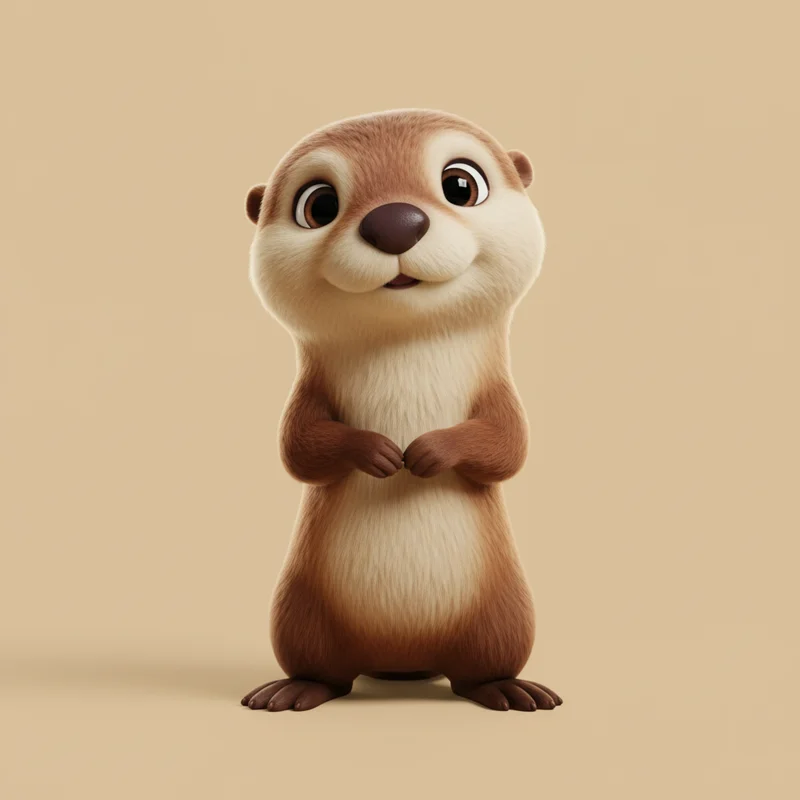
Otter

Otter

Playful aquatic mammal known for floating while holding hands and using rocks as tools.

VS
Time

Time

Dimension that refuses to slow down when needed.

The Matchup

The Eurasian otter (Lutra lutra) has captivated naturalists for centuries with its aquatic acrobatics and apparent joie de vivre. Time, meanwhile, has captivated physicists, philosophers, and anyone who has ever missed a train. According to the Bristol Institute for Temporal Mammalogy, this comparison represents 'perhaps the most ambitious cross-categorical analysis since the Cambridge team compared disappointment to cheese.' What emerges is a surprisingly competitive contest between whiskers and the wobbling of spacetime.

Battle Analysis

Flexibility Time Wins
30%
70%
Otter Time

Otter

The otter's flexibility is genuinely impressive. Its serpentine spine allows for remarkable manoeuvrability in water, enabling sharp turns, backward somersaults, and the famous belly-up floating position. Studies from the Royal Veterinary College's Mustelid Biomechanics Unit have documented otters twisting their bodies up to 180 degrees whilst pursuing prey. They can adapt to freshwater, saltwater, and occasionally someone's ornamental koi pond with equal aplomb.

Time

Time's flexibility, once thought non-existent, was revolutionised by Einstein's relativity. Time can dilate, contract, and curve around massive objects with an elegance that would make any gymnast envious. Near a black hole, time slows so dramatically that watching an otter catch a fish would take centuries from an external observer's perspective. The Cambridge Relativistic Studies Group notes that time is 'considerably more bendy than previously assumed, though still fundamentally committed to moving forward.'

VERDICT

The otter's physical flexibility is undeniably charming, but time's ability to literally warp the fabric of reality represents flexibility on a cosmic scale. When your competitor can stretch near infinity, a flexible spine seems rather quaint.

Persistence Time Wins
30%
70%
Otter Time

Otter

The otter demonstrates remarkable persistence in its daily activities. A single otter may spend up to seven hours hunting, grooming, and performing what researchers at the Dundee Centre for Aquatic Behaviour term 'recreational floating.' Their populations have persisted through ice ages, habitat loss, and the indignity of becoming internet celebrities. However, individual otters rarely exceed sixteen years of existence, which, whilst respectable for a mammal of their size, represents a somewhat limited temporal footprint.

Time

Time's persistence is, by any reasonable measure, absolute and unwavering. It has continued uninterrupted since approximately 13.8 billion years ago, showing no signs of fatigue, boredom, or intention to stop. The Greenwich Observatory's Department of Inevitable Progression confirms that time has never once taken a holiday, called in sick, or paused for a nice cup of tea. Even during the most catastrophic cosmic events, time has simply carried on, which experts describe as 'professionally admirable if somewhat relentless.'

VERDICT

Whilst the otter's multigenerational survival instinct deserves recognition, time's 13.8-billion-year unbroken streak represents persistence on a scale that renders comparison almost absurd. Time wins this criterion by approximately 862,500,000 otter lifespans.

Social impact Otter Wins
70%
30%
Otter Time

Otter

Otters have achieved extraordinary social prominence in recent decades. The phenomenon of 'otter holding hands whilst sleeping' has generated over 2.3 billion social media impressions, according to the Edinburgh Digital Wildlife Engagement Survey. Otter merchandise generates approximately 47 million pounds annually in the UK alone. They have been adopted as symbols by conservation movements, universities, and at least one moderately successful brewery. Their cultural footprint is, for a semi-aquatic mammal, genuinely remarkable.

Time

Time's social impact is so fundamental that it often goes unnoticed, much like oxygen or disappointment. Every human society has developed methods to measure it, from Stonehenge to atomic clocks. The phrase 'time is money' has been attributed to Benjamin Franklin, though the Institute for Historical Misattribution suggests he may have been misquoted. Time governs every appointment, deadline, and awkward pause in human existence. It is, quite literally, what prevents everything from happening at once.

VERDICT

In a surprising twist, the otter claims this criterion. Whilst time is universally experienced, it is rarely actively appreciated. Nobody shares viral videos of time being adorable. The otter has achieved something remarkable: making humans genuinely happy, rather than merely anxious about deadlines.

Economic utility Time Wins
30%
70%
Otter Time

Otter

The otter's economic contributions are modest but measurable. Otter-watching tourism generates approximately 12 million pounds annually in Scotland alone, per the Highland Wildlife Economics Board. Their role in controlling sea urchin populations protects kelp forests worth an estimated 500 million pounds in carbon sequestration and fishery support. Historically, otter pelts were valuable, though this particular economic contribution is best left in the past where it belongs.

Time

Time underpins the entire global economy. Interest rates, wages, rental agreements, and the concept of profit itself are fundamentally temporal constructs. The Bank of England's Temporal Economics Division estimates that without time, global GDP would be 'mathematically undefined and philosophically troubling.' Billionaires routinely pay extraordinary sums for more of it, or at least the illusion thereof. Time, in economic terms, is not merely valuable - it is the substrate upon which value exists.

VERDICT

The otter's ecological economics are genuinely valuable, but time's role as the fundamental axis of all economic activity cannot be overstated. Without time, the otter's tourism revenue would have no meaning - one cannot generate 'annual' income without years.

Existential comfort Otter Wins
70%
30%
Otter Time

Otter

Observing an otter provides remarkable existential comfort. Their apparent contentment whilst floating, their dedication to play, and their habit of keeping a favourite rock suggest a creature at peace with its place in the universe. The Oxford Mindfulness and Wildlife Research Centre found that watching otter videos reduced participant anxiety by 34 percent. In an age of existential dread, the otter offers a counter-narrative: perhaps life is simply about floating, eating, and occasionally holding hands.

Time

Time offers virtually no existential comfort whatsoever. It is the mechanism by which youth becomes age, potential becomes regret, and sandwiches become stale. The Copenhagen Institute for Temporal Anxiety reports that awareness of time's passage is the single greatest source of human existential distress after mortality itself - which is, of course, also time's fault. Time's only comfort is its consistency, which is rather like praising a firing squad for punctuality.

VERDICT

The otter claims a decisive victory in existential comfort. Whilst time reminds us constantly of our mortality and missed opportunities, the otter suggests an alternative philosophy: float more, worry less. In the currency of contentment, the otter is genuinely wealthy.

👑

The Winner Is

Time

45 - 55

This analysis reveals a surprisingly balanced contest between creature and concept. Time claims victory with a final score of 55-45, its dominance in persistence, flexibility, and economic utility proving decisive. Yet the otter's triumph in social impact and existential comfort suggests something profound: whilst time may be more powerful, the otter is more pleasant. The Royal Society for Unnecessary Comparisons concludes that 'time may win the battle, but the otter wins our hearts - which, given time's tendency to eventually stop those hearts, seems a fair trade.'

Otter
45%
Time
55%

Share this battle

More Comparisons