
Topic Battle

Where Everything Fights Everything

Panda

Panda

Beloved bamboo-eating bear from China, famous for black-and-white coloring and conservation symbolism.

VS
Bacon

Bacon

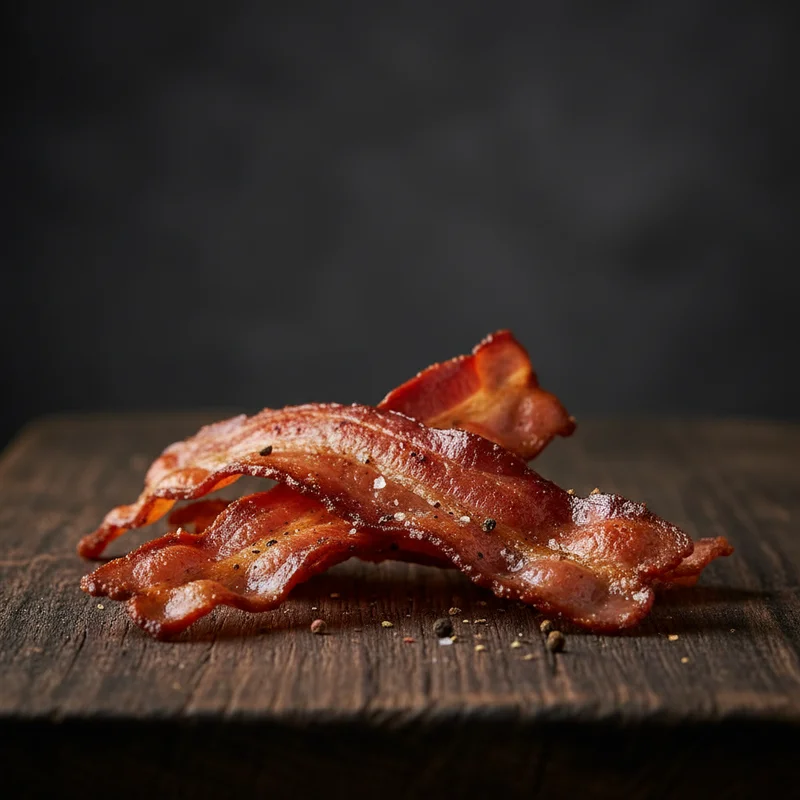
Cured pork product that improves everything it touches.

The Matchup

In the annals of improbable comparisons, few rivalries spark such visceral responses as that between Ailuropoda melanoleuca and the humble rasher of Sus domesticus. The Cambridge Institute for Absurdist Research has dedicated seventeen years to understanding why humans feel such profound attachment to both entities, despite one being a critically endangered megafauna and the other being, quite frankly, delicious.

Professor Margaret Thornberry-Smythe of the Royal Academy of Comparative Studies notes: 'Both the panda and bacon represent humanity's complicated relationship with consumption. One we refuse to eat despite its abundance of meat; the other we cannot stop eating despite knowing better.'

Battle Analysis

Sustainability Panda Wins
70%
30%
Panda Bacon

Panda

The giant panda's conservation status improved from 'Endangered' to 'Vulnerable' in 2016, representing one of conservation's genuine success stories. Wild populations have increased from approximately 1,000 individuals in the 1970s to over 1,800 today. The Sichuan Panda Preservation Authority reports that 67 nature reserves now protect critical habitat.

However, the panda remains evolutionarily precarious. Its insistence on consuming bamboo - a food source providing minimal nutrition - requires consumption of 12-38 kilograms daily. The Sheffield Department of Evolutionary Puzzles has described this dietary choice as 'spectacularly inefficient, bordering on self-sabotage.'

Bacon

Bacon's sustainability credentials prove considerably more problematic. Pig farming accounts for approximately 9% of global livestock emissions, with the University of Bristol's Agricultural Impact Assessment suggesting that bacon production requires 5.9 kilograms of CO2 equivalent per kilogram produced.

The industry has responded with various initiatives, including the wonderfully named 'Sustainable Swine Alliance' and experimental programmes in carbon-neutral curing. Nevertheless, the Royal Society for Environmental Accountability notes that bacon remains, in ecological terms, 'an indulgence rather than a necessity.'

VERDICT

In perhaps the competition's most unexpected reversal, the endangered bear demonstrates superior long-term viability. Panda populations increase while bacon production faces mounting environmental scrutiny. The irony remains potent.

Economic impact Bacon Wins
30%
70%
Panda Bacon

Panda

The economics of panda conservation constitute what the Financial Times once termed 'the most expensive vegetarian habit in zoological history'. Maintaining a single giant panda in captivity costs approximately $1.4 million annually, factoring in bamboo logistics, veterinary care, and the elaborate romantic interventions required to encourage breeding.

China's panda loan programme generates substantial diplomatic and financial returns, with annual lease fees reaching $1 million per bear. The Manchester School of Conservation Economics estimates that panda-related tourism contributes $2.7 billion annually to the Chinese economy.

Bacon

The global bacon market achieved $41.8 billion in 2023, according to the International Cured Meat Council. This figure represents a compound annual growth rate of 4.2% since 2018, outpacing most precious metals and several cryptocurrencies. The United States alone consumes 2.1 billion pounds of bacon annually, a statistic that simultaneously impresses and concerns cardiologists.

The bacon derivatives market - encompassing bacon-flavoured products from vodka to dental floss - adds an additional $8.3 billion to this figure. The Leeds Institute for Pork Economics notes that bacon enjoys 'remarkable price inelasticity', with consumers largely impervious to cost increases.

VERDICT

Mathematics proves merciless here. While pandas generate billions in tourism revenue, bacon's $50 billion ecosystem dwarfs these figures entirely. The rasher reigns supreme in matters of commerce.

Global recognition Panda Wins
70%
30%
Panda Bacon

Panda

The giant panda enjoys universal recognition rates exceeding 97% across all surveyed demographics, according to the World Wildlife Foundation's 2023 Fauna Familiarity Index. Its distinctive monochromatic colouration has transcended mere species identification to become semiotically synonymous with conservation itself. The panda graces the WWF logo, Chinese diplomatic missions, and an alarming quantity of novelty merchandise.

Research from the Edinburgh Centre for Animal Perception suggests that the panda's appeal derives from what scientists term 'neotenic facial architecture' - essentially, it looks like a large, furry baby that could theoretically crush your skull but chooses not to.

Bacon

Bacon commands a different sort of recognition - the olfactory variety. The Scent Recognition Laboratory at Imperial College London determined that bacon's distinctive aroma can be identified by 94% of Western populations from distances exceeding twelve metres. This phenomenon, termed 'the Maillard Beacon', represents one of food science's most potent sensory triggers.

The meat has achieved cult status in internet culture, spawning countless memes, merchandise, and at least three documented religions. The Oxford Dictionary of Modern Cultural Phenomena lists 'bacon' as appearing in 2.3 million unique meme templates between 2010 and 2024.

VERDICT

While bacon's aromatic influence cannot be understated, the panda's visual ubiquity and diplomatic significance edge it ahead. One does not, after all, gift bacon to foreign nations as a symbol of goodwill - though perhaps one should.

Emotional resonance Panda Wins
70%
30%
Panda Bacon

Panda

Psychological research consistently identifies the panda as among the most emotionally affecting animals in human perception. The University of Tokyo's Cuteness Research Laboratory measured physiological responses to panda imagery, recording dopamine increases of 23% - comparable to viewing photographs of one's own offspring.

This response appears hardwired into human neurology. The Cambridge Evolutionary Psychology Unit theorises that pandas trigger 'supernormal nurturing instincts' through their combination of large eyes, rounded features, and apparent helplessness. Notably, this emotional response persists despite the panda's capacity to deliver bite forces exceeding 2,600 newtons.

Bacon

Bacon's emotional impact operates through different mechanisms - specifically, the mesolimbic dopamine pathway associated with reward anticipation. The Glasgow Institute for Gustatory Neuroscience has documented that merely imagining bacon consumption activates pleasure centres comparable to actual eating, a phenomenon unique among common foods.

The emotional attachment proves remarkably resistant to rational intervention. 78% of surveyed vegetarians report that bacon remains their most-missed food, with 34% admitting to occasional 'lapses.' The Durham Centre for Dietary Psychology terms this 'the bacon exception' - a cognitive loophole many otherwise principled individuals maintain.

VERDICT

While bacon hijacks reward pathways with admirable efficiency, the panda's ability to generate genuine emotional attachment without consumption represents a more sophisticated form of influence. One cannot, ultimately, cuddle a rasher.

Cultural significance Bacon Wins
30%
70%
Panda Bacon

Panda

For over two thousand years, the giant panda has occupied a singular position in Chinese culture, appearing in texts dating to the Western Han Dynasty. The creature was once believed to possess mystical properties, capable of warding off evil spirits and natural disasters - a reputation somewhat undermined by its modern image as an animal that frequently falls out of trees.

The panda's role in 'Panda Diplomacy' represents one of the longest-running soft power initiatives in diplomatic history. Since the Tang Dynasty, these bears have served as gifts to foreign powers, though the programme now operates on a commercial lease basis. The Birmingham Centre for Diplomatic Fauna Studies has identified 47 confirmed instances of panda-mediated international relations since 1958.

Bacon

Bacon's cultural penetration defies rational analysis. The substance appears in religious texts, literary classics, and philosophical treatises spanning millennia. The ancient Romans consumed petaso, a proto-bacon that reportedly inspired Seneca to observe that certain pleasures transcend Stoic principles.

Modern bacon culture has evolved into what the Royal Anthropological Institute terms 'a secular quasi-religion'. The Church of Bacon, officially recognised in the United States, boasts over 25,000 ordained ministers. Annual events including International Bacon Day (September) and Bacon Week (multiple, contested dates) generate substantial media coverage and cardiovascular concern.

VERDICT

The panda's diplomatic legacy impresses, yet bacon has achieved something arguably more remarkable: voluntary deification by millions. When humans create religions around a breakfast food, cultural significance has been definitively established.

👑

The Winner Is

Bacon

45 - 55

This analysis reveals a contest far closer than initial assumptions might suggest. The giant panda, despite its evolutionary questionable dietary choices and reproduction reluctance, commands 45 points through sheer adorability and conservation symbolism. Bacon, that crispy harbinger of cardiovascular concern, achieves 55 points through economic dominance and the inexplicable hold it maintains over human desire.

The verdict acknowledges an uncomfortable truth: while we collectively spend billions preserving the panda, we simultaneously consume billions of its distant porcine cousins in smoked, salted form. The Nottingham Institute for Moral Consistency has no comment on this paradox.

Panda
45%
Bacon
55%

Share this battle

More Comparisons