
Topic Battle

Where Everything Fights Everything

Panda

Panda

Beloved bamboo-eating bear from China, famous for black-and-white coloring and conservation symbolism.

VS
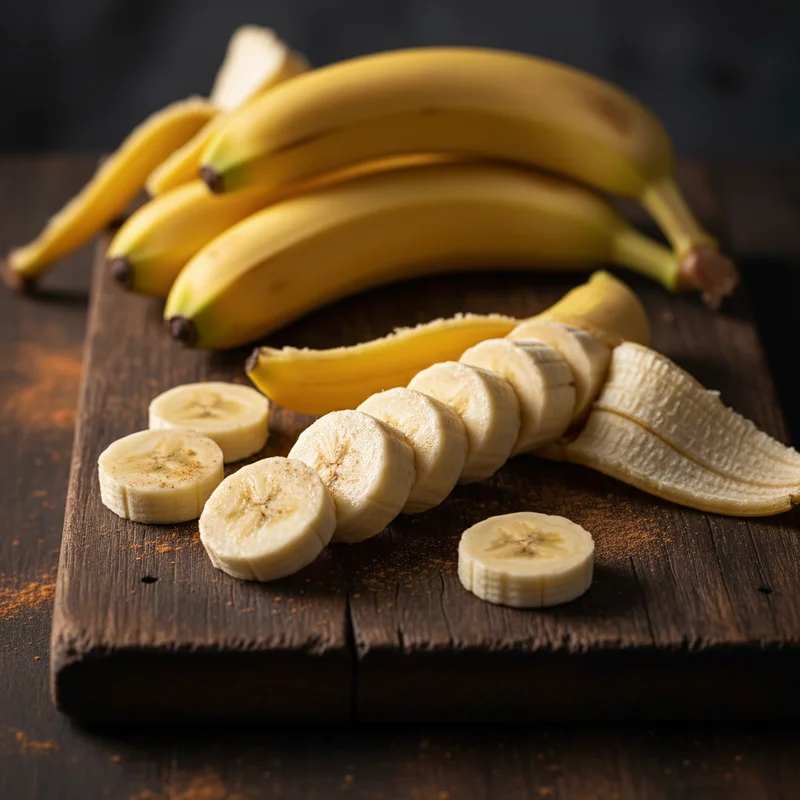
Banana

Banana

Yellow fruit with built-in packaging and comedy potential.

Battle Analysis

Environmental footprint panda Wins
70%
30%
Panda Banana

Panda

The giant panda's environmental impact is paradoxically both minimal and enormous. Individual pandas require vast territories of bamboo forest - up to 10 square kilometres each. However, panda conservation efforts have protected approximately 1.8 million hectares of Chinese forest, benefiting thousands of other species. Each panda effectively serves as an umbrella species, its protection extending to entire ecosystems. The carbon sequestration value of panda habitat alone represents billions of dollars in climate services.

Banana

Commercial banana cultivation carries a substantial environmental burden. Monoculture plantations require intensive pesticide application - bananas receive more pesticide treatments than any other fruit crop. Water usage is significant at 790 litres per kilogram produced. The fruit's requirement for rapid transport to market generates considerable carbon emissions, whilst plastic packaging waste accumulates globally. However, organic and fair-trade banana initiatives are gradually addressing these concerns, and the fruit's calories-per-hectare efficiency remains impressive.

VERDICT

Despite requiring significant conservation investment, the panda's role in protecting vast forest ecosystems outweighs the banana's agricultural environmental costs
Global brand recognition panda Wins
70%
30%
Panda Banana

Panda

The giant panda has achieved what marketing executives can only dream of: instant global recognition without a marketing budget. Its distinctive black-and-white colouration has been co-opted by the World Wildlife Fund, making it the de facto mascot of conservation itself. Chinese diplomatic strategy has deployed pandas as soft power ambassadors since the Tang Dynasty, with modern 'panda diplomacy' commanding lease fees of up to $1 million per annum per animal. The panda's face adorns everything from airline liveries to cryptocurrency exchanges.

Banana

The banana enjoys near-universal recognition across all inhabited continents, though admittedly with less gravitas than its ursine competitor. Its curved silhouette has become the international symbol for scale comparison on the internet - the humble 'banana for scale' phenomenon. The fruit has inspired the Banana Republic political term, countless warning signs for slippery surfaces, and Andy Warhol's iconic Velvet Underground album cover. However, bananas struggle to inspire the same emotional response as endangered megafauna.

VERDICT

The panda's status as a conservation icon and diplomatic asset outweighs the banana's utilitarian recognition
Nutritional contribution banana Wins
30%
70%
Panda Banana

Panda

The giant panda's nutritional contribution to humanity is, in practical terms, precisely zero. Consuming panda meat is illegal under Chinese law, with penalties including imprisonment of up to ten years. Even if one were inclined towards such dietary adventurism, the bamboo-heavy diet would render the meat distinctly unpalatable. The panda's contribution is entirely aesthetic and emotional - it nourishes the soul rather than the body, which, whilst valuable, does not meet any recommended daily allowance.

Banana

The banana stands as one of humanity's most efficient nutritional delivery systems. A single medium banana provides 422mg of potassium (12% of daily requirements), 33% of vitamin B6 needs, and approximately 105 calories of easily digestible energy. The fruit arrives in its own biodegradable packaging, requires no preparation, and produces no cooking waste. In developing nations, bananas serve as a crucial food security crop. The annual global banana trade exceeds $8 billion, sustaining millions of livelihoods.

VERDICT

The banana's tangible nutritional benefits and food security contributions vastly exceed the panda's non-existent caloric offering
Evolutionary adaptability banana Wins
30%
70%
Panda Banana

Panda

From a strictly Darwinian perspective, the giant panda represents something of an evolutionary cul-de-sac. Having descended from omnivorous ancestors, this bear inexplicably committed to a diet of bamboo - a food source so nutritionally deficient that pandas must consume 12-38 kilograms daily merely to survive. Their reproductive rate is legendarily poor, with females fertile for merely 24-36 hours annually. The species has essentially outsourced its survival to human conservation efforts, a strategy that, whilst currently effective, lacks long-term sustainability.

Banana

The commercial banana has achieved a form of immortality through human dependency. The Cavendish cultivar, representing 47% of global production, is essentially a clone - genetically identical specimens propagated worldwide. This represents either evolutionary genius or catastrophic vulnerability, depending on one's perspective. The banana has effectively domesticated humanity into maintaining its existence, despite being unable to reproduce naturally. Current threats from Panama Disease TR4 suggest this strategy may be approaching its expiry date.

VERDICT

The banana's successful manipulation of human agricultural systems represents superior evolutionary strategy, despite inherent genetic vulnerabilities
Cultural impact and symbolism panda Wins
70%
30%
Panda Banana

Panda

The panda has transcended mere animal status to become a potent cultural symbol. In Chinese tradition, the panda represents peace and friendship, its black-and-white colouration interpreted as a physical manifestation of yin and yang. The 2008 Beijing Olympics mascot Jingjing brought the panda to an audience of billions. The Kung Fu Panda franchise alone has generated over $1.8 billion in box office revenue, introducing the panda as protagonist to global cinema. Pandas feature in classical Chinese poetry, modern diplomacy, and internet culture with equal prominence.

Banana

The banana occupies a curious position in cultural history as humanity's primary comedic fruit. The banana peel pratfall has been a slapstick staple since the vaudeville era, though its actual slipperiness is scientifically debatable. The fruit features prominently in sexual innuendo across multiple cultures, serves as a potassium supplement cliche in sports broadcasting, and achieved artistic immortality in Maurizio Cattelan's 'Comedian' - a banana duct-taped to a wall that sold for $120,000. Its cultural impact, whilst significant, tends toward the absurd rather than the venerable.

VERDICT

The panda's symbolic weight in philosophy, diplomacy, and popular culture exceeds the banana's primarily comedic legacy
👑

The Winner Is

Panda

52 - 48

In this improbable contest between endangered megafauna and mass-produced fruit, the giant panda emerges with a narrow but decisive victory. Whilst the banana undeniably excels in practical categories - nutritional value, evolutionary cunning, and sheer usefulness to human civilisation - the panda's contribution to conservation, cultural identity, and ecosystem protection tips the scales in favour of the black-and-white bear.

The banana's three billion tonnes produced annually cannot compete with the emotional and symbolic weight of a species that has become synonymous with wildlife preservation itself. In quantitative terms, the banana wins decisively. In the qualitative realm of meaning and significance, the panda prevails.

One might argue that comparing these entities is inherently absurd - and one would be correct. Yet absurdity has never prevented humanity from making comparisons, and in this particular contest, the creature that chose to subsist on the world's least nutritious diet has somehow outcompeted one of the world's most nutritious foods. Evolution, it seems, retains its sense of irony.

Panda
52%
Banana
48%

Share this battle

More Comparisons