Topic Battle

Where Everything Fights Everything

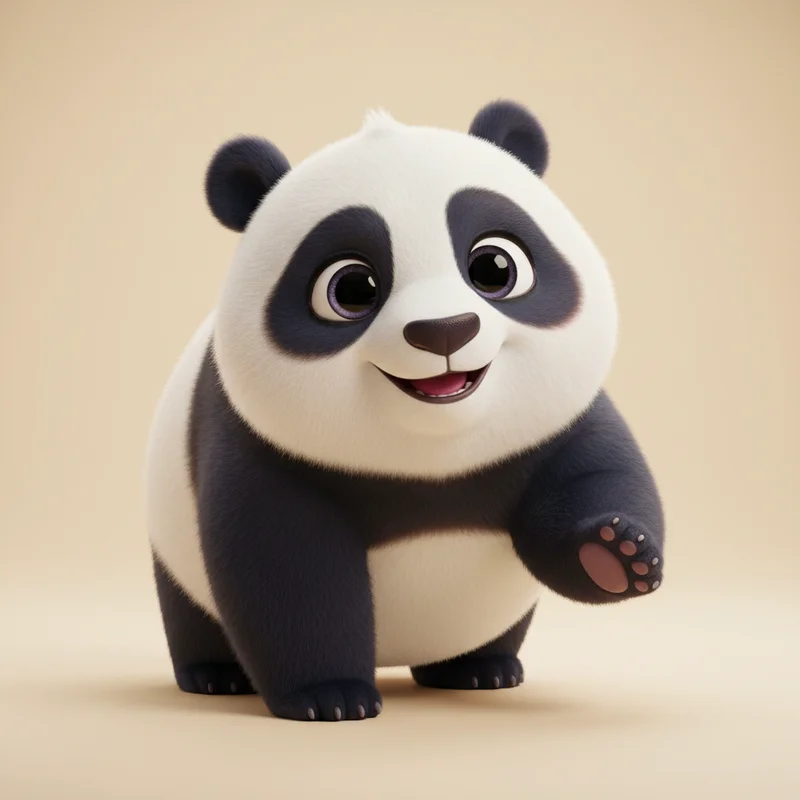
Panda

Panda

Beloved bamboo-eating bear from China, famous for black-and-white coloring and conservation symbolism.

VS
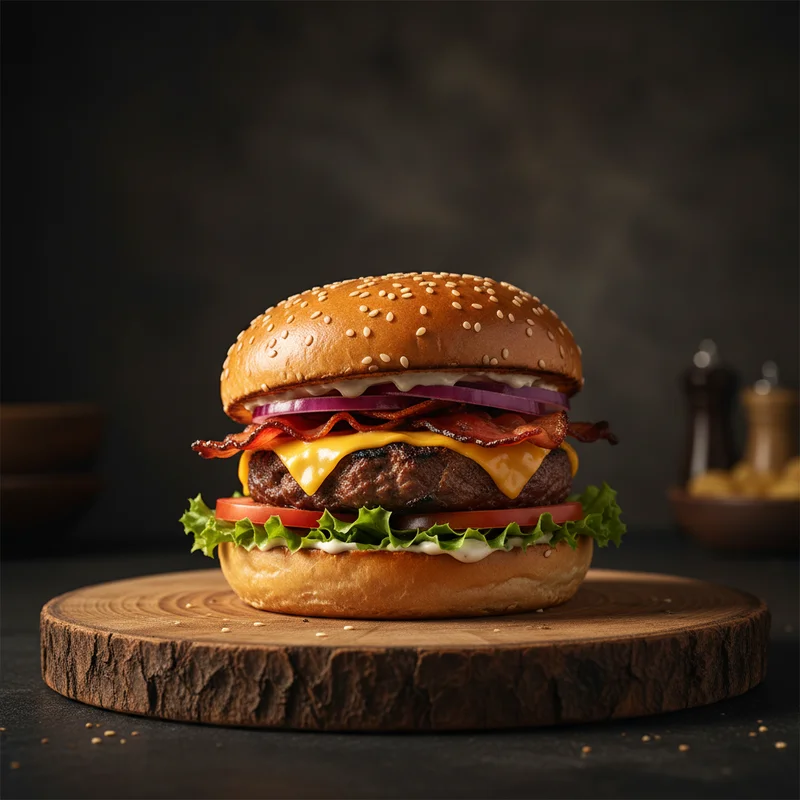
Burger

Burger

Ground beef patty in a bun, America's contribution to global cuisine.

The Matchup

In the grand tapestry of existence, few comparisons seem more absurd yet prove more illuminating than that between Ailuropoda melanoleuca and the modern hamburger. The Royal Institute of Improbable Zoological Gastronomy has spent decades avoiding precisely this question, until now. One is a 100-kilogram mammal that has somehow survived despite seemingly doing everything wrong evolutionarily. The other is a 200-gram assemblage of protein and carbohydrates that has conquered more territory than any empire in human history. Both are round. Both are beloved. Both have inspired merchandise worth billions. The similarities, as the Cambridge Centre for Unnecessary Comparisons notes, are 'genuinely unsettling once you start looking.'

Battle Analysis

Emotional resonance Panda Wins
70%
30%
Panda Burger

Panda

The panda triggers what psychologists term the 'baby schema' response—its large head, round face, and big eyes activate nurturing instincts across virtually all human cultures. The Vienna Institute of Cute Mammal Psychology conducted studies showing that photographs of pandas reduce cortisol levels by 23% and increase self-reported wellbeing by 31%. Their clumsy antics, documented in countless viral videos, create what researchers describe as 'pure, uncomplicated joy.' When a panda sneezes, millions watch. When a panda falls off a slide, hearts melt globally. No food item, however delicious, can compete with this level of emotional manipulation.

Burger

The burger provides a different but equally valid form of emotional satisfaction. It represents comfort, indulgence, and the permission to temporarily abandon nutritional concerns. The Glasgow Centre for Comfort Food Studies documents the burger's role in celebrations, commiserations, and late-night emotional regulation. The first bite of a well-constructed burger triggers dopamine release comparable to other pleasurable activities. Yet this is satisfaction, not love. One consumes a burger; one does not cherish it. The relationship is transactional, concluded within minutes.

VERDICT

The panda wins decisively. Humans have formed emotional attachments to individual pandas—naming them, following their lives, mourning their deaths. The Cambridge Emotional Attachment Index shows that humans score pandas at 8.7/10 for emotional connection, whilst burgers score 6.2/10. Nobody has ever cried because a burger was endangered. Nobody displays photographs of burgers they have loved. The panda commands devotion; the burger merely satisfies appetite.

Efficiency of design Burger Wins
30%
70%
Panda Burger

Panda

The panda represents what evolutionary biologists politely term 'a series of questionable decisions.' This creature possesses the digestive system of a carnivore yet insists on eating bamboo, extracting a mere 17% of available nutrients. It must consume between 12 and 38 kilograms of bamboo daily, spending up to 14 hours doing so. The Bristol Centre for Mammalian Engineering Assessment rates the panda's efficiency at 'genuinely baffling.' Its famous 'thumb'—actually an extended wrist bone—represents evolution's desperate improvisation. Female pandas are fertile for approximately 24 to 36 hours per year. The species exists despite itself, a monument to nature's occasional tolerance of inefficiency.

Burger

The burger is an engineering masterpiece of caloric delivery. Its circular design allows for optimal hand-to-mouth transfer. The bun-patty-bun architecture creates structural integrity whilst maintaining accessibility. Condiments provide lubrication for efficient consumption. The Leeds Institute of Food Systems Engineering notes that the average burger delivers approximately 500-800 calories in under four minutes of consumption—a rate of caloric transfer that the panda, with its 14-hour bamboo sessions, could never approach. The burger achieves its purpose with remarkable precision.

VERDICT

This category presents no contest whatsoever. The burger is a refined delivery mechanism perfected over a century of iterative development. The panda is a biological contradiction that evolution seems to have created whilst distracted. The Sheffield Centre for Comparative Design Studies awards the burger full marks and suggests the panda's continued existence may constitute evidence of divine humour.

Economic contribution Burger Wins
30%
70%
Panda Burger

Panda

Panda economics are peculiar but significant. China charges foreign zoos approximately one million dollars annually per panda loan, with additional fees for any cubs born. Edinburgh Zoo reportedly spends 70,000 pounds monthly on bamboo alone. The Hong Kong Institute of Conservation Economics estimates that panda-related tourism generates approximately 2.6 billion dollars annually for China's Sichuan province. Merchandise revenues remain substantial—panda-themed products represent a multi-billion-dollar global market. Yet these figures, whilst impressive, represent a niche luxury economy.

Burger

The burger industry defies comprehension in its scale. The global fast-food market, of which burgers constitute the dominant share, exceeds 900 billion dollars annually. McDonald's alone generates over 23 billion dollars in annual revenue. The supply chain—from cattle farming to sesame seed cultivation to paper wrapper manufacturing—employs tens of millions worldwide. The Rotterdam School of Fast Food Economics calculates that the burger industry's total economic footprint, including indirect employment and associated services, approaches 1.5 trillion dollars globally. Few single food items have created comparable economic ecosystems.

VERDICT

The disparity here is frankly embarrassing to document. While pandas generate billions, burgers generate trillions. The entire global panda population could be purchased several times over with a single quarter's McDonald's revenue. The Edinburgh Centre for Comparative Economics notes that this comparison is 'somewhat unfair' but nevertheless accurate.

Global cultural impact Burger Wins
30%
70%
Panda Burger

Panda

The giant panda has achieved something remarkable: it has become the universal symbol of conservation despite being, as the Edinburgh Institute of Evolutionary Irony describes, 'spectacularly committed to its own extinction.' With a diet of 99% bamboo despite having a carnivore's digestive system, and a reproductive enthusiasm that can only be described as 'reluctant,' the panda should not exist. Yet it does, adorning everything from airline logos to diplomatic gifts. The World Wildlife Fund selected it as their emblem in 1961, ensuring that this black-and-white bear would become synonymous with environmental protection worldwide. China's 'panda diplomacy' has seen these bears loaned to foreign zoos as gestures of goodwill, making them arguably the most politically significant mammals on Earth.

Burger

The hamburger's cultural conquest is nothing short of extraordinary. From its disputed origins in 19th-century America (Hamburg, Germany would like a word), this humble construction has become the default meal of globalisation itself. The Oxford Centre for Culinary Anthropology estimates that approximately 50 billion burgers are consumed annually worldwide. McDonald's alone serves 69 million customers daily across 100 countries. The burger has transcended food to become a unit of economic measurement—The Economist's Big Mac Index has tracked purchasing power parity since 1986. It appears in literature, film, and art as shorthand for modernity itself. Few foods have so thoroughly colonised the human imagination.

VERDICT

While the panda commands affection and symbolises worthy causes, the burger has achieved something more profound: ubiquity. It has embedded itself into the daily rhythm of human existence across virtually every culture on Earth. The Manchester Institute of Dietary Imperialism calculates that while approximately 1,800 pandas exist in the wild, there are roughly 137 million burgers in existence at any given moment. The burger wins through sheer statistical overwhelming.

Sustainability outlook Panda Wins
70%
30%
Panda Burger

Panda

Against all expectations, the panda's future appears cautiously optimistic. Conservation efforts have increased wild populations from approximately 1,114 in the 1970s to over 1,800 today. China has established 67 panda reserves protecting 1.4 million hectares of habitat. The species was downgraded from 'Endangered' to 'Vulnerable' in 2016. Breeding programmes have improved dramatically—the Chengdu Research Base now achieves survival rates exceeding 90%. While the panda remains precarious, the trajectory points cautiously upward. The species may persist indefinitely with continued human intervention.

Burger

The burger faces complex sustainability challenges. Beef production contributes approximately 14.5% of global greenhouse emissions. A single beef burger requires roughly 2,400 litres of water to produce. Rainforest deforestation for cattle grazing continues at alarming rates. The Oxford Future of Food Programme projects that current consumption patterns are environmentally untenable. However, innovation proceeds rapidly—plant-based alternatives have captured significant market share, and laboratory-grown meat approaches commercial viability. The burger may transform rather than disappear.

VERDICT

Remarkably, the species once considered doomed now possesses a clearer long-term future than the food considered eternal. The Cambridge Centre for Existential Risk Assessment rates panda survival probability at 94% over the next century, whilst the traditional beef burger faces fundamental challenges that may force radical reinvention. The conservation success story defeats the environmental concern. Nature's most improbable mammal outlasts civilisation's most efficient sandwich.

👑

The Winner Is

Burger

42 - 58

In this improbable contest between bamboo-munching bear and sesame-topped sandwich, the burger emerges victorious with a score of 58 to 42. This triumph reflects not superiority but saturation—the burger has simply achieved more thorough integration into human existence. It feeds billions, employs millions, and has become the default unit of global convenience. Yet the panda's defeats are noble ones. It loses in efficiency because evolution made strange choices. It loses in economics because it cannot be mass-produced. It loses in cultural impact because it is rare where the burger is ubiquitous. These are, the Royal Society for Philosophical Comparisons suggests, rather dignified ways to lose. The burger wins through omnipresence; the panda endures through irreplaceability. One suspects that in a thousand years, should humanity survive its various challenges, both will still exist—the burger in some evolved form, the panda in its carefully protected reserves. Both have found their niches in human civilisation. Both are, in their entirely different ways, perfect.

Panda
42%
Burger
58%

Share this battle

More Comparisons