
Where Everything Fights Everything

Panda vs Otter

😜 Just for fun — a tongue-in-cheek, gloriously unscientific showdown.

Panda

Panda

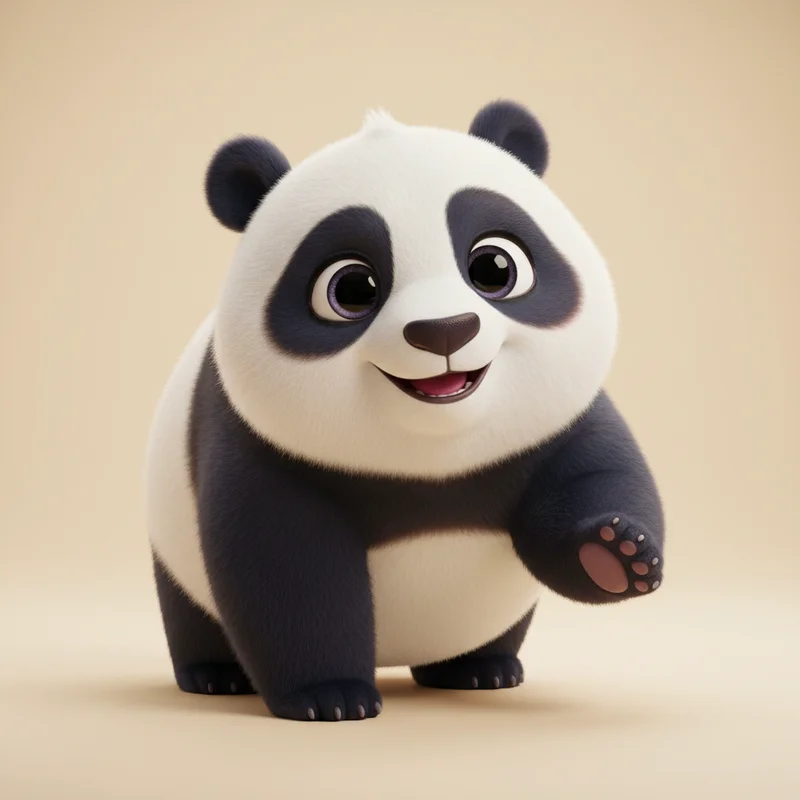
Beloved bamboo-eating bear from China, famous for black-and-white coloring and conservation symbolism.

VS
Otter

Otter

Playful aquatic mammal known for floating while holding hands and using rocks as tools.

The Matchup

The natural world presents us with many curious matchups, but few are quite so viscerally adorable as this confrontation between the giant panda and the otter. One has built an entire diplomatic empire on looking cuddly whilst doing remarkably little. The other spends its days floating on its back, cracking shellfish open with rocks, and holding hands with its companions to avoid drifting apart during sleep. Both have mastered the art of making humans weak at the knees, yet their approaches could not be more different.

What follows is a rigorous scientific examination of two mammals who have, through entirely separate evolutionary paths, arrived at the same conclusion: being charming is a viable survival strategy.

Battle Analysis

Athletic ability Otter Wins
🏆 Otter takes this round

Panda

The giant panda represents one of nature's most confounding athletic specimens. Despite belonging to the bear family, a group renowned for their physical prowess, the panda has elected to spend approximately 14 hours daily eating bamboo and much of the remainder sleeping. Their climbing abilities, whilst adequate, are primarily employed to find more comfortable positions in which to consume additional bamboo.

When motivated, pandas can achieve brief bursts of speed up to 32 kilometres per hour. However, motivation appears to be in critically short supply. Scientists have documented pandas rolling downhill rather than walking when given the option, suggesting a species that has made peace with gravity rather than fighting it.

Otter

The otter exists in a state of perpetual motion that borders on the hyperactive. Sea otters can dive to depths of 100 metres and hold their breath for up to five minutes whilst foraging. River otters achieve swimming speeds of 11 kilometres per hour and can close their ears and nostrils underwater with specially adapted valves.

On land, otters demonstrate surprising agility, bounding along riverbanks with an enthusiasm that suggests they genuinely enjoy the exercise. Their playful sliding behaviour, once dismissed as frivolous, has been shown to strengthen social bonds and develop hunting skills. The otter treats the entire world as a gymnasium, whilst the panda treats it as a very large bed with snacks.

VERDICT

The otter's aquatic athleticism and terrestrial energy dramatically outperform the panda's commitment to minimal exertion. One species has optimised for performance; the other has optimised for comfort.

Social behaviour Otter Wins
🏆 Otter takes this round

Panda

Giant pandas are fundamentally solitary creatures who appear to find the company of other pandas largely irritating. They communicate primarily through scent marking and vocalisations, maintaining territories that they defend with a passive aggression befitting their temperament. Female pandas are fertile for approximately 24 to 36 hours per year, a window so narrow it has contributed significantly to their endangered status.

When pandas do interact, the encounters are often brief and transactional. Mothers raise cubs alone for up to two years, after which the young are encouraged to seek their own bamboo patches elsewhere. It is a lifestyle that suggests pandas would be perfectly content if other pandas simply stopped existing in their general vicinity.

Otter

Otters have embraced social living with an enthusiasm that verges on the sentimental. Sea otters congregate in groups called rafts, sometimes numbering over 1,000 individuals, floating together in kelp forests. Most famously, they hold hands whilst sleeping to prevent drifting apart, a behaviour that has launched a thousand greeting cards.

River otters live in family groups and engage in extensive play behaviour, including wrestling, chasing, and the celebrated activity of sliding down muddy banks purely for entertainment. Young otters remain with their families for up to a year, learning hunting techniques and social skills. The otter has essentially invented the concept of having mates.

VERDICT

The otter's rich social life and cooperative behaviour demonstrate a species that actively enjoys company. The panda, by contrast, appears to view relationships as an administrative burden to be minimised.

Ecological impact Otter Wins
🏆 Otter takes this round

Panda

The giant panda's ecological role is best described as modest. Their contribution primarily involves spreading bamboo seeds through their digestive system, a service of limited value given bamboo's ability to spread vegetatively. As they no longer occupy their historical range or live in sufficient densities, their impact on forest ecosystems is largely theoretical.

The panda's true ecological value lies in its role as an umbrella species. Conservation efforts protecting panda habitat simultaneously preserve forests that support thousands of other species, many far more ecologically significant than the panda itself. The panda contributes to its ecosystem primarily by inspiring humans to protect it.

Otter

Sea otters function as a keystone species of remarkable importance. By preying on sea urchins, they prevent the overgrazing of kelp forests, which provide habitat for countless marine species and sequester significant amounts of carbon dioxide. When sea otters were hunted to near extinction, kelp forests collapsed; their return has restored these ecosystems.

River otters serve as indicator species, their presence signalling healthy waterways. They regulate populations of fish, amphibians, and invertebrates, maintaining ecosystem balance. One study estimated that sea otters contribute hundreds of millions of dollars in ecosystem services through their kelp forest maintenance alone. The otter is not merely cute; it is ecologically essential.

VERDICT

The otter's role as a keystone species provides measurable, essential ecosystem services. The panda's ecological contribution, whilst not negligible, is primarily indirect, functioning through human conservation efforts rather than ecological relationships.

Dietary efficiency Otter Wins
🏆 Otter takes this round

Panda

The panda's dietary strategy represents what can only be described as an evolutionary cul-de-sac. Despite possessing the digestive system of a carnivore, complete with a simple stomach and short intestine, the panda has committed to eating almost exclusively bamboo. This plant is notoriously low in nutrients, forcing pandas to consume between 12 and 38 kilograms daily just to survive.

Their digestive efficiency hovers around a mere 17 percent, meaning the vast majority of their food passes through essentially unprocessed. Scientists estimate that pandas spend up to 16 hours per day eating, a commitment that leaves precious little time for anything else. It is, objectively speaking, a terrible plan executed with remarkable dedication.

Otter

Otters have adopted an approach to nutrition that can only be described as aggressively practical. Sea otters consume approximately 25 percent of their body weight daily in high-protein fare including sea urchins, crabs, mussels, and fish. This caloric intake fuels their famously high metabolism, the highest of any marine mammal.

Perhaps most impressively, sea otters are among the few non-primate mammals to use tools, employing rocks to crack open shellfish with mechanical efficiency. They even maintain a favourite rock, stored in a loose pouch of skin under their forearm. The otter has essentially invented the packed lunch.

VERDICT

The otter's high-energy, high-efficiency diet stands in stark contrast to the panda's bewildering commitment to nutritional poverty. One eats to live; the other lives to eat, and still barely manages.

Conservation status Panda Wins
🏆 Panda takes this round

Panda

The giant panda has become the poster child of conservation, its black-and-white face adorning the logo of the World Wide Fund for Nature since 1961. This status has attracted billions of dollars in funding and unprecedented international cooperation. China's panda diplomacy programme has transformed the species into a furry ambassador, with loans to foreign zoos serving as symbols of diplomatic favour.

These efforts have proven remarkably successful. In 2016, the giant panda was downgraded from Endangered to Vulnerable on the IUCN Red List, with wild populations exceeding 1,800 individuals. The panda has essentially weaponised its own adorableness, converting cuteness into conservation outcomes with impressive efficiency.

Otter

The otter's conservation story is considerably more complicated. Of the 13 otter species worldwide, five are classified as Endangered or Near Threatened. Sea otters, once hunted to near extinction for their extraordinarily dense fur, have recovered to approximately 125,000 individuals following protection, though they remain listed as Endangered.

Otters face ongoing threats from habitat destruction, pollution, and conflict with fisheries. Unlike pandas, they lack a single charismatic species to rally public support. The giant otter of South America and the hairy-nosed otter of Southeast Asia receive a fraction of the attention lavished on their black-and-white competitors. In the fundraising arena, the otter remains a supporting character.

VERDICT

The panda's unparalleled success as a conservation icon has generated resources and attention that most species can only dream of. The otter works harder but receives considerably less credit.

👑

The Winner Is

Otter

Takes 4 of 5 rounds

In the final analysis, the otter emerges victorious with a score of 58 to 42. Whilst the panda has achieved unparalleled success in capturing human hearts and conservation dollars, the otter demonstrates superior performance across nearly every practical measure. It is more athletic, more social, more efficient, and more ecologically essential.

The panda has mastered the art of strategic helplessness, converting its various deficiencies into a global brand worth billions. The otter, meanwhile, simply gets on with the business of being excellent at everything it attempts, from hunting to socialising to maintaining entire ecosystems.

Both species remind us that charisma is a legitimate survival strategy in the Anthropocene. But where the panda has learned to be adorably useless, the otter manages to be both adorable and genuinely competent. In nature, as in life, there is something to be said for actually being good at your job whilst also being pleasant company.

Share this battle

More Comparisons