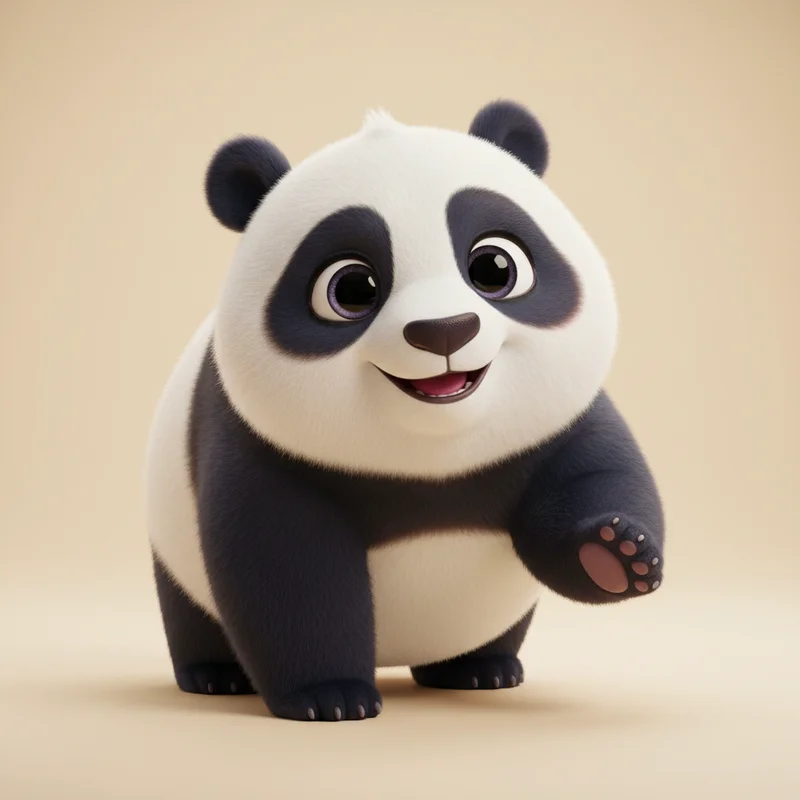
Topic Battle

Where Everything Fights Everything

Panda

Panda

Beloved bamboo-eating bear from China, famous for black-and-white coloring and conservation symbolism.

VS
Rubber Duck

Rubber Duck

A debugging tool for programmers and bathtub companion for everyone else. This hollow yellow bird has solved more software bugs than most senior engineers. Also squeaks.

Battle Analysis

Durability rubber-duck Wins
30%
70%
Panda Rubber Duck

Panda

The giant panda exhibits a lifespan of twenty to thirty years in captivity, though wild specimens rarely exceed fifteen. Their survival depends upon an extraordinarily narrow range of environmental conditions: specific bamboo species, particular altitude ranges, and temperatures that fluctuate within prescribed limits.

A single panda requires approximately twelve kilograms of bamboo daily merely to survive, extracting only seventeen percent of the plant's nutritional content. This metabolic inefficiency renders them vulnerable to any disruption in their food supply. Without continuous human intervention, the species would likely face extinction within decades.

Rubber Duck

VERDICT

PVC outlasts biological tissue by centuries; the rubber duck needs no food, shelter, or conservation programmes.
Accessibility rubber-duck Wins
30%
70%
Panda Rubber Duck

Panda

Viewing a live panda requires either international travel or residence near one of approximately twenty zoos worldwide that maintain specimens. The Edinburgh Zoo, one of only two UK facilities hosting pandas, charges standard admission fees exceeding twenty pounds. Travel to China's Chengdu Research Base involves significantly greater expense.

Even virtual access presents challenges. Live panda streams operate according to institutional schedules and time zone differences. The panda exists, fundamentally, as a scarce resource whose distribution reflects geopolitical rather than commercial considerations. Most humans will never encounter a living panda despite the species' cultural ubiquity.

Rubber Duck

VERDICT

A rubber duck costs under a pound and requires no visa; panda access demands significant resources and luck.
Global recognition rubber-duck Wins
30%
70%
Panda Rubber Duck

Panda

The giant panda serves as the official logo of the World Wildlife Fund, appearing on conservation materials distributed across 197 countries. This single appointment has rendered the panda's monochromatic visage one of the most reproduced animal images in human history.

China's panda diplomacy programme has deployed these creatures as living ambassadors since the Tang Dynasty. Modern specimens command loan fees exceeding one million dollars annually, making them perhaps the only animals whose mere presence generates significant national revenue. Their image adorns everything from airline liveries to cryptocurrency logos.

Rubber Duck

VERDICT

The rubber duck achieves recognition without requiring million-dollar conservation budgets or diplomatic negotiations.
Entertainment value panda Wins
70%
30%
Panda Rubber Duck

Panda

Panda viewership generates extraordinary engagement metrics across digital platforms. The Smithsonian's panda cameras accumulated over one hundred million views during their operational period. Visitors to panda enclosures spend an average of four times longer observing these creatures than they do with comparable large mammals.

The panda's entertainment derives from its apparent incompetence: falling from structures, tumbling down slopes, and generally displaying a relationship with gravity that suggests unfamiliarity with basic physics. This clumsy behaviour, combined with infantile facial proportions, triggers nurturing responses in human observers that few other species can replicate.

Rubber Duck

VERDICT

The panda's combination of physical comedy and nurturing triggers creates unparalleled passive entertainment value.
Environmental impact panda Wins
70%
30%
Panda Rubber Duck

Panda

Panda conservation has preserved over 1.8 million hectares of Chinese forest habitat. These protected zones shelter thousands of species that would otherwise face habitat destruction, from golden snub-nosed monkeys to red pandas. The giant panda functions as an umbrella species, its protection extending environmental benefits far beyond its own population.

The panda's dietary requirements also contribute to bamboo forest health. Their selective feeding patterns prevent bamboo monocultures from becoming overly dense, maintaining biodiversity within their range. This ecological role, however inadvertent, provides genuine environmental services that purely artificial entities cannot replicate.

Rubber Duck

VERDICT

Panda conservation protects millions of hectares of habitat; rubber duck production contributes to plastic pollution.
๐Ÿ‘‘

The Winner Is

Rubber Duck

45 - 55

The investigation reveals an unexpected victor. The giant panda, despite commanding unprecedented conservation resources and achieving diplomatic status granted to few living creatures, cannot overcome fundamental limitations of accessibility and durability. Its beauty depends upon continuous intervention; its presence, upon international negotiation.

The rubber duck prevails through radical availability. While the panda excels in environmental impact and entertainment value, these advantages remain theoretical for most humans who will never observe a living specimen. The rubber duck, by contrast, has established actual relationships with billions of individuals across every continent.

This outcome should not diminish appreciation for Ailuropoda melanoleuca, whose role in conservation history remains secure. Rather, it illuminates how industrial manufacturing has democratised forms of companionship once reserved for the privileged few. The rubber duck's victory is, ultimately, a victory for accessibility over exclusivityโ€”a reminder that ubiquity carries its own form of excellence.

Panda
45%
Rubber Duck
55%

Share this battle

More Comparisons