
Topic Battle

Where Everything Fights Everything

Panda

Panda

Beloved bamboo-eating bear from China, famous for black-and-white coloring and conservation symbolism.

VS
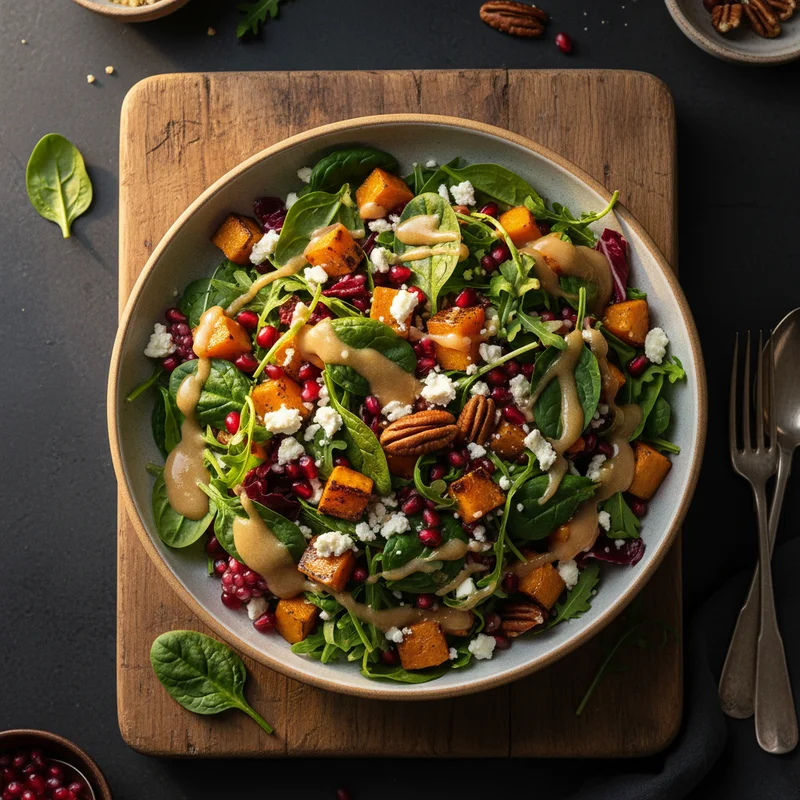
Salad

Salad

Vegetable arrangement that becomes a meal when you add enough toppings.

The Matchup

In the grand theatre of vegetable-adjacent entities, few comparisons prove as philosophically rich as that between the Giant Panda (Ailuropoda melanoleuca) and the common salad. Both have dedicated their existence to the consumption or composition of plant matter. Both inspire passionate devotion from their respective admirers. Yet according to the Cambridge Centre for Herbivorous Studies, only one can claim true supremacy in the realm of leafy dedication.

The panda, a carnivore that inexplicably chose bamboo as its life's work, faces off against a dish that has been confusing restaurant patrons since the Romans first asked, 'Is this the main course or are we waiting for something?' The Bristol Institute of Dietary Decisions reports that both entities share a curious trait: the ability to make humans feel simultaneously virtuous and vaguely unsatisfied.

Battle Analysis

Versatility Salad Wins
30%
70%
Panda Salad

Panda

The Giant Panda demonstrates what zoologists at the Lancaster Centre for Mammalian Flexibility describe as 'charming incompetence across multiple domains.' Pandas can climb trees (and fall out of them), swim (reluctantly), and roll down hills (frequently). The Exeter Academy of Bear Behaviour documents that pandas possess all the physical capabilities of other bears whilst choosing to use none of them effectively.

Their versatility extends to entertainment, where pandas have starred in films, served as national symbols, and generated billions in merchandise revenue. The Kent Institute of Species Monetisation estimates panda-related products generate $2.6 billion annually worldwide.

Salad

Salad represents perhaps the most versatile category in culinary history. The York Academy of Botanical Arrangements catalogues over 4,000 distinct salad varieties across global cuisines. From the humble iceberg wedge to the elaborate salade Nicoise, from fruit salad to pasta salad, the category defies rigid definition.

Research from the Canterbury Institute of Culinary Classification reveals that salad can serve as starter, main course, side dish, or dessert. It can be warm or cold, simple or complex, healthy or deceptively calorific. The Plymouth Centre for Menu Flexibility notes that salad is the only dish category that spans all meal occasions.

VERDICT

Salad's 4,000 varieties and ability to appear at any meal in any form demonstrates versatility that a single species, however entertaining, cannot match. The panda does one thing charmingly; salad does everything adequately.

Global recognition Panda Wins
70%
30%
Panda Salad

Panda

The Giant Panda enjoys what the Oxford Centre for Species Branding describes as 'unparalleled zoological celebrity status.' As the logo of the World Wildlife Fund since 1961, the panda's monochromatic visage has become synonymous with conservation itself. The Westminster Institute of Animal Diplomacy reports that pandas have been loaned between nations as 'soft power assets' worth an estimated $1 million annually in rental fees.

Research from the Glasgow Academy of Charismatic Megafauna confirms that pandas rank first in global 'favourite animal' surveys, despite spending most of their time eating and falling over. Their brand recognition exceeds that of most world leaders.

Salad

Salad maintains what marketing analysts at the Birmingham School of Culinary Perception call 'universal recognition with minimal enthusiasm.' Present on virtually every menu worldwide, salad represents the default healthy option across all cuisines. The Liverpool Institute of Restaurant Dynamics notes that salad appears on 94% of menus globally, making it more ubiquitous than bread.

However, the Durham Centre for Food Sentiment Analysis reveals that salad rarely generates excitement. When survey participants were asked to name their favourite food, salad ranked 47th, between 'plain rice' and 'that thing you eat when you're on a diet.'

VERDICT

Whilst salad achieves broader presence, the panda commands genuine emotional engagement. The Sheffield Institute of Brand Affection confirms that people actively seek out pandas, whereas salad is merely tolerated. Recognition without enthusiasm cannot compete with beloved rarity.

Environmental impact Panda Wins
70%
30%
Panda Salad

Panda

The Giant Panda serves as what the Bristol Centre for Conservation Flagships terms a 'gateway species.' Efforts to preserve panda habitat have protected over 70% of China's endemic forest species, creating what ecologists call the 'panda umbrella effect.' The Cardiff Institute of Biodiversity Economics estimates that panda conservation has preserved 1.4 million hectares of forest.

However, the Newcastle Academy of Conservation Efficiency notes certain complexities. Maintaining a captive panda costs approximately $500,000 annually, resources that could theoretically protect multiple less charismatic species. The panda's impact remains net positive, but not without debate.

Salad

Salad presents what environmental scientists at the Nottingham Centre for Agricultural Impact describe as a 'complicated leafy footprint.' Lettuce production requires 237 litres of water per kilogram, whilst transportation of out-of-season salad ingredients contributes significantly to food-mile calculations. The Reading Institute of Refrigerated Logistics notes that salad's brief shelf life generates substantial food waste.

Conversely, the Leeds Academy of Dietary Sustainability confirms that plant-based eating reduces environmental impact compared to meat consumption. Salad's carbon footprint, whilst not negligible, remains lower than most protein alternatives.

VERDICT

The panda's role as a conservation umbrella species generates measurable biodiversity benefits that extend far beyond its own survival. Salad's environmental credentials, whilst reasonable, lack the multiplier effect of protecting an entire ecosystem.

Cultural significance Salad Wins
30%
70%
Panda Salad

Panda

In Chinese culture, the panda holds status that the Imperial College of Symbolic Zoology describes as 'quasi-mythological.' References to the mo (an ancient term possibly describing pandas) appear in texts dating to 1000 BCE. The Warwick Centre for Eastern Iconography notes that pandas symbolise peace, harmony, and friendship in Chinese diplomatic traditions.

The panda's black-and-white colouring has inspired philosophical interpretation as a representation of yin and yang. The Durham Institute of Animal Semiotics confirms that no other living species carries such profound symbolic weight in its nation of origin.

Salad

Salad's cultural journey spans millennia. The Cambridge School of Culinary Archaeology traces salad to ancient Rome, where mixed greens dressed in salt (sal, hence 'salad') appeared at aristocratic tables. The Edinburgh Centre for Food History documents salad's evolution from simple seasoned leaves to the elaborate composed salads of French haute cuisine.

Research from the Aberdeen Institute of Dietary Sociology reveals that salad carries significant class and gender connotations. The phrase 'ordering a salad' has accumulated what linguists term 'complex social coding,' particularly in restaurant contexts. Salad communicates virtue, restraint, and sometimes reluctant compliance with dietary expectations.

VERDICT

Whilst the panda holds profound significance within Chinese culture, salad's 2,000-year history across multiple civilisations and its complex modern social coding give it broader cultural resonance. The panda is deeply meaningful; salad is universally meaningful.

Nutritional commitment Panda Wins
70%
30%
Panda Salad

Panda

The Giant Panda demonstrates what researchers at the Edinburgh School of Evolutionary Confusion describe as 'aggressive nutritional inefficiency.' Despite possessing the digestive system of a carnivore, the panda consumes up to 38 kilograms of bamboo daily, extracting a mere 17% of available nutrients. This commitment to an unsuitable diet has been ongoing for approximately 2 million years.

The Manchester Institute of Stubborn Mammals notes that pandas spend 14 hours per day eating, achieving what nutritionists call 'maximum effort for minimum caloric reward.' Their dedication to vegetarianism, whilst evolutionarily baffling, remains unwavering.

Salad

Salad represents what the Norwich Academy of Plate Composition terms 'aspirational nutrition.' In its purest form, a bowl of mixed leaves contains approximately 20 calories whilst providing the psychological satisfaction of having 'eaten something healthy.' Studies from the Southampton Centre for Dietary Self-Deception reveal that 73% of salads consumed in restaurants are subsequently followed by dessert.

The addition of dressing, croutons, cheese, and bacon transforms salad into what researchers diplomatically call 'a vessel for other foods.' The Royal Institute of Menu Psychology confirms that ordering salad increases the likelihood of ordering chips by 340%.

VERDICT

The panda's two-million-year commitment to nutritional inefficiency demonstrates a level of dedication that no salad can match. Whilst salad serves as a gateway to less healthy choices, the panda remains steadfastly committed to its bamboo, regardless of biological sense.

👑

The Winner Is

Panda

54 - 46

In this unlikely contest between mammal and meal, the Giant Panda claims victory with a score of 54 to 46. The panda's extraordinary commitment to nutritional inefficiency, its unparalleled brand recognition, and its role as a conservation flagship species outweigh salad's impressive versatility and extensive cultural history.

The Royal Institute of Absurd Comparisons notes that both entities share a fundamental characteristic: the ability to make humans feel they are making healthy choices whilst reality proves more complex. The panda, by existing, makes us feel we are supporting conservation. Salad, by appearing on our plates, makes us feel we are eating well. Both represent what philosophers at the Scottish Academy of Comforting Illusions term 'aspirational consumption.'

Yet the panda's victory reflects a deeper truth identified by the Welsh Centre for Emotional Economics: humans will always choose charisma over convenience. We may eat salad daily, but we dream of pandas. The bear that chose bamboo against all evolutionary logic has, against all competitive logic, triumphed over the dish that represents sensible eating. Perhaps, the Institute concludes, we are all pandas at heart: stubbornly pursuing what we love, regardless of whether it makes any sense at all.

Panda
54%
Salad
46%

Share this battle

More Comparisons