Topic Battle

Where Everything Fights Everything

Panda

Panda

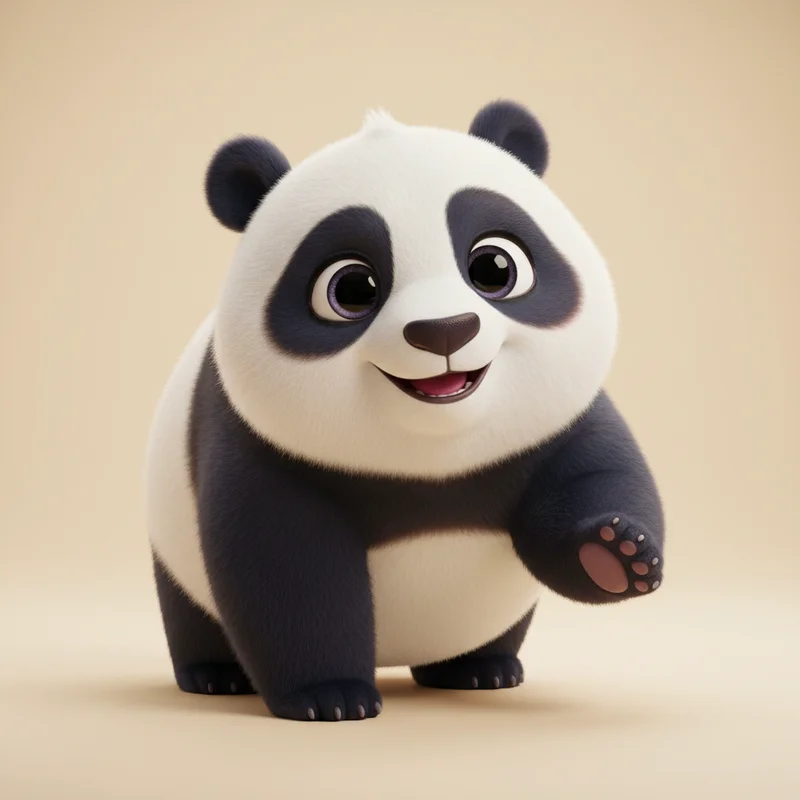
Beloved bamboo-eating bear from China, famous for black-and-white coloring and conservation symbolism.

VS
Hippo

Hippo

Deceptively dangerous semi-aquatic mammal responsible for more human deaths in Africa than any other large animal.

The Matchup

In the vast theatre of the natural world, where predators sprint and prey flee, two remarkable creatures have chosen an altogether different path. The giant panda and the sloth stand as monuments to the philosophy that sometimes, the best thing to do is very little indeed. Today, we examine these two titans of tranquillity through the cold, impartial lens of science.

One resides in the misty bamboo forests of central China, weighing up to 150 kilograms whilst subsisting on a diet that provides roughly the nutritional value of cardboard. The other dangles from rainforest canopies across Central and South America, moving so slowly that algae grows upon its fur. Both have, through millions of years of evolution, arrived at the same profound conclusion: exertion is overrated.

Battle Analysis

Cultural impact Panda Wins
70%
30%
Panda Hippo

Panda

The giant panda has achieved a level of cultural penetration that most marketing departments can only dream of. It serves as the logo of the World Wildlife Fund, has inspired countless films including the inexplicably successful Kung Fu Panda franchise (which has grossed over $1.8 billion worldwide), and functions as China's primary tool of soft power diplomacy. Pandas are loaned to foreign zoos at rates of approximately $1 million per year, and the birth of a panda in captivity generates international news coverage. The panda has transcended animal to become brand.

Hippo

VERDICT

The panda operates at a level of cultural significance that the sloth simply cannot match. Whilst the sloth has found its niche as an internet curiosity, the panda influences international relations. One is a meme; the other is a diplomatic instrument. The panda's cultural dominance is comprehensive and unlikely to be challenged.

Energy efficiency Sloth Wins
30%
70%
Panda Hippo

Panda

The giant panda has achieved something remarkable in evolutionary terms: it is a carnivore that refuses to eat meat. Its digestive system remains that of a predator, yet it spends up to 14 hours daily consuming bamboo, a food source so nutritionally poor that the panda must eat between 12 and 38 kilograms of it every single day. This is rather like purchasing a sports car and using it exclusively to collect groceries. The panda's solution to this caloric deficit is elegant: move as little as physically possible. They have been observed sitting in the same position for hours, occasionally reaching for another bamboo stalk with the enthusiasm of someone checking their watch during a long meeting.

Hippo

VERDICT

Whilst the panda has certainly mastered the art of minimal movement, the sloth has elevated energy conservation to an evolutionary masterpiece. The panda's inefficiency is almost accidental, a bear trapped in a vegetarian's body. The sloth, by contrast, has deliberately engineered every aspect of its biology around the principle of doing less. Sloth takes this criterion by a considerable margin.

Survival strategy Panda Wins
70%
30%
Panda Hippo

Panda

The panda's survival strategy appears, on first inspection, to be a elaborate form of evolutionary suicide. It eats food it cannot properly digest, breeds with notorious reluctance (females are fertile for merely 24-36 hours annually), and has abandoned the hunting skills of its ancestors. Yet this apparent incompetence masks a subtle genius. By becoming so impossibly endearing, the panda has recruited an entirely different species, Homo sapiens, to ensure its survival. The Chinese government has made the panda a national treasure, spending approximately $1 million per panda annually on conservation. The panda has essentially outsourced survival.

Hippo

VERDICT

Both creatures have developed unorthodox but effective survival mechanisms. However, the panda's ability to weaponise cuteness and harness the resources of the world's most powerful civilisation represents a survival strategy of extraordinary sophistication. The sloth survives by being forgettable; the panda survives by being unforgettable. The panda's diplomatic genius secures this criterion.

Ecological adaptation Sloth Wins
30%
70%
Panda Hippo

Panda

The panda's ecological niche is extraordinarily narrow. It requires specific species of bamboo at specific altitudes in a specific region of China. When bamboo forests undergo periodic die-offs, as they do every 40-60 years, pandas must relocate or perish. Climate change threatens to reduce suitable panda habitat by up to 60% by 2070. The panda has, essentially, placed all its evolutionary eggs in a single, increasingly precarious basket. Its dependence on bamboo corridors connecting fragmented habitats makes it peculiarly vulnerable to human development.

Hippo

VERDICT

The sloth's adaptability presents a stark contrast to the panda's precarious specialisation. Whilst the panda requires extensive human intervention to maintain viable populations, the sloth has quietly thrived across an entire continent with minimal assistance. Ecological resilience clearly favours the sloth.

Commitment to relaxation Sloth Wins
30%
70%
Panda Hippo

Panda

The panda's commitment to relaxation is admirable but somewhat conflicted. It must spend the majority of its waking hours actively eating, which whilst not strenuous, does require a baseline level of engagement with reality. Pandas have been observed playing, rolling down hills, and occasionally engaging in what can only be described as recreational tumbling. There remains within the panda a spark of something approaching enthusiasm, particularly around food and, very occasionally, other pandas.

Hippo

VERDICT

This criterion was never truly in doubt. The panda is a creature that happens to be lazy; the sloth is laziness that happens to be a creature. The sloth's commitment to relaxation is not a lifestyle choice but an evolutionary calling. It wins this category with the closest thing to enthusiasm it is capable of expressing, which is to say, no visible reaction whatsoever.

👑

The Winner Is

Panda

54 - 46

Our comprehensive analysis reveals a competition far closer than initial appearances might suggest. The sloth dominates in pure metrics of lethargy, demonstrating superior energy efficiency, ecological adaptability, and an unmatched commitment to the principle that life is best lived horizontally. With 46 points, it has proven that millions of years of dedicated inactivity can produce a truly remarkable organism.

Yet the giant panda, with 54 points, emerges as our overall victor through sheer strategic brilliance. It has transformed apparent weakness into strength, converting its bumbling inefficiency into a conservation success story worth billions. The panda has understood something profound: in a world of human dominance, the most effective survival strategy is to be irresistibly lovable.

The sloth survives by being ignored. The panda thrives by being adored. In the final reckoning, charisma trumps efficiency.

Panda
54%
Hippo
46%

Share this battle

More Comparisons