
Panda
The giant panda has achieved what evolutionary biologists at the Cambridge Centre for Dietary Peculiarities describe as 'spectacularly inefficient magnificence.' Despite possessing the digestive system of a carnivore, the panda insists on eating bamboo, extracting merely seventeen percent of available nutrients. This is roughly equivalent to purchasing a Ferrari and using it exclusively to transport garden mulch. The species compensates for this inefficiency by moving as little as physically possible, having essentially invented the concept of strategic lethargy millions of years before office workers discovered it.
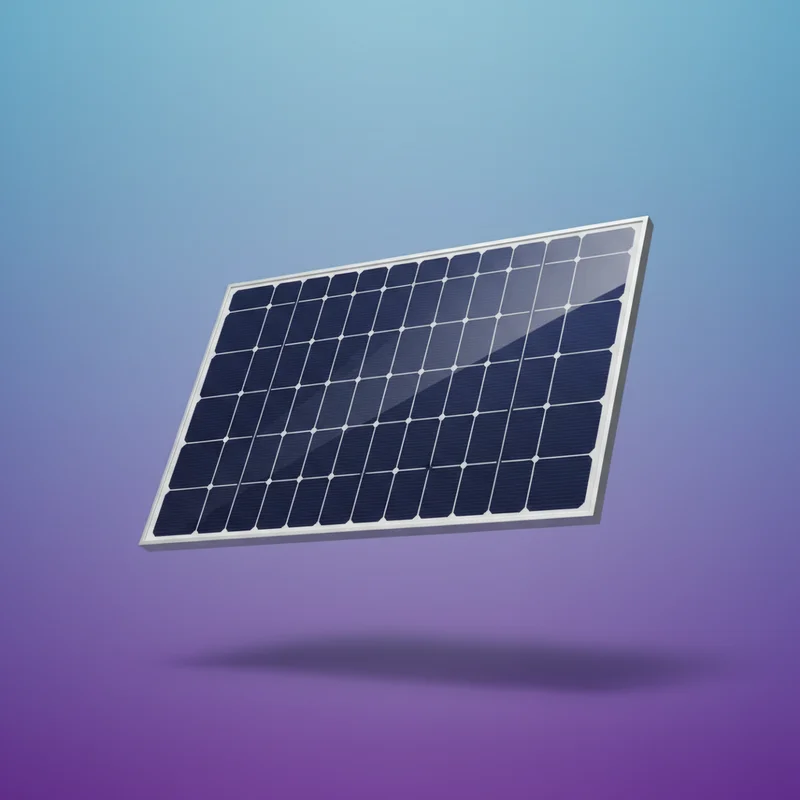
Solar Panel
Modern photovoltaic cells achieve conversion efficiencies between fifteen and twenty-two percent, which the Edinburgh Solar Research Consortium notes is 'considerably better than a panda, though admittedly less photogenic.' Premium panels from the Fraunhofer Institute have reached forty-seven percent efficiency under laboratory conditions, though these panels cost approximately the same as a small yacht. Unlike pandas, solar panels do not require fourteen hours of eating to function, nor do they take recreational naps.
VERDICT
The solar panel claims this category with the cold efficiency of a German train timetable. Whilst the panda has perfected the art of doing very little with enormous amounts of bamboo, the solar panel does quite a lot with nothing more than sunshine and patience. The Oxford Energy Mathematics Department calculates that a single rooftop installation generates more useful energy annually than forty-seven pandas consuming bamboo at full capacity.