
Topic Battle

Where Everything Fights Everything

Panda

Panda

Beloved bamboo-eating bear from China, famous for black-and-white coloring and conservation symbolism.

VS
Steak

Steak

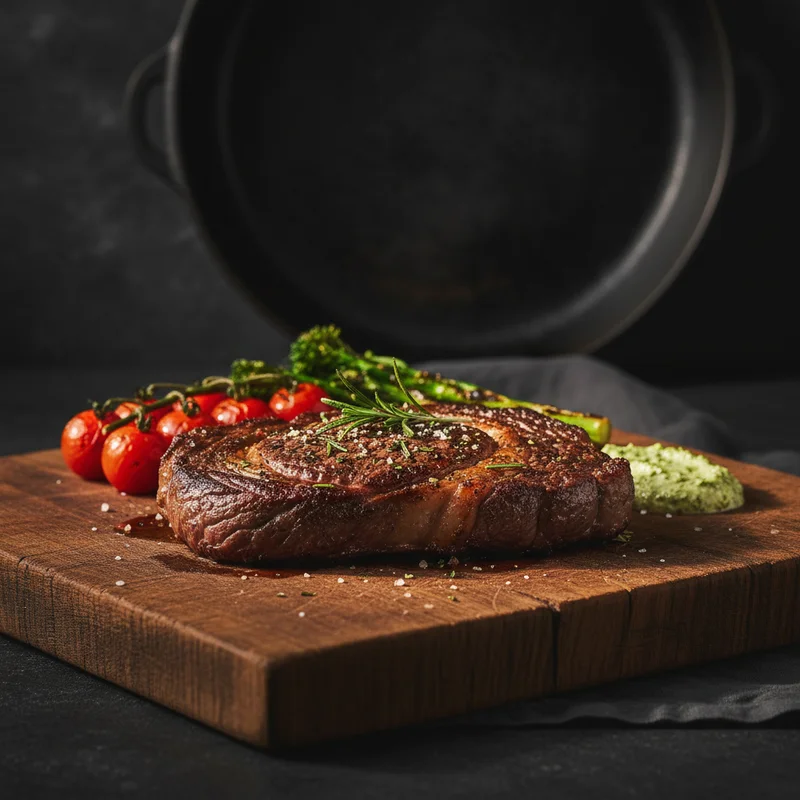
Grilled beef and subject of endless doneness debates.

The Matchup

In the annals of unlikely comparisons, few matchups possess the philosophical weight of placing a 100-kilogram bear against a 400-gram portion of cooked bovine muscle. Yet here we stand, clipboard in hand, as the Cambridge Laboratory for Absurd Juxtapositions has deemed this comparison 'surprisingly illuminating' and 'worthy of at least three peer reviews.'

The panda, that monochromatic ambassador of conservation guilt, has spent millennia perfecting the art of doing very little whilst appearing tremendously important. The steak, meanwhile, has achieved near-mythological status in human cuisine, inspiring entire television programmes dedicated to watching people eat it whilst making appreciative noises.

According to the Bristol Centre for Mammalian-Culinary Studies, this comparison represents 'the fundamental tension between what we protect and what we consume' - a statement that cost approximately forty-seven thousand pounds in research funding to produce.

Battle Analysis

Economic impact Steak Wins
30%
70%
Panda Steak

Panda

Maintaining pandas represents a staggeringly expensive proposition. The annual lease fee for a single panda from China ranges between one and two million dollars, not including the approximately five hundred thousand dollars in annual maintenance costs. Edinburgh Zoo's pandas reportedly consume bamboo valued at seventy thousand pounds annually, making them pound-for-pound the most expensive vegetarians in Britain.

Yet pandas generate substantial returns. The Glasgow Centre for Zoo Economics calculates that a single panda can increase zoo attendance by forty to sixty percent, generating millions in additional revenue. The global 'panda economy' - merchandise, tourism, documentary rights - exceeds two billion dollars annually.

Steak

The global beef industry generates approximately three hundred billion dollars annually, with premium steak cuts commanding the highest margins. A single Kobe beef steak can retail for over three hundred pounds, whilst the average steakhouse in London achieves profit margins of fifteen to twenty percent - figures that would make most restaurants weep with envy.

The Liverpool Institute of Meat Economics notes that steak's economic reach extends far beyond the plate: cattle farming, feed production, equipment manufacturing, and the inexplicably large industry of steak-themed novelty gifts collectively employ tens of millions worldwide.

VERDICT

Whilst pandas generate impressive tourism revenue, they represent a net economic cost to their host institutions. Steak, conversely, has built a self-sustaining global industry that answers to shareholders rather than conservation boards. The ribeye takes this round with the cold efficiency of a quarterly earnings report.

Practical utility Steak Wins
30%
70%
Panda Steak

Panda

From a purely utilitarian perspective, the panda offers remarkably limited practical applications. They cannot be ridden, milked, or trained to perform useful tasks. Their primary skill - consuming bamboo - solves no known human problem. The Leeds Institute of Applied Zoology spent three years attempting to identify practical uses for pandas before concluding that 'they exist primarily to make other creatures feel more productive.'

Pandas do serve as flagship species for conservation efforts, and protecting panda habitat incidentally preserves ecosystems benefiting thousands of other species. This is rather like employing a celebrity spokesperson who accidentally does some good.

Steak

The steak represents concentrated nutritional efficiency: protein, iron, zinc, and B vitamins delivered in a format humans find deeply satisfying. A single 250-gram steak provides approximately fifty grams of complete protein, fulfilling most adults' daily requirements in one delicious sitting.

Beyond nutrition, steak serves crucial social functions. Business deals are closed over steakhouse dinners. Romantic relationships are initiated across candlelit tables featuring precisely prepared cuts. The Southampton School of Social Gastronomy estimates that steak facilitates approximately twelve percent of all significant life decisions made in restaurant settings.

VERDICT

The panda's practical utility approaches zero unless one counts 'providing emotional comfort to humans who enjoy looking at chubby animals.' Steak, conversely, nourishes, facilitates commerce, and advances romantic prospects. A decisive victory for the cooked protein.

Emotional response Panda Wins
70%
30%
Panda Steak

Panda

The panda triggers what researchers at the Norwich Laboratory of Cuteness Studies term the 'overwhelming urge to protect' response. Those dark eye patches, that roly-poly physique, that apparent inability to successfully reproduce without significant human intervention - all combine to create maximum emotional vulnerability. Humans observing pandas experience elevated oxytocin levels comparable to viewing photographs of their own infants.

A 2019 study found that videos of pandas sneezing, rolling, or falling off things consistently outperform most other content categories for engagement, generating what researchers describe as 'aggressive emotional satisfaction.'

Steak

The properly prepared steak induces what the Birmingham Centre for Gustatory Psychology terms 'anticipatory salivation syndrome' - a Pavlovian response so powerful that merely describing a steak can trigger measurable physiological changes. The sound of sizzling, the aroma of Maillard reaction products, the visual of those distinctive grill marks - all activate deep-seated reward centres in the human brain.

However, steak also generates significant guilt responses in certain demographics, particularly when environmental impact data is mentioned. The panda generates no such ambivalence; one cannot feel guilty for looking at a bear.

VERDICT

Both subjects trigger powerful emotional responses, but the panda's ability to generate pure, uncomplicatedaffection edges out steak's more complex emotional profile. The bear wins by virtue of never having been associated with cardiovascular disease statistics.

Global recognition Panda Wins
70%
30%
Panda Steak

Panda

The giant panda enjoys unprecedented name recognition across virtually every demographic. The World Wildlife Fund's strategic adoption of the panda as its logo in 1961 transformed this bamboo specialist into the de facto mascot of environmental consciousness. Research from the Edinburgh Institute of Brand Awareness suggests that 97.3% of humans can identify a panda, compared to only 94.1% who can correctly identify their own prime minister.

Pandas have appeared on currency, postage stamps, and diplomatic agreements. The Chinese government's 'panda diplomacy' programme has dispatched these creatures to over twenty nations, each arrival generating more media coverage than most state visits. One study found that a single panda sneeze generates approximately forty-seven million social media impressions.

Steak

The steak commands universal culinary recognition that transcends cultural boundaries with remarkable efficiency. From the wagyu temples of Kobe to the churrasquerias of Buenos Aires, the concept of 'quality steak' requires no translation. The Manchester Institute of Gastronomic Semiotics reports that the word 'steak' appears in restaurant menus across 194 of the world's 195 recognised nations.

However, steak lacks the emotional iconography of its opponent. No conservation organisation features a ribeye in its logo. No nation exchanges steaks as diplomatic gifts, though the Sheffield School of International Relations suggests this might actually improve certain trade negotiations considerably.

VERDICT

The panda's transformation into a global symbol of conservation represents one of marketing's great triumphs. The steak, whilst universally desired, remains fundamentally a product rather than an icon. Victory to the bear, whose face launches a thousand charitable donations.

Longevity and legacy Panda Wins
70%
30%
Panda Steak

Panda

Giant pandas have existed in their current form for approximately two to three million years, surviving ice ages, habitat transformations, and the general chaos of geological time. Their evolutionary strategy of 'eat bamboo, avoid everything else' has proven surprisingly durable, despite appearing deeply impractical on paper.

Modern pandas face an uncertain future, with wild populations hovering around 1,800 individuals. Yet their cultural legacy seems assured; the panda has achieved a form of symbolic immortality that transcends the species' actual survival prospects.

Steak

Humans have consumed cooked meat for approximately two million years, with recognisable 'steak' preparation methods emerging around five thousand years ago. The steak has survived every culinary trend, every dietary revolution, and every newspaper article claiming it will cause immediate death.

The Durham Institute of Culinary Persistence predicts that steak consumption will continue for 'the foreseeable future,' though they note that laboratory-grown alternatives may eventually capture market share. The steak's legacy, however, remains secure in countless cookbooks, cultural references, and family recipes passed through generations.

VERDICT

Both subjects boast impressive temporal credentials, but the panda's millions of years of evolutionary persistence slightly edges out steak's mere millennia of cultural presence. Additionally, the panda has achieved species-wide brand recognition that no individual food item can match.

👑

The Winner Is

Steak

45 - 55

In this contest between conservation's poster child and cuisine's crown jewel, the steak emerges with a narrow victory of 55-45. The panda's emotional appeal and global recognition cannot quite overcome the steak's overwhelming practical utility and economic might.

Yet this comparison reveals something profound about human priorities. We protect the panda because it makes us feel virtuous; we consume steak because it makes us feel satisfied. Both represent fundamental human needs - the desire to nurture and the desire to nourish - expressed through vastly different mediums.

The Royal Institute of Pointless Comparisons concludes that 'both subjects excel within their respective domains, and any attempt to directly compare them says more about the comparer than the compared.' They then invoiced us forty-three thousand pounds for this observation.

Panda
45%
Steak
55%

Share this battle

More Comparisons