Topic Battle

Where Everything Fights Everything

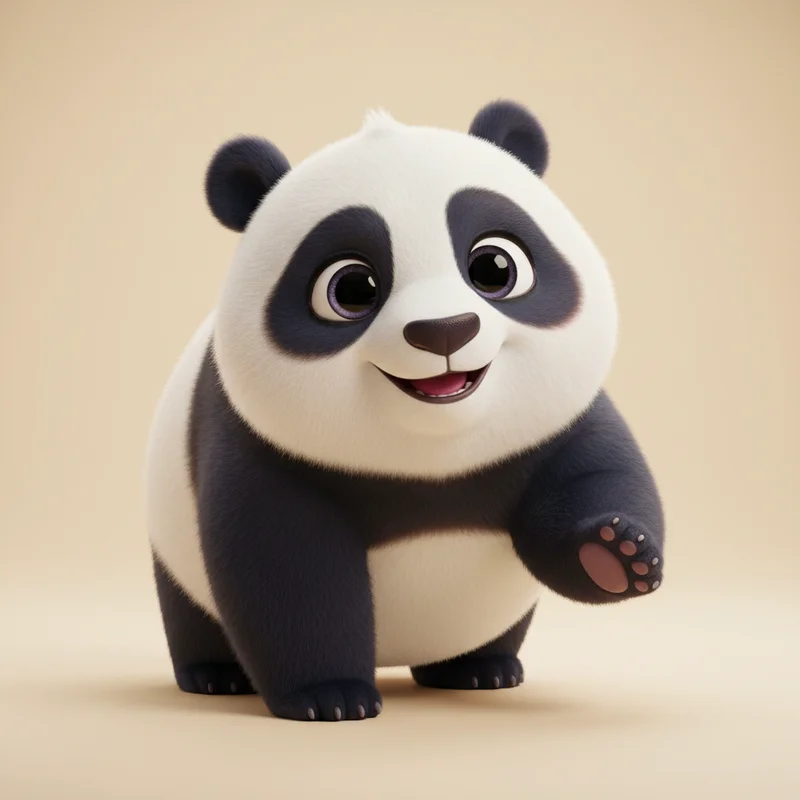
Panda

Panda

Beloved bamboo-eating bear from China, famous for black-and-white coloring and conservation symbolism.

VS
Time

Time

Dimension that refuses to slow down when needed.

Battle Analysis

Longevity Time Wins
30%
70%
Panda Time

Panda

The giant panda lineage extends approximately 8 million years into the evolutionary record, a respectable tenure by mammalian standards. Individual specimens achieve lifespans of 20-30 years in the wild, with captive pandas occasionally exceeding 35 years under optimal conditions.

However, this apparent durability masks a precarious reality. The species teetered on extinction's precipice throughout the 20th century, with populations dwindling to fewer than 1,000 individuals by 1980. Modern conservation efforts have elevated numbers to approximately 1,864 wild pandas, yet the species remains classified as vulnerable.

Time

Time's curriculum vitae regarding longevity is, quite literally, unimpeachable. Emerging simultaneously with the universe itself some 13.8 billion years ago, time has maintained uninterrupted service without pause, holiday, or maintenance window.

Unlike the panda, which required external intervention to prevent extinction, time has never required conservation efforts. It cannot be endangered, protected, or preserved in reserves. Time shall persist long after the last panda has shuffled off this mortal coil, continuing its relentless march until the heat death of the universe renders such measurements meaningless.

VERDICT

Eight million years of evolutionary history cannot compete with 13.8 billion years of continuous existence.
Adaptability Time Wins
30%
70%
Panda Time

Panda

The giant panda represents a cautionary tale in evolutionary specialisation. Despite possessing a carnivore's digestive system, the species has committed entirely to bamboo consumption, a plant providing so little nutrition that pandas must consume 12-38 kilograms daily merely to survive.

This dietary rigidity renders pandas extraordinarily vulnerable to habitat change. When bamboo forests die back, as they periodically do en masse, pandas cannot simply switch to alternative food sources. Their reproductive adaptability proves equally limited, with females fertile for merely 24-72 hours annually.

Time

Time demonstrates perfect adaptability by requiring no adaptation whatsoever. It functions identically in vacuum and atmosphere, at absolute zero and stellar core temperatures, in the presence of matter and in the emptiest voids between galaxy clusters.

Einstein's revelations regarding time dilation revealed that time itself adapts to velocity and gravitational conditions, stretching and compressing in response to physical circumstances. This relativistic flexibility ensures time remains functional under conditions that would instantaneously destroy any panda or indeed any physical entity.

VERDICT

Pandas adapted themselves into an evolutionary corner; time adapts to the fabric of spacetime itself.
Symbolic value Time Wins
30%
70%
Panda Time

Panda

The panda carries immense symbolic weight across multiple cultural registers. In Chinese tradition, it represents peace, harmony, and gentle strength. Internationally, it has become the preeminent symbol of wildlife conservation, its face synonymous with environmental stewardship.

The creature's black-and-white colouration has inspired philosophical interpretations linking it to yin-yang dualism. Its apparent contentment whilst consuming bamboo for 14 hours daily has rendered it a symbol of simple living and mindful existence in an increasingly frenetic world.

Time

Time's symbolic register encompasses mortality, progress, decay, hope, and despair simultaneously. It features prominently in every major religious and philosophical tradition, from the Buddhist concept of impermanence to the Christian notion of eternity, from the Greek distinction between chronos and kairos to the Hindu cycles of yugas.

Time symbolises both humanity's greatest fear (death) and its greatest aspiration (legacy). It appears in more literary works, artistic representations, and musical compositions than any animal, serving as perhaps the single most productive metaphorical vehicle in human cultural production.

VERDICT

The panda symbolises conservation; time symbolises the entire human condition and existential experience.
Global recognition Time Wins
30%
70%
Panda Time

Panda

The giant panda commands extraordinary global recognition, transcending linguistic and cultural barriers with remarkable efficacy. Its distinctive black-and-white visage serves as the emblem of the World Wide Fund for Nature, appearing on merchandise, signage, and literature distributed across 100 nations.

Panda diplomacy has functioned as a cornerstone of Chinese foreign policy since the Tang Dynasty, with modern loans generating substantial political and economic capital. The creature's image adorns currency, postage stamps, and Olympic mascots, achieving a level of brand recognition that most multinational corporations would envy.

Time

Time achieves universal recognition in the most literal sense conceivable. Every human civilisation has developed systems to measure, track, and negotiate with time. From Stonehenge to atomic clocks, from sundials to smartphone calendars, humanity's relationship with time has generated more infrastructure than any other abstract concept.

The word for time appears among the most frequently used nouns in virtually every documented language. Unlike the panda, which remains unknown to isolated communities, time's presence is acknowledged by every conscious being capable of memory and anticipation.

VERDICT

Panda recognition spans continents; time recognition spans every conscious entity across all of human history.
Entertainment value Panda Wins
70%
30%
Panda Time

Panda

The giant panda delivers superlative entertainment value with minimal apparent effort. Videos of pandas tumbling, sneezing, and generally failing at basic motor tasks have accumulated billions of views across digital platforms. The Edinburgh Zoo's panda cam attracted 2 million viewers within its first month of operation.

Pandas in captivity generate substantial revenue streams, with zoos paying the Chinese government up to $1 million annually for loan privileges. Their capacity to draw crowds, sell merchandise, and generate positive media coverage renders them among the most commercially valuable animals on Earth.

Time

Time's entertainment credentials prove more subtle but equally profound. It serves as the essential ingredient in narrative itself; without temporal progression, no story can be told. Time travel represents one of the most enduring entertainment premises, generating countless novels, films, and television series.

The entertainment industry is fundamentally a time industry, selling audiences curated temporal experiences. Yet time itself provides no direct amusement. One cannot watch time being adorable. It generates no viral content. Its entertainment value is infrastructural rather than intrinsic.

VERDICT

Pandas generate billions of views through inherent charm; time merely enables entertainment without providing any.
👑

The Winner Is

Time

38 - 62

This analysis yields a decisive verdict: Time prevails with a comprehensive margin of 62 to 38. The panda, for all its considerable charms and cultural significance, cannot overcome the fundamental asymmetry of competing against an abstract dimension of reality itself.

The panda's solitary victory in entertainment value represents a genuine achievement. Few entities in the natural world can claim to have brought such uncomplicated joy to billions of human observers. Yet even this triumph contains temporal irony: the videos that bring such pleasure can only exist and be experienced through time's passage.

Time's dominance across longevity, recognition, symbolism, and adaptability reflects not the panda's inadequacy but rather the impossibility of any finite entity competing with the infinite.

Panda
38%
Time
62%

Share this battle

More Comparisons