Where Everything Fights Everything

Panda vs Turtle

😜 Just for fun — a tongue-in-cheek, gloriously unscientific showdown.

Panda

Panda

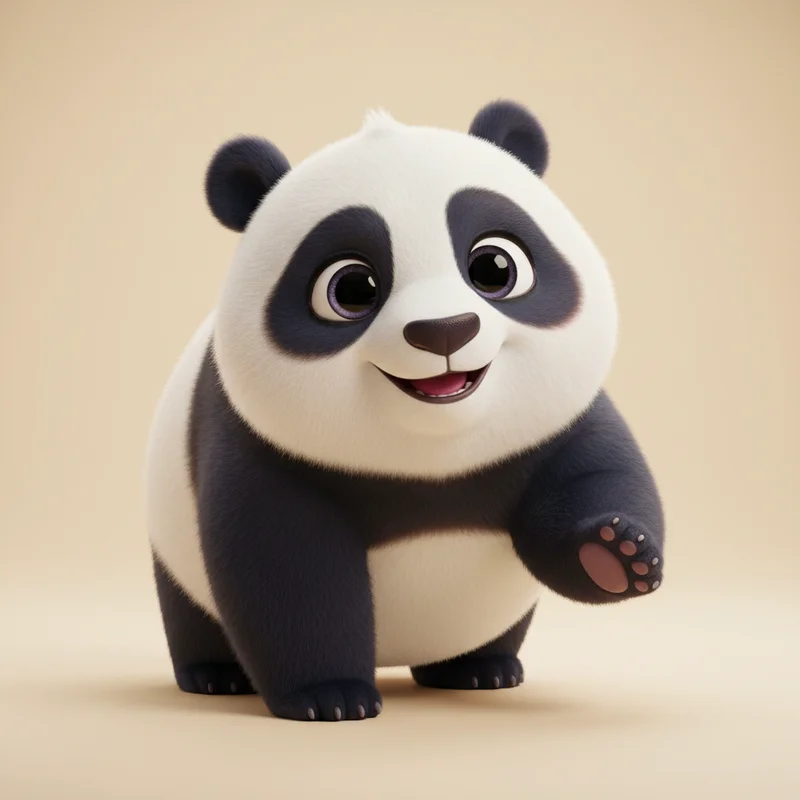
Beloved bamboo-eating bear from China, famous for black-and-white coloring and conservation symbolism.

VS
Turtle

Turtle

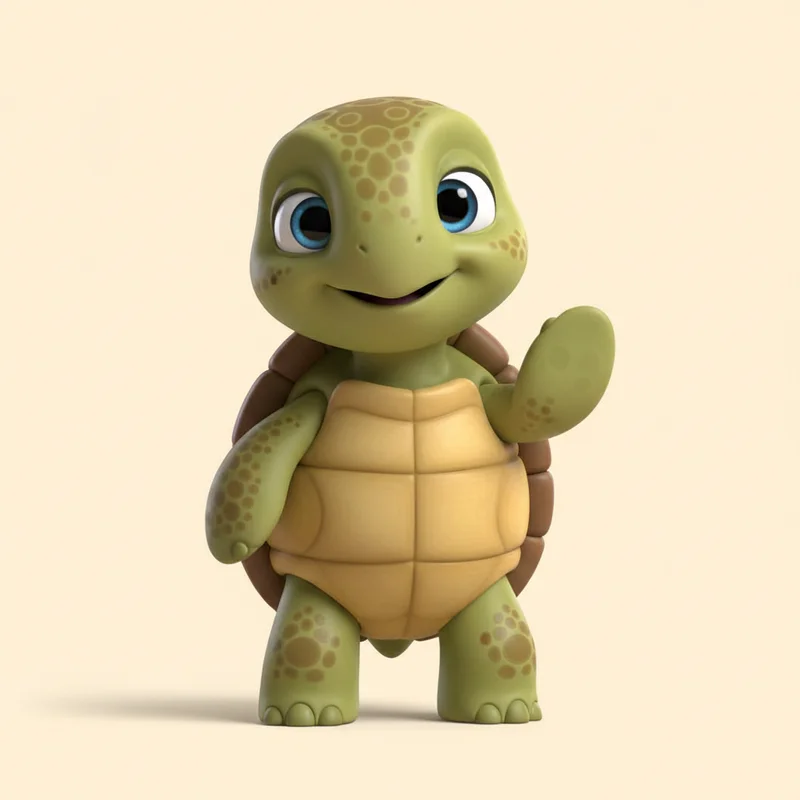
Shelled reptile living at deliberately slow pace, with some species surviving over 100 years.

Battle Analysis

Charisma and appeal Panda Wins
🏆 Panda takes this round

Panda

The giant panda represents charisma weaponised for survival. Those distinctive eye patches, likely evolved to appear larger and more intimidating, instead trigger overwhelming protective instincts in human observers. Their apparent clumsiness—tumbling from platforms, rolling down hills, failing spectacularly at basic coordination—generates viral content that translates directly into conservation funding. Baby pandas, born weighing merely 100 grams and resembling pink, hairless beans, develop into creatures that have been scientifically documented to reduce human stress hormones upon visual exposure. The panda has, through no intentional effort, become the most marketable animal on Earth—proof that evolution occasionally rewards looking adorable over being competent.

Turtle

Turtles offer a quieter, more contemplative appeal. Their measured movements, their ancient eyes, their suggestion of wisdom accumulated across millennia—these qualities attract those who value patience over performance. Baby sea turtles racing toward the ocean represent one of nature's most emotionally resonant spectacles, inspiring beach protection programmes worldwide. The desert tortoise, capable of outliving its human observers, invites philosophical reflection on time and persistence. Yet turtles lack the panda's viral marketability; they do not perform amusing falls or sneeze dramatically for camera phones. Their appeal is earned through patience rather than performance, which limits its commercial potential whilst arguably enhancing its authenticity.

VERDICT

Pandas generate millions in merchandise and donations through weaponised adorability; turtles inspire but do not monetise.
Evolutionary success Turtle Wins
🏆 Turtle takes this round

Panda

The giant panda's evolutionary journey reads less like a triumph and more like a cautionary tale of specialisation. Having diverged from other bears approximately 19 million years ago, the species inexplicably abandoned the carnivorous diet that made ursids successful predators. Instead, pandas developed an obsessive relationship with bamboo—a plant so nutritionally deficient that the animal must consume up to 38 kilograms daily simply to maintain basic metabolic function. Their pseudo-thumb, a modified wrist bone, represents an elegant adaptation that nonetheless serves only to grip the very food source that dooms them to perpetual eating. The species' reproductive inefficiency—females fertile for merely 24-48 hours annually—suggests evolution may have been preparing to write them off entirely before human intervention changed the equation.

Turtle

Turtles have witnessed the rise and fall of the dinosaurs, survived five mass extinction events, and barely bothered to modify their fundamental body plan since the Triassic period. The shell, that masterpiece of natural engineering comprising roughly 60 bones fused with the ribcage and spine, proved so effective that minimal improvement was necessary across geological epochs. Various species have colonised every conceivable aquatic and terrestrial habitat, from ocean depths to arid deserts. Sea turtles navigate thousands of miles using magnetoreception; tortoises have achieved lifespans exceeding 150 years. The order's persistence across 230 million years represents one of evolution's most emphatic endorsements of a single design philosophy: protection through patience.

VERDICT

Turtles survived five mass extinctions independently; pandas required human fundraising to avoid one.
Cultural significance Turtle Wins
🏆 Turtle takes this round

Panda

The giant panda has achieved cultural saturation unprecedented for a wild animal. Its likeness adorns the logo of the World Wildlife Fund, has served as Olympic mascot, and graces currency, stamps, and diplomatic agreements across the globe. Panda diplomacy, practised since the Tang Dynasty, now generates approximately one million dollars annually per breeding pair for the Chinese government. The species has become synonymous with conservation itself—the first animal many children learn to associate with environmental protection. This cultural weight, however, remains remarkably recent; the panda was virtually unknown outside China before the 20th century, its fame constructed deliberately through careful image management.

Turtle

Turtles occupy foundational positions in mythologies spanning every inhabited continent. In Hindu cosmology, the world rests upon a cosmic turtle; Chinese tradition associates the turtle with longevity and wisdom; Native American creation myths frequently feature turtles carrying the Earth on their backs. Aesop's tortoise taught Western civilisation that slow and steady wins the race over two millennia before corporate motivational posters appropriated the message. The turtle represents patience, protection, and persistence across virtually every human culture that has encountered them. Unlike the panda's manufactured celebrity, the turtle's cultural significance accumulated organically over thousands of years of human observation and admiration.

VERDICT

Turtles anchor creation myths across global cultures; pandas achieved fame through modern marketing.
Survival independence Turtle Wins
🏆 Turtle takes this round

Panda

The giant panda exists today through an unprecedented global support system. Without the 67 protected reserves spanning 1.4 million hectares, without the captive breeding programmes maintaining genetic diversity, without the annual conservation investment exceeding £50 million, the species would almost certainly drift toward extinction. Wild pandas can survive independently, technically, but their narrow dietary requirements and fragmented habitat make them perpetually vulnerable to bamboo flowering cycles that can devastate food supplies across entire regions. The species has essentially been adopted by humanity—a ward of the international conservation community requiring constant supervision and intervention.

Turtle

Sea turtles navigate 10,000-kilometre migrations without GPS, returning to natal beaches with astounding precision using only Earth's magnetic field and olfactory memory. Desert tortoises survive months without water by extracting moisture from cacti and storing reserves in their bladders. Snapping turtles thrive in polluted urban waterways that would poison more delicate organisms. Whilst human activity threatens numerous turtle species, the fundamental design requires no external support—merely the absence of human destruction. Remove humanity from the equation, and turtles would continue their unhurried existence precisely as they have since before the first mammals appeared. They do not require our assistance; they require only that we cease killing them.

VERDICT

Turtles survived 230 million years autonomously; pandas require constant international financial support.
Defensive capabilities Turtle Wins
🏆 Turtle takes this round

Panda

Despite their cuddly reputation, giant pandas retain the fundamental equipment of their bear lineage. Their bite force measures approximately 2,603 newtons, sufficient to crush the bamboo stalks that constitute their diet and certainly capable of inflicting serious injury upon misguided tourists seeking photographs. Adult males can weigh up to 160 kilograms of muscle that, whilst primarily employed for sedentary bamboo consumption, could theoretically be mobilised for combat. However, pandas display minimal territorial aggression and prefer retreat to confrontation. Their primary defensive strategy appears to be looking sufficiently endearing that predators feel guilty about attacking them—an approach with limited efficacy against leopards and golden jackals.

Turtle

The turtle's defensive strategy represents possibly the most elegant solution in natural history: become a mobile fortress. The carapace and plastron form a protective enclosure capable of withstanding predatory pressure that would doom less architecturally ambitious creatures. Box turtles achieve near-complete enclosure; snapping turtles combine armour with jaw strength exceeding 1,000 newtons, capable of severing human fingers. Sea turtles grow shells tough enough to frustrate shark attacks, whilst some tortoise shells can support weights exceeding 200 times the animal's body mass. When threatened, most turtles need only retract vulnerable appendages and wait—a strategy requiring neither courage nor energy expenditure.

VERDICT

The shell provides passive, permanent protection; pandas must rely on size and hope.
👑

The Winner Is

Turtle

Takes 4 of 5 rounds

This examination of two fundamentally different survival strategies reveals uncomfortable truths about evolutionary fitness in the Anthropocene. The giant panda has survived through appeal to human emotion—a strategy brilliantly effective in the current era but entirely dependent upon continued human interest and financial commitment. The turtle has survived through architectural excellence and patience—a strategy that proved effective for 230 million years before humans arrived to complicate matters. Whilst the panda commands greater cultural attention and conservation resources, the turtle represents a more robust evolutionary approach: one that does not require external validation or international funding agreements to persist. The turtle wins not because it is more beloved, but because its survival strategy is self-sustaining. The shell does not require renewal; the patience does not expire.

Share this battle

More Comparisons