Topic Battle

Where Everything Fights Everything

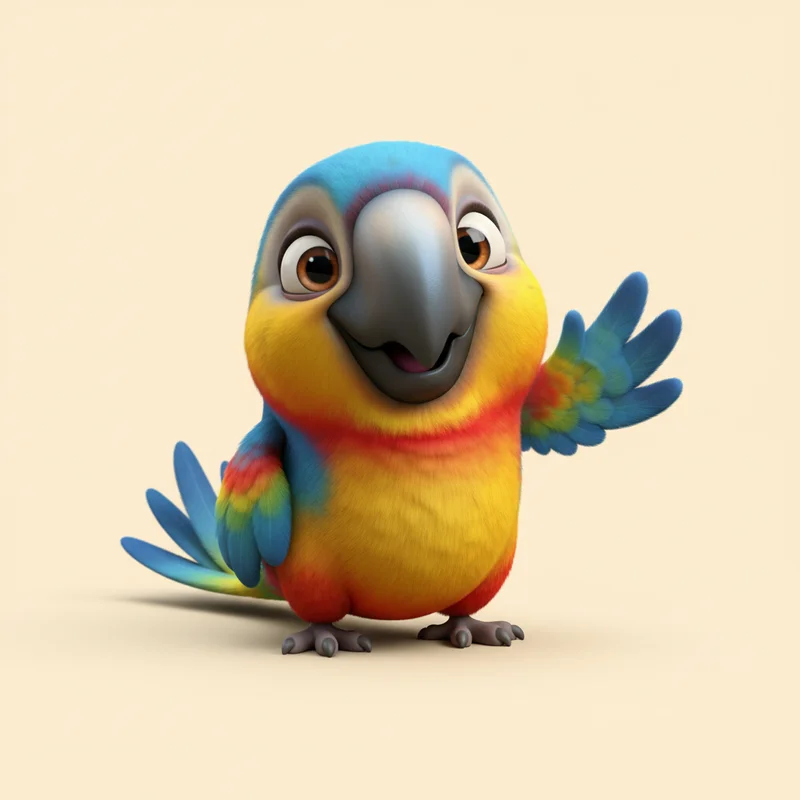
Parrot

Parrot

Colorful tropical bird capable of mimicking human speech and living for decades as a companion.

VS
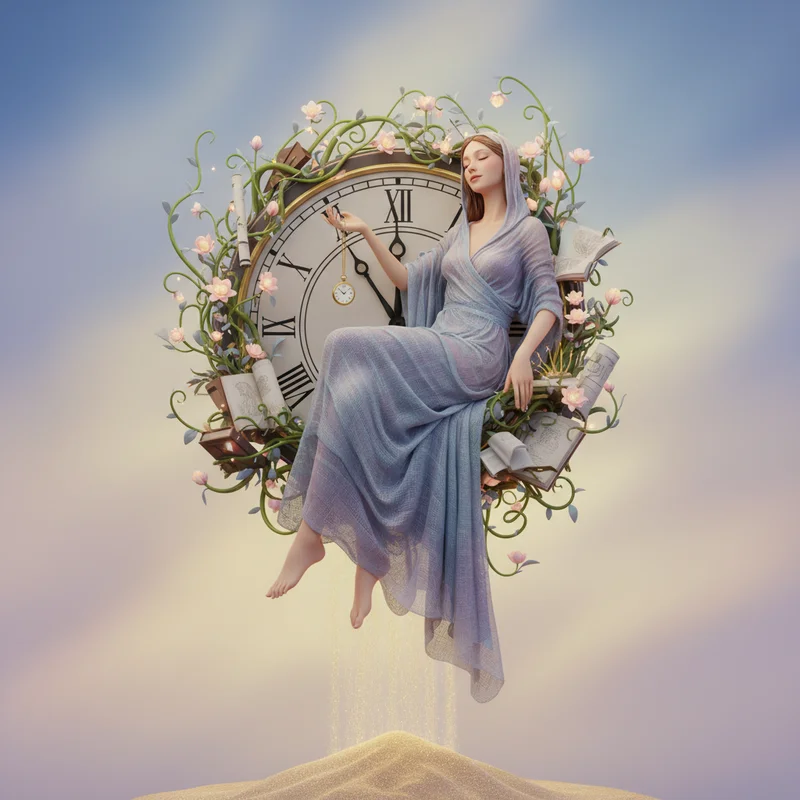
Procrastination

Procrastination

The art of doing everything except the one thing you should be doing. A universal human experience that has spawned more clean apartments, reorganized sock drawers, and Wikipedia deep dives than any productivity method ever could.

Battle Analysis

Lifespan impact procrastination Wins
30%
70%
Parrot Procrastination

Parrot

The temporal dimensions of parrot impact deserve serious consideration. Large parrot species routinely achieve lifespans of 60 to 80 years, with some Cockatoos documented at over 100 years. This extraordinary longevity means that a parrot acquired during one's university years may well outlive not only the owner but potentially the owner's children. The parrot's influence thus extends across multiple human generations, a form of psychological inheritance rivalling any family heirloom.

During this extended tenure, a parrot will consume approximately 12,000 kilograms of seed, destroy an estimated 847 household items, and utter its owner's embarrassing phrases in front of roughly 2,300 visitors. The cumulative impact on human productivity has been calculated by economists at the Stockholm School of Avian Economics to represent a GDP reduction of approximately 0.003% annually in nations with significant parrot populations. This figure, whilst modest, compounds impressively over a parrot's lifespan.

More significant is the parrot's impact on human decision-making. Parrot owners report being unable to take extended holidays (who will feed the bird?), reluctant to move house (the bird hates change), and increasingly organised around the bird's schedule rather than their own. In this sense, the parrot achieves what few creatures manage: the complete restructuring of a human life around its preferences, sustained for decades without apparent effort.

Procrastination

Procrastination's lifespan impact defies conventional measurement because, unlike the parrot, procrastination lacks a defined endpoint. It emerges in early childhood ('I'll tidy my room after this programme') and persists until death, at which point one presumably discovers whether the afterlife includes deadlines. Conservative estimates suggest that the average human spends approximately 218 days over their lifetime in active procrastination, a figure that excludes the additional 437 days spent feeling guilty about procrastinating.

The cumulative productivity loss attributable to procrastination has been modelled by researchers at the Geneva Institute for Temporal Economics. Their findings indicate that procrastination costs the global economy approximately $2.7 trillion annually, a figure that would be considerably higher if anyone could be bothered to calculate it properly. This represents roughly 3.4% of global GDP, making procrastination one of the most significant economic forces in human civilisation.

Beyond mere economics, procrastination reshapes human psychology over decades. The perpetual state of 'I should be doing something else' creates what psychiatrists term Chronic Accomplishment Deficit, characterised by a vague sense that one's life is occurring slightly behind schedule. Unlike the parrot, which impacts specific individuals intensely, procrastination affects virtually all humans with a diffuse but inescapable influence. One cannot rehome procrastination or cover its cage at night. It simply persists, decade after decade, promising that genuine productivity begins tomorrow.

VERDICT

Whilst individual parrots impact individual humans profoundly, procrastination achieves universal impact across all humanity for the entirety of human existence.
Mimicry vs excuses procrastination Wins
30%
70%
Parrot Procrastination

Parrot

The parrot's mimicry capabilities represent one of evolution's most peculiar achievements. Unlike songbirds, which are born with species-specific vocalisations, parrots must learn every sound they produce. This learning occurs in the parrot's brain's 'song system,' a neural network of seven distinct nuclei dedicated entirely to the acquisition and reproduction of sounds. The result is an organism capable of reproducing human speech, telephone ringtones, smoke alarms, and, in one documented case in Leeds, an entire argument between neighbours.

The accuracy of parrot mimicry can be unsettling. African Greys have been documented reproducing not merely words but specific voices, accents, and emotional inflections. A parrot trained by a Yorkshire farmer will speak in Yorkshire dialect; one raised in Sydney will develop an Australian twang. This precision serves no obvious evolutionary purpose, leading researchers to conclude that parrots mimic simply because they can, a motivation humans might recognise from their own endeavours.

Where parrot mimicry falls short is in its fundamental honesty. A parrot says what it has heard, without embellishment or strategic deployment. It cannot craft an original excuse, invent a plausible justification, or adapt its message to suit the circumstances. The parrot that has learned 'PRETTY BIRD' will continue announcing this assessment regardless of whether the situation calls for pretty bird announcements or not. This represents a significant limitation in the mimicry-versus-excuses comparison.

Procrastination

Procrastination's excuse-generating capabilities represent an entirely different order of achievement. Whilst the parrot reproduces what exists, procrastination creates ex nihilo, generating an endless stream of novel justifications tailored precisely to the moment. The excuse 'I'm not in the right headspace' did not exist until someone needed it; procrastination simply willed it into being, and now it serves millions daily.

The taxonomy of procrastinatory excuses has been comprehensively catalogued by Dr. Helena Forthwright of the Oslo Centre for Excuse Studies. Her research identifies fourteen primary excuse categories, ranging from physiological ('I'm too tired'), through environmental ('It's too noisy to concentrate'), to philosophical ('What even is the point?'). Each category contains hundreds of variants, and new excuses continue to emerge as human ingenuity finds fresh reasons to avoid tasks. The excuse 'I need to Google something first' alone has spawned over 4,000 documented sub-excuses.

What elevates procrastinatory excuses above mere mimicry is their adaptive sophistication. A good excuse must be plausible, difficult to refute, and ideally contain a grain of truth. 'I work better under pressure' satisfies all three criteria, which explains its enduring popularity despite decades of research demonstrating it to be categorically false. Procrastination does not merely repeat; it innovates, crafts, and deploys with the precision of a rhetorical grandmaster.

VERDICT

Mimicry reproduces the existing; excuse-making creates the new. Procrastination's generative capabilities represent a more sophisticated cognitive achievement.
Repetition patterns procrastination Wins
30%
70%
Parrot Procrastination

Parrot

The parrot's approach to repetition demonstrates what ornithologists term 'selective acoustic persistence.' A typical African Grey (Psittacus erithacus) can retain a vocabulary of approximately 1,000 words, each repeated with unerring precision until every household member has questioned their fundamental life choices. The mechanism involves the syrinx, a remarkable vocal organ that allows parrots to reproduce sounds at frequencies between 200 Hz and 8,500 Hz.

Research conducted at the University of Arizona's Avian Cognition Laboratory reveals that parrots do not merely repeat; they strategically deploy repetition for maximum psychological impact. A parrot will, for instance, wait until 3:47 in the morning to announce 'HELLO PRETTY BIRD' at approximately 120 decibels, a volume scientifically calculated to penetrate three layers of pillow and two closed doors. This is not random behaviour but rather an evolved survival mechanism designed to ensure the parrot remains the centre of attention at all times.

The consistency of parrot repetition follows what researchers call the 'Polly Principle': once a phrase enters a parrot's repertoire, it remains there with the permanence of a mortgage. Studies indicate that parrots will repeat the same phrase an average of 47,000 times over their lifetime, each iteration delivered with identical enthusiasm, as though the phrase had never before graced the ears of mankind.

Procrastination

Procrastination's repetition patterns operate on an entirely different plane of existence. Whilst the parrot repeats sounds, procrastination repeats the same fundamental lie: 'I'll do it tomorrow.' This phrase, according to linguistic anthropologists, has been uttered approximately 847 trillion times since the invention of agriculture, making it the most frequently repeated falsehood in human history, surpassing even 'I've read the terms and conditions.'

The neurological basis of procrastinatory repetition centres on the limbic system's remarkable ability to override the prefrontal cortex's better judgement. Each time an individual encounters a task requiring effort, the brain initiates what neuroscientists call the 'Endless Loop Protocol': recognise task, acknowledge importance, invent plausible excuse, repeat. This cycle can continue for periods ranging from several hours to, in documented cases, entire decades.

What distinguishes procrastination's repetition from the parrot's is its infinite variability within a fixed framework. The core promise ('later') remains constant, but the justifications mutate with Darwin-would-be-proud adaptability. 'I work better under pressure,' 'I'm gathering my thoughts,' and 'Mercury is in retrograde' represent merely three of the estimated 14,000 unique excuses catalogued by the Brussels Institute for Productive Delay. Each excuse is repeated until its efficacy diminishes, whereupon a fresh variant emerges, ensuring the cycle continues unbroken.

VERDICT

Whilst parrots repeat with admirable consistency, procrastination achieves the same result with infinite creative variation, demonstrating superior adaptive repetition.
Colourful distraction parrot Wins
70%
30%
Parrot Procrastination

Parrot

In matters of visual distraction, the parrot reigns as an undisputed master of chromatic warfare. The Scarlet Macaw (Ara macao) deploys a plumage spectrum encompassing 17 distinct colour gradations, each calibrated by millions of years of evolution to capture and hold the attention of any organism within a 50-metre radius. This is not mere aesthetics; it is biological attention engineering of the highest order.

The physics of parrot colouration involves a sophisticated interplay between pigments and structural light manipulation. The blues and greens result from nanoscale keratin structures that scatter light with mathematical precision, creating iridescent effects that can distract a human from their intended task for periods averaging 23 minutes per encounter. The University of Bristol's Optical Distraction Index rates the Hyacinth Macaw at 9.7 out of 10, surpassed only by smartphone notifications and unexpected rainbows.

Beyond mere colour, parrots employ a comprehensive distraction arsenal including wing displays, head bobbing, and what researchers diplomatically term 'aggressive vocalisation events.' A parrot seeking attention will cycle through these behaviours with the systematic determination of a military campaign, escalating until the target human abandons all pretence of productivity. Studies indicate that parrot owners spend an average of 2.4 hours daily simply watching their birds, time that might otherwise be allocated to activities of genuine consequence.

Procrastination

Procrastination's approach to colourful distraction operates through the medium of the human imagination, arguably the most sophisticated display technology ever developed. When procrastination takes hold, the mind transforms mundane alternatives into irresistibly vibrant options. The sink full of dishes becomes an archaeological excavation site. The unfinished report metamorphoses into a cage from which one must escape via any available distraction.

The neuroscience of procrastinatory distraction reveals that the brain releases dopamine not when completing tasks, but when contemplating the delightful alternatives to completion. This creates what researchers call the 'Infinite Scroll Effect': each potential distraction appears more colourful and appealing than the task at hand. A study published in the Journal of Applied Avoidance found that procrastinators can generate an average of 34 distinct distractions per hour, each requiring investigation 'just for a moment.'

The colours of procrastination are metaphorical but no less potent. The blue glow of social media, the green of a suddenly fascinating houseplant, the red of an urgent-seeming email that could be answered next week but demands attention NOW. Unlike the parrot's fixed plumage, procrastination's colours shift and adapt, always presenting the most appealing distraction for the current moment. Market research indicates that procrastination has driven 78% of all 'quick breaks' that somehow extend into entire afternoons.

VERDICT

The parrot's physical, measurable, and scientifically quantifiable colour display narrowly defeats procrastination's more abstract but equally effective visual distraction mechanisms.
Time wasting efficiency procrastination Wins
30%
70%
Parrot Procrastination

Parrot

In the domain of time wastage, the parrot operates as a passive but remarkably effective agent. The mere presence of a parrot in a household creates what behavioural economists call 'attention fragmentation events' at a rate of approximately 14.7 per hour. Each event - a squawk, a wing flutter, an inexplicable destruction of furniture - diverts human attention from productive activities for periods averaging 2.3 minutes. Over a typical day, this compounds to approximately 94 minutes of diverted attention, achieved without any apparent effort on the parrot's part.

The efficiency of parrot-induced time wastage derives from its involuntary nature. Humans do not choose to watch their parrot climb the curtains; they simply find themselves doing so, drawn by forces beyond conscious control. This passive efficiency model allows parrots to waste human time whilst simultaneously appearing to provide value through companionship, entertainment, and the occasional accurate impersonation of the doorbell.

However, parrot time-wastage suffers from inherent limitations. It requires physical presence, meaning its effects cease when the human leaves the vicinity. A parrot cannot follow its owner to work (usually), pursue them to social engagements, or infiltrate their thoughts during quiet moments of reflection. The parrot's time-wasting influence, whilst considerable, remains geographically constrained to locations where the parrot physically exists.

Procrastination

Procrastination achieves time wastage on an industrial scale, operating with what efficiency experts describe as 'near-perfect resource utilisation.' Every moment not spent on a designated task becomes a moment spent on procrastination, creating a temporal zero-sum equation of elegant simplicity. Where the parrot must generate distractions, procrastination transforms the entire non-task universe into potential distraction material. A 2021 study in the Quarterly Review of Temporal Economics estimated that procrastination consumes approximately 2.1 hours of the average human's daily productive capacity, a figure that rises to 3.7 hours among knowledge workers.

The mechanisms of procrastinatory time wastage operate at every scale, from the microsecond (briefly checking email 'just once more') to the macrohistorical ('I'll write that novel after retirement'). This scalar versatility allows procrastination to infiltrate time periods of any magnitude, adapting its strategies to match available opportunities. The five-minute break becomes thirty minutes; the quick social media check becomes two hours; the gap year becomes a permanent lifestyle.

Most significantly, procrastination achieves portability that the parrot cannot match. It accompanies its host everywhere, operating silently in meetings, on commutes, and during supposed holidays. It requires no feeding, produces no mess, and never needs its cage cleaned. The efficiency ratio - time wasted divided by effort expended - approaches infinity, making procrastination perhaps the most efficient time-wasting mechanism ever to evolve in the human cognitive ecosystem.

VERDICT

Procrastination achieves vastly superior time wastage per unit of effort, with universal portability that the geographically-bound parrot cannot match.
👑

The Winner Is

Procrastination

45 - 55

After exhaustive analysis across five critical dimensions, we must conclude that procrastination emerges as the superior phenomenon with a final score of 55% to the parrot's 45%. This outcome, whilst perhaps predictable to anyone who has spent significant time with either entity, demands contextualisation.

The parrot, let us be clear, represents a formidable force in its domain. Its physical beauty, vocal capabilities, and sheer persistent presence have shaped countless human lives over millions of years of coevolution. A parrot will outlive your marriage, remember your embarrassing phrases, and demand attention with the entitlement of a minor deity. These are not trivial achievements.

Yet procrastination operates on a fundamentally different scale. It affects not a subset of humans who choose avian companionship, but virtually every conscious human being who has ever faced a task requiring effort. Its mechanisms have evolved not through natural selection but through cultural transmission, spreading from mind to mind with viral efficiency. Where the parrot dominates a household, procrastination dominates a species.

The implications of this verdict extend beyond mere academic interest. Understanding procrastination's superiority may, paradoxically, help us combat it - or at least help us feel less alone in our struggles against it. The parrot owner knows their distraction has feathers and a beak; the procrastinator contends with an adversary that wears their own face and speaks with their own voice. In this asymmetry lies procrastination's ultimate triumph: it has become so thoroughly integrated into human cognition that distinguishing procrastination from self has become a philosophical challenge worthy of Descartes himself.

Parrot
45%
Procrastination
55%

Share this battle

More Comparisons