Topic Battle

Where Everything Fights Everything

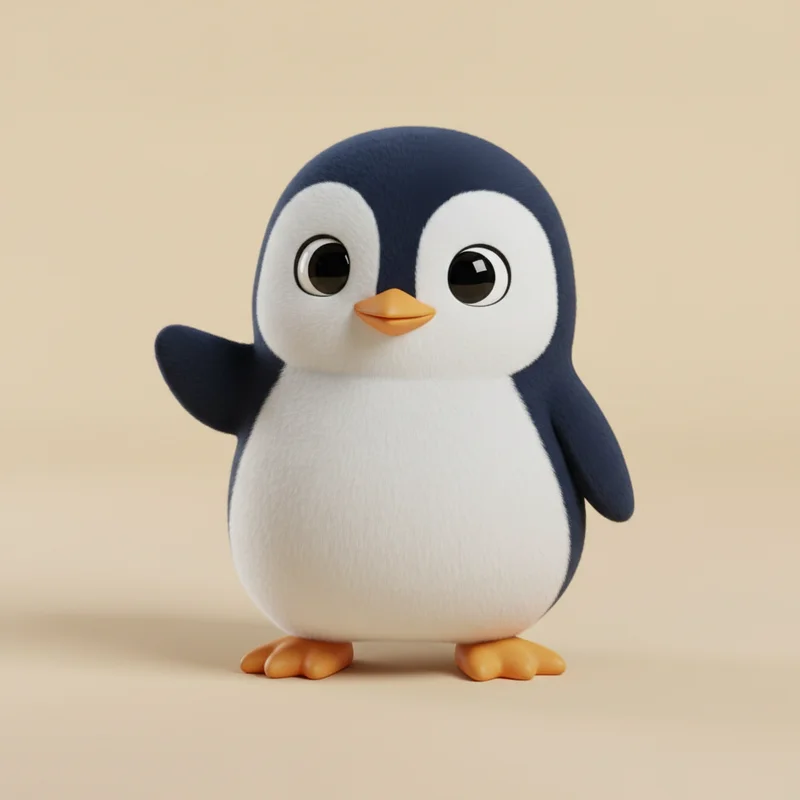
Penguin

Penguin

Flightless seabird thriving in Antarctic conditions, famous for adorable waddles and dedicated parenting.

VS
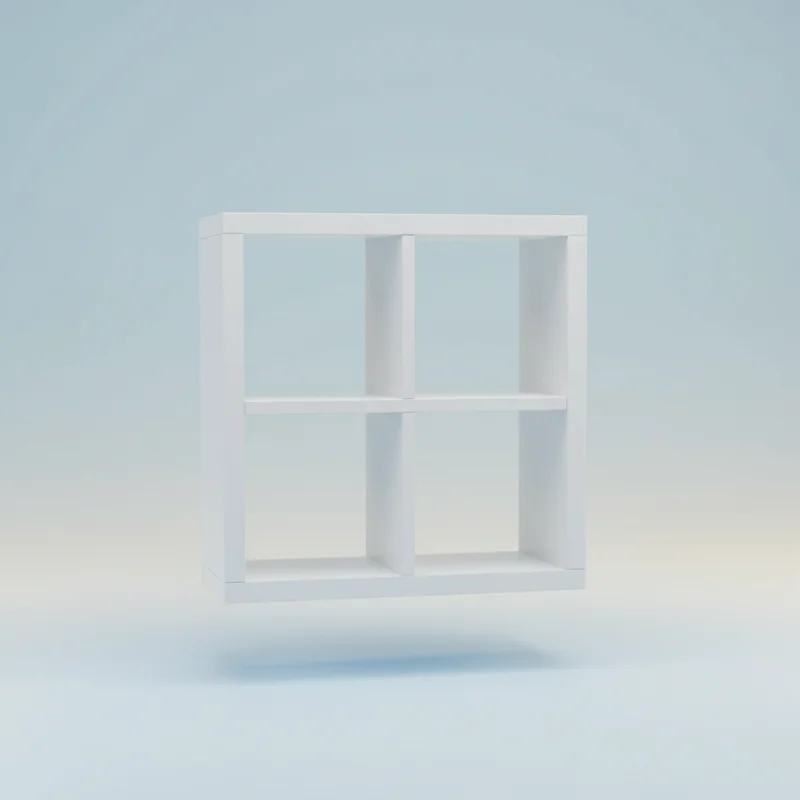
IKEA Furniture

IKEA Furniture

Swedish flat-pack relationship tests sold as affordable home goods. Comes with 47 pieces, one Allen key, and instructions that assume you have transcended the need for words. Marriages have ended over fewer screws.

Battle Analysis

Nordic connection IKEA Furniture Wins
30%
70%
Penguin IKEA Furniture

Penguin

The penguin's connection to cold northern regions presents an immediate geographical complication: no penguins exist in the Northern Hemisphere in the wild. They are exclusively creatures of the Southern Hemisphere, concentrated around Antarctica, the southern coasts of South America, Africa, and Australasia. This would appear to disqualify the penguin from Nordic consideration entirely, yet the matter requires deeper examination.

The penguin embodies what might be termed Nordic values in spirit rather than geography. The stoic endurance of Emperor penguins huddling through Antarctic winters mirrors the Scandinavian concept of 'sisu' - the Finnish term for extraordinary determination in the face of adversity. Temperatures of minus 60 degrees Celsius do not deter the penguin. Blizzards lasting weeks do not break its resolve. This is Nordic temperament expressed through Southern Hemisphere biology, a philosophical alignment that transcends mere latitude.

Furthermore, the penguin's design aesthetic aligns perfectly with Scandinavian principles. Clean lines, functional form, and a commitment to efficiency over ornamentation define both the penguin's streamlined body and the output of Nordic design movements. The penguin has never added unnecessary decoration to its appearance. It has never succumbed to the temptation of bright colours or elaborate plumage. It presents itself in dignified monochrome, a walking embodiment of minimalist philosophy that predates the Bauhaus movement by approximately 60 million years.

IKEA Furniture

IKEA's Nordic credentials are beyond dispute. Founded in Almhult, Sweden, in 1943 by Ingvar Kamprad, the company represents the most successful global export of Swedish design philosophy since dynamite, though with considerably fewer explosive consequences. The name itself is an acronym: Ingvar Kamprad, Elmtaryd (the farm where he grew up), and Agunnaryd (his hometown). This is Nordic heritage encoded into the very brand identity.

The design principles embedded in IKEA products reflect centuries of Scandinavian aesthetic evolution. Functionality dominates ornamentation. Clean lines triumph over decorative excess. Light colours create the illusion of space in small dwellings designed to weather long winters. Every BILLY bookshelf carries within it the accumulated design wisdom of a culture that has spent millennia making the most of limited daylight and limited square footage. This is furniture as cultural transmission, Swedish values compressed into flat-pack form.

The company maintains its Swedish identity with almost religious devotion. Store restaurants serve Swedish meatballs and lingonberry sauce. Product names follow a systematic Swedish naming convention: beds are named after Norwegian places, bookcases after occupations, outdoor furniture after Scandinavian islands. The KALLAX is not merely a storage unit; it is a daily reminder that somewhere in southern Sweden, someone decided that 'kallax' was the appropriate word for this particular configuration of particleboard. IKEA does not merely sell furniture; it sells Swedish-ness, one flat-pack at a time.

VERDICT

Authentic Swedish heritage and intentional Nordic design philosophy defeat geographical technicalities
Assembly methodology Penguin Wins
70%
30%
Penguin IKEA Furniture

Penguin

The assembly of a penguin requires no external intervention, no instruction manual, and certainly no desperate phone call to customer support at 11 PM on a Sunday evening. The process begins with egg incubation lasting between 32 and 68 days, depending on species, during which time the embryo constructs itself according to genetic specifications refined over millions of generations. Each component arrives precisely on schedule, pre-fitted, and fully compatible with adjacent systems.

The Emperor penguin's incubation process represents perhaps the most demanding assembly environment on Earth. Males balance eggs on their feet for 64 days in temperatures reaching minus 40 degrees Celsius, fuelled only by body fat reserves and an apparently inexhaustible commitment to parental responsibility. No assembly instructions are consulted during this period. No parts are discovered missing at step 47. No existential crisis occurs when dowel A refuses to align with slot B despite the diagram suggesting this should be straightforward.

Post-hatching development proceeds with similar efficiency. The chick emerges fully assembled, requiring only feeding, protection, and socialisation to achieve operational status. Motor skills develop through practice rather than through consultation of troubleshooting appendices. Waterproofing activates automatically when the appropriate developmental stage is reached. The entire assembly process, from fertilisation to independent adult, occurs without a single component requiring replacement due to manufacturing defect. Quality control in penguin production has achieved what no furniture manufacturer can claim: a near-zero return rate.

IKEA Furniture

IKEA furniture assembly has transcended mere construction to become a cultural phenomenon, a rite of passage, and according to certain divorce lawyers, a leading indicator of relationship instability. The process begins promisingly enough: a flat cardboard box arrives, suggesting organisation and forethought. Inside, however, chaos awaits in carefully labelled bags, each containing hardware for non-consecutive steps in a sequence designed by someone who clearly believes linear progression is a construct of limited minds.

The instruction manual deserves particular scrutiny. Wordless by design, it features illustrations of a simplified humanoid figure executing each step with an expression of serene competence that actual assemblers find increasingly offensive as hour two approaches. This figure, known informally as 'IKEA Man,' has never struggled with a cam lock. He has never discovered that panel C is actually panel D due to ambiguous wood grain orientation. He exists in a dimension where dowels slide smoothly into pre-drilled holes on the first attempt. He is not from this Earth.

Research conducted by the University of Stockholm in 2019 found that the average HEMNES chest of drawers requires 2.4 hours to assemble, though this figure excludes time spent locating misplaced Allen keys, debating whether the drawer fronts face the correct direction, and quietly reconsidering one's entire approach to home furnishing. The study also noted that blood pressure readings increased by an average of 14% during assembly, with peak elevation occurring at the point where partially assembled units must be flipped without assistance from a second person who has, conveniently, found urgent business elsewhere.

VERDICT

Autonomous biological assembly with zero-defect quality control defeats flat-pack psychological warfare
Monochrome aesthetic Penguin Wins
70%
30%
Penguin IKEA Furniture

Penguin

The penguin's black and white colouration represents one of evolution's most elegant solutions to multiple simultaneous design challenges. This is countershading refined to perfection: viewed from above, the dark dorsal surface blends with the ocean depths; viewed from below, the white ventral surface disappears against the bright surface waters. The penguin is simultaneously camouflaged from predators above and prey below, a masterclass in dual-purpose design that no furniture has yet replicated.

The aesthetic consistency across penguin species suggests that natural selection has converged on an optimal solution. From the diminutive Little Blue Penguin to the stately Emperor, the fundamental colour scheme remains constant. Seventeen species, one design principle. This is brand consistency that marketing departments dream of achieving: instant recognition across diverse forms, a visual identity so powerful that even children can identify a penguin from crude crayon representations. The penguin has achieved what logo designers charge thousands to approximate.

Beyond mere camouflage, the penguin's colouration creates undeniable visual appeal. The formal appearance has inspired comparisons to tuxedo-wearing gentlemen, lending the penguin an air of dignified sophistication that few animals achieve. A waddle that might appear undignified in a brown bird becomes endearing in formal dress. The penguin has understood, 60 million years before human fashion, that nothing projects elegance quite like simple black and white. Evolution, it seems, discovered minimalist chic long before Coco Chanel.

IKEA Furniture

IKEA's relationship with the monochrome palette is more complicated than the penguin's straightforward commitment. While the brand certainly offers white and black furniture options, it also offers birch, oak effect, dark brown, high-gloss turquoise, and a shade of green that catalogues describe as 'inspirational' but critics describe as 'unfortunate.' This represents a departure from pure monochrome philosophy, a concession to consumer demand that the penguin would never make.

The BILLY bookshelf, perhaps IKEA's most iconic product, is most commonly purchased in white. Over 110 million BILLY units have been sold since 1979, and the white variant dominates sales figures. This suggests that consumers, when given freedom, gravitate toward monochrome simplicity - a vindication of penguin design philosophy through market behaviour. The people have spoken, and they have said: white furniture, please, in flat-pack form, with small wooden dowels that will roll under the sofa at the worst possible moment.

Yet IKEA's brand colours introduce chromatic complexity. Blue and yellow dominate corporate identity, derived from the Swedish flag and applied to everything from building exteriors to shopping bags to the peculiar sensation of emerging, blinking, into a car park after four hours in a furniture maze. These colours are not monochrome. They are, in fact, almost aggressively polychrome, a visual assault of national pride that the penguin's understated palette cannot match for sheer attention-grabbing impact. Whether this represents improvement or deviation from aesthetic principles remains a matter for individual judgment.

VERDICT

Sixty million years of consistent black-and-white commitment defeats chromatic catalogue compromise
Navigation capabilities Penguin Wins
70%
30%
Penguin IKEA Furniture

Penguin

The penguin's navigational abilities have challenged scientific understanding for decades. Emperor penguins travel up to 120 kilometres from their breeding colonies to reach open water for feeding, then return unerringly across featureless ice sheets to their precise starting location. They accomplish this without visible landmarks, without GPS technology, and without the mounting frustration that characterises human attempts to navigate IKEA store layouts.

Research suggests penguins employ multiple navigational systems simultaneously. Magnetic field detection, solar positioning, and possibly olfactory cues combine to create an internal positioning system of remarkable accuracy. Penguins released 100 kilometres from their colony return directly, without the exploratory searching that would indicate trial-and-error navigation. They know where they are going. They know how to get there. They do not require overhead signage indicating that bedroom furniture is located on level two, past the marketplace, beyond the point of psychological return.

This navigational precision serves critical survival functions. Breeding adults must locate their specific mate and chick among thousands of visually identical individuals across ice shelves that shift and reform between visits. They achieve this through acoustic recognition combined with spatial memory, navigating both physical and social landscapes with expertise that human mapping applications cannot replicate. The penguin is its own navigation system, powered by fish and refined by evolution.

IKEA Furniture

IKEA furniture does not navigate independently - a limitation that might appear to disqualify it from this criterion entirely. However, the furniture's role in the larger navigational ecosystem of the IKEA store warrants examination. IKEA furniture exists as both the destination and the obstacle in one of retail's most psychologically sophisticated wayfinding systems.

The IKEA store layout represents deliberate navigational complexity. The one-way path winding through showroom displays, across marketplace sections, through the self-service warehouse, ensures maximum exposure to merchandise while minimising the possibility of efficient targeted shopping. The average IKEA visit covers 1.5 kilometres, though this figure increases significantly when accounting for backtracking caused by forgotten items, second thoughts about the HEMNES versus MALM decision, and the disorienting realisation that the exit appeared to be there but is apparently now somewhere else.

The furniture itself contributes to this navigational challenge. Display rooms blur the boundary between aspiration and reality, creating domestic vignettes so complete that visitors occasionally forget they are in a retail environment rather than someone's unusually well-organised living room. The EKTORP sofa does not navigate, but it does serve as a waypoint in the customer journey, a temporary resting place where decisions can be reconsidered and meatball consumption planned. Navigation in IKEA is not by the furniture but rather around, through, and occasionally into the furniture, in a relationship best described as adversarial collaboration.

VERDICT

Autonomous 120-kilometre precision navigation defeats stationary showroom obstacle status
Cold weather performance Penguin Wins
70%
30%
Penguin IKEA Furniture

Penguin

The penguin's cold weather capabilities represent one of the most remarkable thermal engineering achievements in the biological kingdom. Emperor penguins routinely survive ambient temperatures of minus 40 degrees Celsius combined with wind speeds exceeding 140 kilometres per hour - conditions that would render most organisms, and certainly all furniture, non-functional within minutes. This is not mere tolerance; this is mastery of hostile environments.

The adaptations enabling this performance merit detailed examination. Penguin feathers number approximately 100 per square centimetre, creating a dense insulating layer that traps air while remaining waterproof. Beneath the skin, a thick layer of blubber provides both insulation and energy reserves. Blood flow to extremities is regulated through counter-current heat exchange systems, ensuring that arterial blood warms returning venous blood, minimising heat loss while maintaining tissue viability. This is thermal engineering that human technology struggles to replicate.

The behavioural adaptations prove equally impressive. Emperor penguins form huddles containing up to 5,000 individuals, with birds continuously rotating from the windward edge to the protected centre. This collective thermoregulation reduces individual heat loss by up to 50%, representing a form of thermal cooperation that no furniture can achieve. The penguin has solved cold weather challenges through a combination of physiological excellence and social innovation, emerging not merely functional but flourishing in conditions that would destroy less sophisticated organisms.

IKEA Furniture

IKEA furniture's relationship with cold weather is considerably more complicated, beginning with the fundamental problem that particleboard and extreme cold are not natural allies. The composite materials forming the foundation of most IKEA products respond to temperature fluctuations in ways that engineers describe as 'predictable' and consumers describe as 'why has my wardrobe door stopped closing properly.'

At temperatures below minus 10 degrees Celsius, certain adhesives used in furniture construction begin to lose flexibility. Metal hardware contracts at different rates than wooden components, potentially loosening cam locks and creating gaps where tight fits previously existed. The MALM dresser was not designed for Antarctic deployment. It was designed for heated Swedish apartments where thermostats maintain civilised temperatures and the primary environmental threat is humidity from drying laundry rather than penguin-adjacent wind chill.

However, IKEA furniture excels at creating insulation against cold - from the inside. A well-positioned KALLAX unit filled with books provides genuine thermal mass, moderating temperature fluctuations in poorly heated spaces. The BILLY bookshelf, when fully stocked, creates a buffer zone against external walls. This is passive thermal performance rather than active cold resistance, but it represents a legitimate contribution to cold weather survival, albeit one that requires the furniture to remain indoors and the outdoors to remain distinctly elsewhere.

VERDICT

Surviving minus 40 degrees Celsius with 140 km/h winds defeats particleboard thermal limitations
👑

The Winner Is

Penguin

52 - 48

After rigorous examination across five critical dimensions, the penguin emerges as the victor in this comparison of Nordic-adjacent excellence. The Antarctic bird claims decisive victories in assembly methodology, monochrome aesthetics, cold weather performance, and navigation capabilities, yielding only the Nordic connection criterion to IKEA's authentic Swedish heritage. This represents a comprehensive performance that even the most devoted flat-pack enthusiast must acknowledge.

The penguin's superiority reflects fundamentally different timescales of optimisation. Evolution has had approximately 60 million years to refine the penguin design, testing each iteration against the unforgiving criterion of survival in Earth's harshest conditions. IKEA has had approximately 80 years to refine its furniture designs, testing each iteration against the somewhat more forgiving criterion of consumer purchasing decisions and return rate statistics. When nature has sufficient development time, even the most ingenious Swedish engineering struggles to compete.

Yet this verdict obscures important nuances. The penguin, for all its excellence, cannot furnish a living room. It cannot store books. It cannot provide affordable seating solutions for student accommodation. IKEA furniture serves a billion homes worldwide; the global penguin population would fit comfortably in a medium-sized stadium. The penguin wins on individual metrics, but IKEA wins on accessibility and democratic design. Both represent remarkable achievements in their respective domains - one biological, one industrial - and both continue to inspire through their commitment to functional elegance, monochrome aesthetics, and the quiet dignity of efficiency over ornamentation.

Penguin
52%
IKEA Furniture
48%

Share this battle

More Comparisons