
Where Everything Fights Everything

Penguin vs Spider-Man

😜 Just for fun — a tongue-in-cheek, gloriously unscientific showdown.

Penguin

Penguin

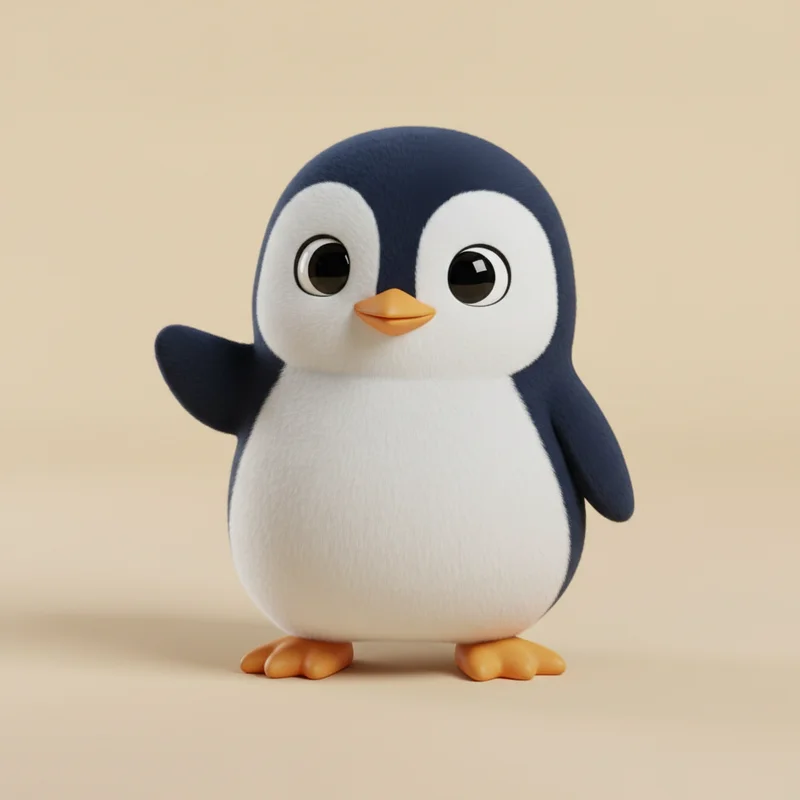
Flightless seabird thriving in Antarctic conditions, famous for adorable waddles and dedicated parenting.

VS
Spider-Man

Spider-Man

Web-slinging hero with great responsibility.

Battle Analysis

Adaptability Penguin Wins · 53%
53%
47%
Penguin Spider-Man

Penguin

The penguin's adaptations read like a catalogue of evolutionary genius. Counter-current heat exchange systems in their flippers prevent thermal loss. Dense, waterproof plumage creates an impenetrable barrier against sub-zero temperatures. Their haemoglobin functions efficiently at oxygen levels that would render most vertebrates unconscious. Over sixty-five million years, these birds have perfected the art of thriving where survival itself seems improbable. They hunt in darkness beneath Antarctic ice, navigate by magnetic fields, and regulate their metabolism with precision that shames human engineering.

Spider-Man

Spider-Man's adaptability operates through different mechanisms entirely—a radioactive bite granting abilities that adjust instinctively to circumstance. The spider-sense provides anticipatory awareness of threats, whilst wall-crawling permits navigation of surfaces regardless of orientation. Web-slinging technology, whether organic or mechanical depending on narrative iteration, offers solutions to problems ranging from transportation to restraint. His adaptability extends beyond the physical into the psychological; Peter Parker maintains dual existence across economic hardship, personal tragedy, and existential threat.

VERDICT

Sixty-five million years of evolutionary refinement narrowly exceeds radioactive improvisation.
Symbolic value Spider-Man Wins · 53%
47%
53%
Penguin Spider-Man

Penguin

The penguin symbolises resilience, dedication, and the triumph of cooperation over adversity. Their huddling behaviour during Antarctic winters demonstrates collective survival strategies that human societies might envy. In corporate contexts, they represent adaptability and non-conformity. Their inability to fly, rather than constituting failure, illustrates the power of specialisation. They embody the principle that excellence requires choosing one's domain and mastering it completely rather than pursuing mediocre versatility.

Spider-Man

Spider-Man carries symbolic weight that has shaped generational understanding of heroism. The principle that 'with great power comes great responsibility' has entered common parlance, influencing ethical discourse beyond entertainment contexts. Peter Parker's struggles with ordinary life alongside extraordinary abilities represent the tension between duty and desire familiar to all humans. He symbolises the democratisation of heroism—the notion that anyone, regardless of background, might rise to meet circumstance.

VERDICT

Ethical principles woven into popular consciousness through accessible narrative achieve broader symbolic reach.
Global recognition Spider-Man Wins · 59%
41%
59%
Penguin Spider-Man

Penguin

Penguins enjoy substantial global recognition, appearing in documentary films, children's literature, and as mascots for various commercial enterprises. The emperor penguin's parenting rituals, immortalised in cinema, have moved audiences to tears across continents. Linux users encounter penguin imagery daily. Antarctic tourism revolves significantly around penguin observation. Yet their recognition, whilst broad, lacks the penetrative depth achieved by deliberate media saturation. They remain creatures of nature rather than narrative.

Spider-Man

Spider-Man represents one of the most recognised fictional entities in human history. Since 1962, the character has appeared in countless comic iterations, multiple film franchises grossing billions, animated series, video games, and merchandise permeating every conceivable market. The image of the web-slinger transcends linguistic and cultural barriers. Children in Tokyo, Mumbai, and Sao Paulo recognise the red and blue costume instantly. This saturation represents a triumph of modern mythology over ancient naturalism.

VERDICT

Deliberate mythmaking through sixty years of media saturation achieves unparalleled cultural penetration.
Entertainment value Spider-Man Wins · 59%
41%
59%
Penguin Spider-Man

Penguin

Penguin observation offers genuine entertainment, as evidenced by the success of nature documentaries and zoo attendance figures. Their waddling locomotion, seemingly formal attire, and occasionally dramatic interpersonal conflicts provide reliable amusement. However, this entertainment operates within constrained parameters—penguins offer variations on established themes rather than narrative progression. One cannot, strictly speaking, await a penguin sequel with the anticipation granted to serialised fiction.

Spider-Man

Spider-Man represents entertainment as industrial science—a character engineered for maximum engagement across every conceivable medium. Film appearances gross billions; video games achieve critical acclaim; comic runs span decades of continuous publication. The character's youth and wit provide accessibility that graver superheroes lack. His rogues' gallery offers sufficient variety to sustain indefinite narrative extension. Entertainment value, measured by audience hours consumed, places Spider-Man among humanity's most successful diversions.

VERDICT

Engineered narrative entertainment across multimedia platforms surpasses observational amusement.
Environmental impact Penguin Wins · 60%
60%
40%
Penguin Spider-Man

Penguin

Penguins occupy a crucial position within marine ecosystems, serving as both predator and prey in Antarctic food webs. Their guano enriches nutrient-poor environments, supporting terrestrial ecosystems where little else survives. As indicator species, their population dynamics reveal the health of oceanic systems. Their existence requires no resource extraction, generates no pollution, and contributes actively to ecological cycles. They represent sustainable existence perfected through deep time.

Spider-Man

Spider-Man's environmental impact exists primarily in the realm of the hypothetical and commercial. His fictional activities presumably reduce crime-related environmental damage in Manhattan. However, the real-world production of Spider-Man media involves substantial carbon expenditure—film sets, merchandise manufacturing, global distribution networks. The character's environmental footprint, measured through the lens of industrial output required to sustain his cultural presence, proves considerably larger than his fictional heroism might suggest.

VERDICT

Genuine ecological contribution outweighs the carbon footprint of fictional heroism's industrial apparatus.
👑

The Winner Is

Spider-Man

Takes 3 of 5 rounds

This examination reveals two distinct paths to excellence. The penguin achieves genuine mastery through evolutionary patience—each generation slightly more refined than the last, until flightless birds command ice sheets that would destroy their critics. Spider-Man achieves mastery through narrative construction—a character so carefully calibrated to human psychology that his fictional status becomes irrelevant to his impact. By narrow margin, Spider-Man prevails, not because fictional constructs exceed biological achievement, but because his influence upon human consciousness proves more readily measurable. The penguin requires no validation from comparison; it exists in perfection regardless of observation. Spider-Man exists only through observation—and has made himself impossible to ignore.

Share this battle

More Comparisons