
Topic Battle

Where Everything Fights Everything

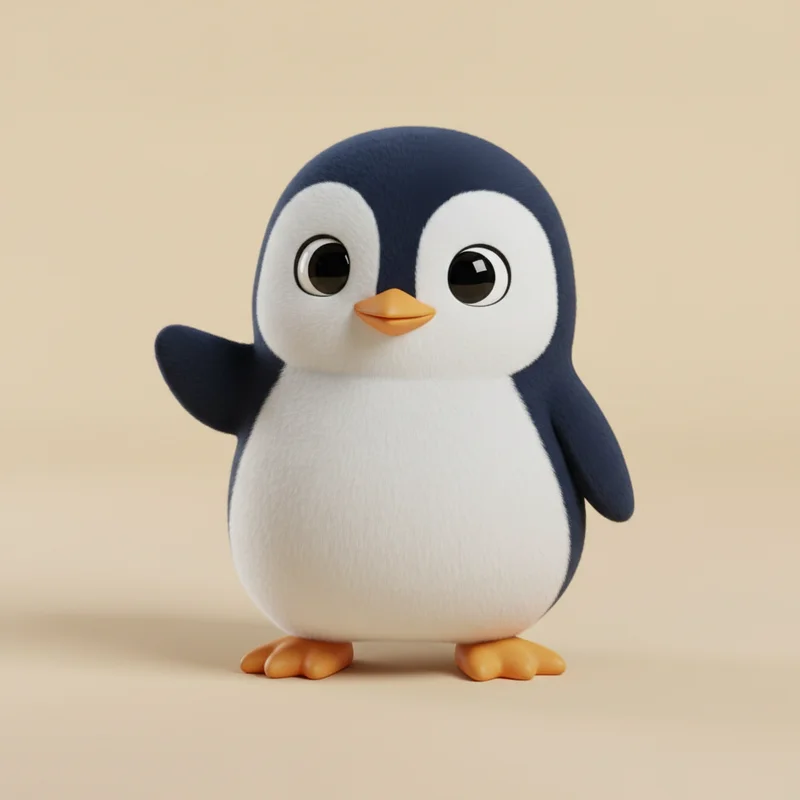
Penguin

Penguin

Flightless seabird thriving in Antarctic conditions, famous for adorable waddles and dedicated parenting.

VS
Wolverine

Wolverine

Clawed mutant with regeneration and anger issues.

Battle Analysis

Durability Wolverine Wins
30%
70%
Penguin Wolverine

Penguin

The emperor penguin endures temperatures plummeting to minus sixty degrees Celsius whilst standing motionless for months during the Antarctic winter. Their specialised feathers, numbering approximately one hundred per square centimetre, create an insulation system so effective that snow falling upon a huddling colony fails to melt. They survive four months of complete darkness, hurricane-force winds exceeding two hundred kilometres per hour, and the absence of food whilst incubating eggs upon their feet. This is durability measured not in combat prowess but in the capacity to simply persist when every physical force conspires toward extinction.

Wolverine

The wolverine possesses a physiology seemingly designed for indestructibility. Its loose, remarkably tough hide allows it to twist within its own skin to counterattack when seized by predators. Documented accounts describe wolverines surviving wolf pack attacks, driving grizzly bears from kills, and traversing mountain ranges in single nights across terrain that would exhaust larger predators. Their dense fur resists frost formation even in the coldest conditions, and their metabolism permits them to consume frozen carrion that would prove indigestible to other carnivores. They have been known to kill prey ten times their body weight.

VERDICT

Combines environmental resilience with active combat durability that permits confrontation with far larger adversaries
Adaptability Wolverine Wins
30%
70%
Penguin Wolverine

Penguin

Penguins have achieved mastery of a single environment through profound specialisation. Their wings have evolved into flippers capable of propelling them through water at speeds approaching thirty-six kilometres per hour. Yet this aquatic excellence comes at the cost of terrestrial capability. They cannot fly, they waddle inefficiently on land, and their survival depends entirely upon access to Antarctic and sub-Antarctic ecosystems. When removed from their narrow environmental band, they perish rapidly. This represents specialisation elevated to such heights that flexibility has been entirely sacrificed.

Wolverine

The wolverine occupies an ecological niche that spans boreal forests, alpine tundra, and Arctic regions across multiple continents. It functions as both predator and scavenger, capable of hunting live prey or subsisting entirely on carrion during lean periods. Wolverines have been documented killing reindeer, stealing kills from wolves, caching food beneath snow for months, and travelling over fifty kilometres in single journeys across mountain passes. Their dietary flexibility, combined with their capacity to thrive from Siberia to Alaska to Scandinavia, demonstrates remarkable environmental adaptability.

VERDICT

Thrives across multiple continents and biomes whilst the penguin remains bound to Antarctic and sub-Antarctic regions
Global recognition Penguin Wins
70%
30%
Penguin Wolverine

Penguin

The penguin has achieved an extraordinary position in human consciousness, transcending its geographical isolation to become one of the most recognisable creatures on Earth. Documentary films have brought millions to tears watching their Antarctic struggles. They serve as mascots for operating systems, chocolate biscuits, and publishing houses. Children's literature overflows with penguin protagonists. Their distinctive tuxedo colouration and upright stance create immediate identification even among those who have never encountered one. The penguin has conquered the human imagination despite being physically accessible to almost no one.

Wolverine

The wolverine suffers from a curious recognition deficit wherein millions believe they know the creature but actually envision a fictional mutant superhero bearing its name. The actual animal remains mysterious to most, glimpsed rarely even by those who spend careers studying it. Its secretive nature and remote habitat have kept it largely absent from popular consciousness. Those who do recognise the wolverine often confuse it with badgers or small bears. Scientific study of wolverines in the wild remains fragmentary due to their elusiveness and vast territorial ranges.

VERDICT

Achieved global icon status despite Antarctic isolation while the actual wolverine remains largely unknown to the public
Intimidation factor Wolverine Wins
30%
70%
Penguin Wolverine

Penguin

The penguin presents perhaps the least intimidating silhouette in the animal kingdom. Its waddling gait, compact stature, and apparent formal attire suggest a waiter rather than a warrior. Even the largest emperor penguin, standing just over one metre tall, inspires affection rather than alarm. Their primary defensive strategy involves huddling together for warmth rather than confrontation. When threatened by predatory seabirds, they flee rather than fight. The penguin's evolutionary strategy has never required intimidation; survival depends upon endurance and community rather than projecting menace.

Wolverine

The wolverine has earned the scientific name Gulo gulo, derived from the Latin for 'glutton', though indigenous names more accurately capture its essence as a creature of almost supernatural ferocity. Documented accounts describe individual wolverines driving grizzly bears from kills, fighting off wolf packs, and pursuing prey with relentless determination across vast distances. Their massive paws, powerful jaws capable of crushing frozen bone, and fearless aggression have inspired terror legends across circumpolar cultures. Even predators many times their size give wolverines considerable respect.

VERDICT

Commands fear from animals ten times its size while penguins are universally regarded as adorable and harmless
Evolutionary success Penguin Wins
70%
30%
Penguin Wolverine

Penguin

The penguin lineage extends back approximately sixty million years, with ancestral forms emerging shortly after the extinction event that eliminated the dinosaurs. They have diversified into eighteen distinct species occupying niches from the Galapagos Islands to the Antarctic ice shelves. Their populations, whilst threatened by climate change, number in the hundreds of millions. They have conquered an ecological niche so successfully that no other warm-blooded diving bird has managed to compete with them in their range. Their evolutionary trajectory represents sustained success over geological timescales.

Wolverine

The wolverine represents the largest terrestrial member of the mustelid family, a lineage that includes weasels, otters, and badgers. Their evolutionary history, whilst successful, has produced only a single species with a relatively restricted population estimated at fewer than thirty thousand individuals globally. They occupy a precarious position as apex scavengers in ecosystems vulnerable to climate change and habitat fragmentation. Their reproductive rate remains low, with females producing only two or three kits per litter. Evolutionary success measured in population stability and numbers favours their competitors.

VERDICT

Sixty million years of continuous lineage and hundreds of millions of individuals versus a single vulnerable species
👑

The Winner Is

Wolverine

42 - 58
The contest between penguin and wolverine reveals two radically different approaches to survival, each magnificent in its own right. The penguin has achieved something remarkable: transforming the most hostile environment on Earth into a nursery, conquering human hearts across the globe, and maintaining evolutionary success for sixty million years. Yet when measuring the complete organism, the wolverine emerges as the more formidable creature. Its combination of ferocity, adaptability, and durability concentrated into a frame weighing no more than twenty-five kilograms represents natural engineering of the highest order. The wolverine thrives through individual capability whilst the penguin survives through collective endurance. Both strategies succeed, but the wolverine's versatility ultimately proves more compelling.
Penguin
42%
Wolverine
58%

Share this battle

More Comparisons