Topic Battle

Where Everything Fights Everything

Pigeon

Pigeon

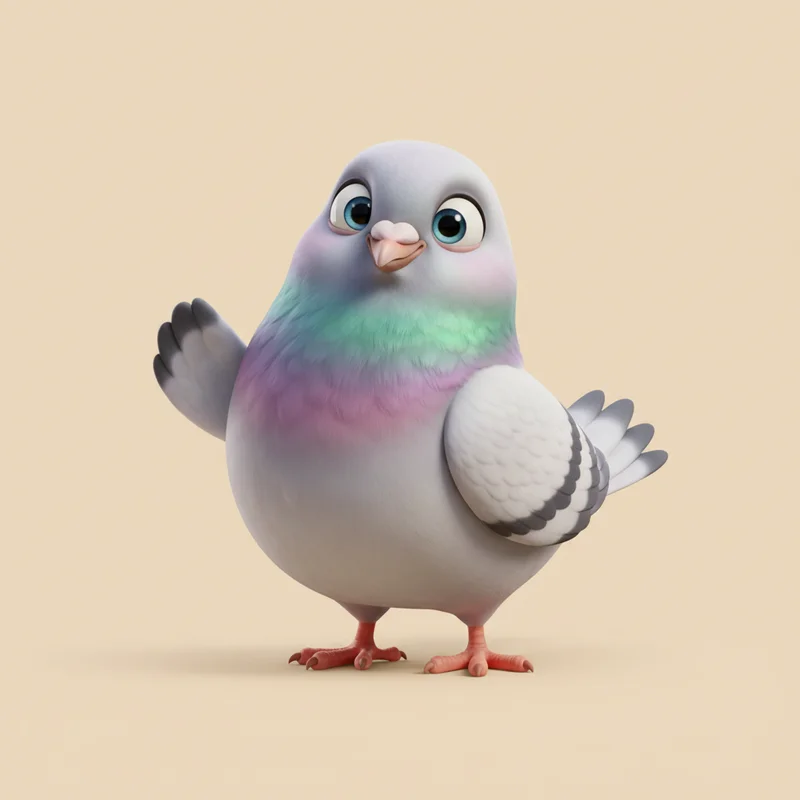
Urban survivor, descendant of war heroes, professional breadcrumb enthusiast. Either a "rat with wings" or a "rock dove" depending on whether you're trying to sound sophisticated. Has seen things. Judges you anyway.

VS
Harry Potter

Harry Potter

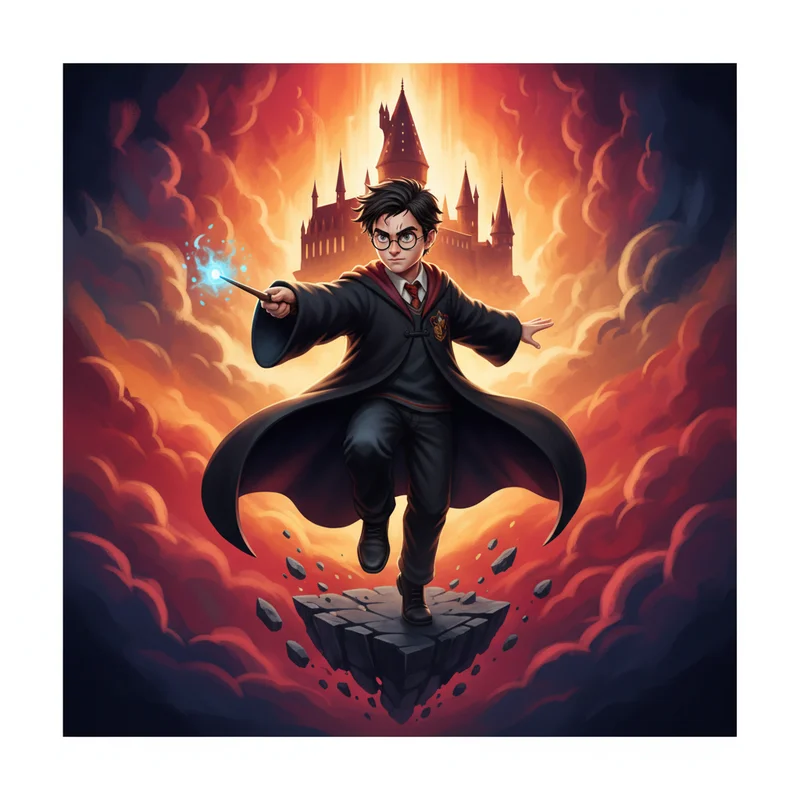
Boy wizard who lived and spawned a franchise.

Battle Analysis

Cultural influence Harry Potter Wins
30%
70%
Pigeon Harry Potter

Pigeon

The pigeon has served as religious symbol, military asset, and scientific subject across virtually every major human civilisation. Mesopotamian temples kept sacred dove populations. Roman generals deployed messenger pigeons in military campaigns. Darwin's studies of pigeon breeding informed the foundational theories of evolution. In modern context, pigeons appear in works by Banksy, feature prominently in Trafalgar Square tourism, and have inspired scientific research yielding three Nobel Prizes in studies of magnetoreception and learning behaviour.

Harry Potter

The Harry Potter franchise has generated approximately $9 billion in book sales alone, with film adaptations, theme parks, and merchandise pushing total economic impact beyond $25 billion. The series has been translated into 80 languages and sold to readers in over 200 territories. Cultural penetration includes academic courses, psychological studies, and the permanent alteration of children's literature publishing practices. Platform 9 3/4 at King's Cross Station now requires queue management systems during peak tourist seasons.

VERDICT

Whilst the pigeon's cultural contributions span millennia of human history, Mr Potter's concentrated economic and social impact within a mere three decades represents cultural saturation of unprecedented density. The wizard takes this category by commercial margins.

Combat effectiveness Harry Potter Wins
30%
70%
Pigeon Harry Potter

Pigeon

The pigeon's combat capabilities are, admittedly, limited. Whilst capable of delivering pecking attacks at rates approaching three strikes per second, their hollow bones and lightweight frame (averaging 300-350 grams) render them vulnerable to most predators and all wizards. Their primary defensive strategy involves rapid escape flight, achieving speeds of 92 miles per hour in optimal conditions. Some historical accounts document pigeons successfully defending territory against rival males, though casualties in such encounters rarely prove fatal.

Harry Potter

Mr Potter's combat record includes confirmed defeats of basilisks, dementors, Death Eaters, and the most feared dark wizard of the modern era. His mastery of Expelliarmus has achieved near-legendary status, though critics note his over-reliance on this single spell suggests tactical rigidity. His Patronus Charm, manifesting as a stag, demonstrates substantial magical power. Perhaps most significantly, he once survived the Killing Curse, a feat accomplished by precisely zero other documented wizards and certainly no pigeons.

VERDICT

In direct confrontation, magical combat training inevitably triumphs over aerodynamic efficiency. Harry Potter claims this category, though one notes the pigeon's superior retreat velocity might prove advantageous in certain tactical scenarios.

Navigational ability Pigeon Wins
70%
30%
Pigeon Harry Potter

Pigeon

The pigeon possesses what scientists term a multi-modal navigational system of extraordinary sophistication. Its magnetoreceptor cells, located primarily within the beak, can detect variations in Earth's magnetic field with precision exceeding most electronic compasses. Additionally, pigeons utilise infrasound frequencies below human hearing range, creating acoustic maps of terrain hundreds of kilometres distant. Their homing instinct is so reliable that 30,000 pigeons served in the British military during World War I alone, achieving message delivery rates exceeding 95% under combat conditions.

Harry Potter

Harry Potter's navigational abilities, whilst certainly magical, remain fundamentally dependent upon external apparatus. His Firebolt broomstick provides excellent manoeuvrability but offers no inherent pathfinding capability. When separated from magical transportation, Mr Potter has demonstrated a tendency to become geographically confused, requiring guidance from various companions, magical maps, and the occasional Deluminator. His Apparition skills remain questionable at best, with documented incidents of splinching amongst his peer group.

VERDICT

The pigeon's innate biological GPS vastly outperforms Harry's learned magical navigation. One requires no batteries, no instruction, and no licence. The pigeon takes this category with characteristic efficiency.

Survival adaptability Pigeon Wins
70%
30%
Pigeon Harry Potter

Pigeon

Pigeons have colonised every continent except Antarctica, demonstrating metabolic and behavioural flexibility that permits survival in environments ranging from scorching Middle Eastern deserts to the frozen expanses of Scandinavian cities. Their digestive system can process nearly any organic matter remotely resembling food. Urban pigeons in London consume an estimated 15,000 tonnes of discarded food waste annually, converting municipal refuse into functional biomass with admirable efficiency.

Harry Potter

Harry Potter's survival record, whilst impressive within narrative context, reveals significant dependencies upon external support systems. His continued existence through seven novels required intervention from Dumbledore, Hermione Granger, Ron Weasley, various Order of the Phoenix members, house-elves, phoenixes, and his mother's sacrificial protection. Remove any single element from this support network, and probability of survival decreases markedly. He also requires regular meals prepared by others and appears incapable of basic household maintenance spells until adulthood.

VERDICT

The pigeon survives through evolutionary self-sufficiency; Mr Potter survives through ensemble cast support. In any scenario requiring independent resourcefulness, the pigeon's advantages become insurmountable.

Environmental sustainability Pigeon Wins
70%
30%
Pigeon Harry Potter

Pigeon

The pigeon represents a carbon-neutral organism operating within established ecological parameters. Its diet consists primarily of materials already present in the urban environment, effectively recycling waste. Pigeon guano, whilst aesthetically problematic, contains nitrogen and phosphorus compounds that contribute to urban nutrient cycling. Their reproduction rate, whilst occasionally deemed excessive by municipal authorities, remains naturally regulated by food availability and predator pressure from peregrine falcons now recolonising British cities.

Harry Potter

The environmental impact of wizarding society remains inadequately studied, though evidence suggests significant concerns. Dragon breeding presumably requires substantial habitat. Floo powder production and distribution implies mining and manufacturing processes. The constant generation of magical creatures through breeding programmes raises questions of introduced species impact. Most troubling, the frequent battles between magical factions have caused substantial collateral damage to natural environments, including the near-destruction of the Forbidden Forest ecosystem during the Battle of Hogwarts.

VERDICT

The pigeon exists in ecological balance with its environment; wizarding society appears to operate outside environmental regulation entirely. Sustainability metrics favour the bird by considerable margins.

👑

The Winner Is

Pigeon

52 - 48

This comparison reveals a fundamental tension between biological refinement and magical capability. The pigeon, product of 50 million years of evolutionary optimisation, represents nature's solution to problems of navigation, survival, and adaptation. Harry Potter, product of J.K. Rowling's imagination and substantial publishing investment, represents humanity's fantasy of transcending natural limitations through supernatural intervention.

In practical terms, the pigeon requires no schooling, no wand, no prophecy, and no chosen-one status to accomplish its daily objectives. It navigates across continents without GPS, survives in environments hostile to most lifeforms, and reproduces with admirable efficiency. Mr Potter, by contrast, required seven years of magical education, constant mentorship, and repeated near-death experiences to reach functional adulthood.

The final score of 52-48 reflects the pigeon's advantages in categories measuring independent capability and environmental integration, balanced against Mr Potter's undeniable superiority in combat and cultural saturation. Both subjects demonstrate mastery of their respective domains; one simply required rather less assistance to achieve it.

Pigeon
52%
Harry Potter
48%

Share this battle

More Comparisons