
Topic Battle

Where Everything Fights Everything

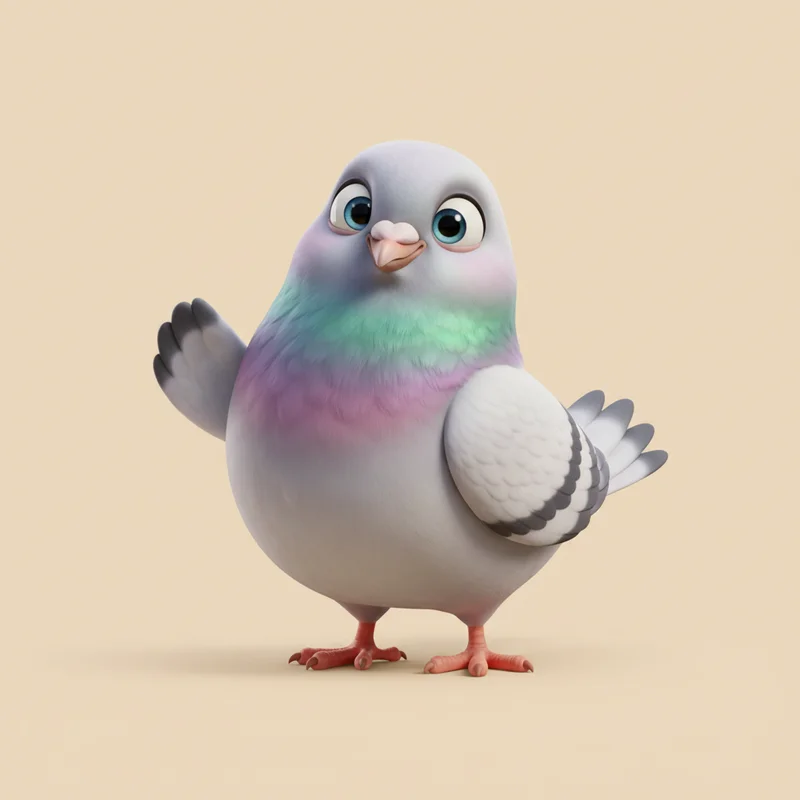
Pigeon

Pigeon

Urban survivor, descendant of war heroes, professional breadcrumb enthusiast. Either a "rat with wings" or a "rock dove" depending on whether you're trying to sound sophisticated. Has seen things. Judges you anyway.

VS
Mario

Mario

Nintendo's mustachioed plumber and gaming icon.

Battle Analysis

Adaptability Pigeon Wins
70%
30%
Pigeon Mario

Pigeon

The pigeon's adaptability is nothing short of evolutionary masterwork. These birds thrive in environments ranging from Siberian winters to tropical heat, from rural farmland to the densest urban jungles. They subsist on a diet that would fell lesser creatures—discarded fast food, spilled grain, mysterious pavement substances of indeterminate origin. When predators arrive, pigeon populations simply breed faster, producing up to 8 broods annually. They have colonised every continent except Antarctica, adapted to underground railway systems, and learned to operate touch-screen devices for food rewards in laboratory settings.

Mario

Mario's adaptability manifests through his remarkable professional flexibility. Originally a carpenter, he transitioned seamlessly to plumbing, then expanded into medicine (Dr. Mario), motorsport (Mario Kart), professional golf, tennis, football, and Olympic athletics. He has explored space, traversed time, inhabited the bodies of his enemies through possession, and adopted numerous power-up forms including cat, tanuki, bee, and cloud. His willingness to engage in any activity placed before him—regardless of qualification or physical plausibility—demonstrates an adaptability that borders on the existentially flexible.

VERDICT

Mario's vocational variety impresses, but the pigeon's adaptability operates on biological timescales, shaped by millions of years of evolution and tested across every conceivable environment Earth provides. Real adaptability outweighs fictional versatility. Adaptability victory: Pigeon.

Economic impact Mario Wins
30%
70%
Pigeon Mario

Pigeon

The pigeon's economic footprint presents a curious duality. On the positive ledger, racing pigeons constitute a $15 billion global industry, with championship birds fetching prices rivalling luxury automobiles. Historical messenger pigeon services underpinned early financial markets, with the Rothschild banking fortune partially attributable to pigeon-delivered intelligence. Yet pigeons also impose costs: urban pest control expenditure, building damage from acidic droppings, and agricultural losses total an estimated $1.1 billion annually in the United States alone. The pigeon gives and the pigeon takes.

Mario

Mario's economic contributions are staggeringly unambiguous. The Mario franchise has generated over $38 billion in direct revenue, making it the highest-grossing video game franchise in history. The 2023 Super Mario Bros. Movie alone earned $1.36 billion, whilst Mario Kart 8 Deluxe has sold over 60 million copies. Nintendo's market capitalisation of $63 billion rests substantially upon Mario's pixelated shoulders. Beyond direct revenue, Mario has spawned theme park attractions, countless merchandise lines, and an entire industry of platform games inspired by his original formula. He creates wealth; he does not defecate upon it.

VERDICT

The mathematics here are unforgiving. Mario's $38 billion in direct franchise revenue dwarfs the pigeon's mixed economic contributions. When one entity generates more GDP than many nations whilst the other requires pest control budgets, the victor is clear. Economic impact victory: Mario.

Cultural longevity Mario Wins
30%
70%
Pigeon Mario

Pigeon

The pigeon's relationship with humanity stretches back to 4500 BCE in ancient Mesopotamia, where they were first domesticated. They appear in religious texts across multiple faiths—Noah's dove, the sacred birds of Aphrodite, and the honoured creatures of Sikh gurdwaras. Throughout this extensive tenure, pigeons have served as messengers, food sources, racing athletes, and research subjects. Their cultural footprint spans millennia and civilisations, embedded in human society before the invention of writing itself.

Mario

Mario first appeared in Donkey Kong in 1981, initially as 'Jumpman'—a carpenter, not a plumber—rescuing a damsel from a barrel-throwing primate. In the subsequent 43 years, he has appeared in over 200 games, generated franchise revenue exceeding $38 billion, and starred in a 2023 film that grossed $1.36 billion globally. He has survived the deaths of arcades, the console wars, the mobile gaming revolution, and the rise of photorealistic graphics. No other video game character has maintained such consistent relevance across such transformative industry changes.

VERDICT

A 5,000-year head start ought to guarantee victory, yet the pigeon's cultural significance has diminished over time whilst Mario's has grown exponentially. The plumber has achieved in four decades what most cultural artefacts cannot achieve in centuries: increasing relevance with each passing generation. Cultural longevity victory: Mario.

Global recognition Mario Wins
30%
70%
Pigeon Mario

Pigeon

The pigeon achieves universal recognition through sheer ubiquity—every human who has visited an urban area has encountered these birds. They require no introduction, no marketing campaign, no brand ambassador. Recognition is simply automatic, a function of physical presence across six continents. However, this recognition rarely carries positive connotations in Western contexts; 'pigeon' has become synonymous with pest, nuisance, and that thing that just deposited something unpleasant on one's shoulder.

Mario

Mario achieved 93% global recognition in brand awareness studies, a figure rivalling corporate titans like Coca-Cola and McDonald's. His distinctive silhouette—cap, moustache, overalls—triggers instant identification even in crude representations. Unlike the pigeon, Mario's recognition carries overwhelmingly positive associations: childhood joy, family entertainment, nostalgic warmth. He was voted the most iconic video game character of all time in multiple surveys and appears on merchandise in virtually every country with electricity. Recognition and affection are distinct metrics, and Mario commands both.

VERDICT

Both entities achieve remarkable recognition, but Mario's comes bundled with emotional warmth whilst the pigeon's often arrives with a frown and hastily protected lunch. Being recognised and being beloved are different achievements entirely. Global recognition victory: Mario.

Navigation prowess Pigeon Wins
70%
30%
Pigeon Mario

Pigeon

The pigeon's navigational abilities border on the supernatural. These remarkable birds can return home across distances exceeding 1,800 kilometres, utilising a sophisticated combination of magnetoreception, solar positioning, visual landmark recognition, and olfactory mapping. During both World Wars, carrier pigeons delivered critical messages through artillery barrages and adverse weather conditions, with some birds flying wounded to complete their missions. The racing pigeon 'Armando' sold for 1.25 million euros in 2019, a testament to the value humans place upon these navigational gifts.

Mario

Mario's navigation operates on an entirely different paradigm. Rather than traversing real geography, he navigates abstract space—leaping between platforms that hover inexplicably in void, entering pipes that teleport him across impossible distances, and traversing worlds that shift from ice to fire to space within mere minutes. His spatial awareness must account for enemies approaching from multiple vectors, coins positioned at tantalising heights, and hidden blocks that only reveal themselves upon contact. Most remarkably, he achieves all this whilst maintaining a running speed that belies his stocky physique, having completed courses in under 5 minutes through speedrunning techniques that exploit the very fabric of his reality.

VERDICT

Whilst Mario's platforming virtuosity is undeniable, the pigeon's navigation operates in actual reality, across genuine distances, through measurable weather conditions. One cannot dismiss the achievement of real-world wayfinding in favour of fictional obstacle courses, however challenging. Navigation prowess victory: Pigeon.

👑

The Winner Is

Mario

46 - 54

This analysis reveals a contest of unexpected depth. The pigeon claims decisive victories in Navigation Prowess and Adaptability—domains where biological reality triumphs over digital fiction. A creature honed by millions of years of evolution, capable of genuine wayfinding across continental distances, possesses capabilities no video game character can truthfully claim.

Yet Mario secures the broader triumph through Cultural Longevity, Economic Impact, and Global Recognition. His 43-year ascent to cultural immortality, his $38 billion in generated wealth, and his association with joy rather than nuisance combine to form an insurmountable advantage. The pigeon may be everywhere, but Mario is everywhen—present in the childhoods of three generations and showing no signs of retirement.

The final score of 54 to 46 in Mario's favour reflects a victory earned through cultural conquest rather than biological persistence.

Pigeon
46%
Mario
54%

Share this battle

More Comparisons