Topic Battle

Where Everything Fights Everything

Pigeon

Pigeon

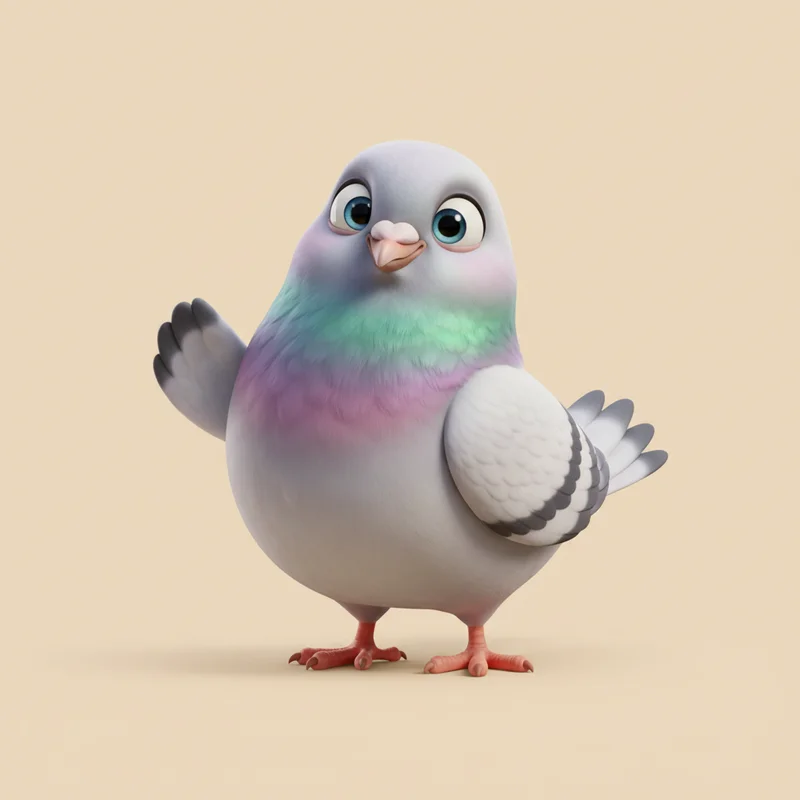
Urban survivor, descendant of war heroes, professional breadcrumb enthusiast. Either a "rat with wings" or a "rock dove" depending on whether you're trying to sound sophisticated. Has seen things. Judges you anyway.

VS
Pikachu

Pikachu

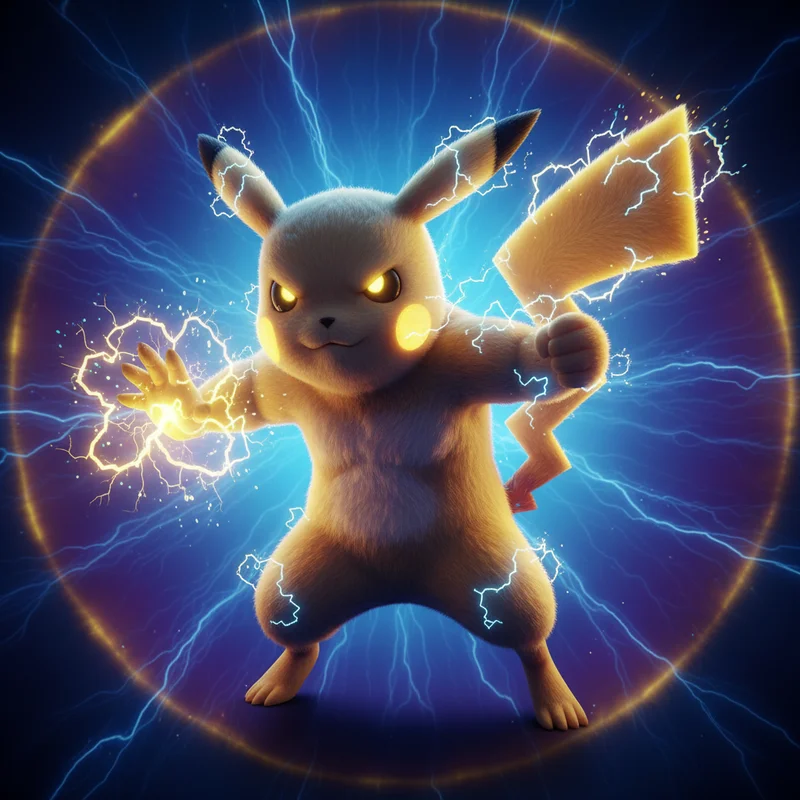
Electric mouse Pokemon and franchise mascot.

Battle Analysis

Economic impact Pikachu Wins
30%
70%
Pigeon Pikachu

Pigeon

The pigeon's economic footprint presents a curious paradox. On the positive side, racing pigeons represent a $15 billion global industry, with champion birds fetching prices exceeding $1.9 million at auction. The species has served humanity as message carriers, scientific subjects, and, in some cultures, a source of protein.

Conversely, urban pigeons inflict an estimated $1.1 billion annually in building damage across the United States alone, through the corrosive properties of their droppings. This creates a net economic calculation of considerable complexity, wherein the pigeon simultaneously enriches and impoverishes human society.

Pikachu

The Pokemon franchise, with Pikachu as its undisputed mascot, represents the highest-grossing media franchise in human history, generating approximately $100 billion since its 1996 inception. This figure encompasses video games ($17 billion), trading cards ($13 billion), merchandise ($64 billion), and theatrical films ($1.5 billion).

Pikachu's image graces everything from commercial aircraft to limited-edition credit cards. The character has appeared on Japanese currency designs and serves as an official ambassador for the city of Osaka. In purely monetary terms, the yellow rodent has achieved what economists can only describe as unprecedented cultural capitalisation.

VERDICT

Whilst the racing pigeon industry commands respect, it simply cannot compete with a franchise that generates more revenue than Star Wars, Marvel, and Harry Potter combined. Pikachu represents a masterclass in intellectual property monetisation.

Global distribution Pigeon Wins
70%
30%
Pigeon Pikachu

Pigeon

The Columba livia maintains an unrivalled global distribution network spanning every inhabited continent. Conservative estimates place the worldwide feral pigeon population at approximately 400 million individuals, with colonies established in environments ranging from the Arctic Circle to the Australian Outback. No visa is required. No localisation team needed. The pigeon simply arrives, establishes dominance over local statuary, and begins the serious business of breeding.

From the rooftops of London to the plazas of Buenos Aires, from the temples of Delhi to the subway platforms of New York, the pigeon has achieved what no military force in history has managed: complete and permanent global occupation. Their infrastructure requirements are minimal: one ledge, one bread crumb, one inexplicably tolerant human population.

Pikachu

Pikachu's global presence operates through an entirely different paradigm, one measured not in physical specimens but in brand recognition metrics. Studies indicate that Pikachu ranks among the most recognisable characters on Earth, with awareness levels exceeding 95% in developed markets. The character has been officially localised into over 20 languages and has appeared on merchandise in approximately 195 countries.

However, this distribution remains fundamentally representational. One cannot encounter a wild Pikachu foraging near a bus stop. The character exists only through the mediation of screens, plush toys, and the occasional person in a costume at shopping centres. This creates what philosophers might term an ontological distribution gap.

VERDICT

Whilst Pikachu achieves impressive memetic penetration, the pigeon's physical presence in virtually every urban environment on Earth represents a more substantive form of global dominance. One can escape Pikachu by simply closing one's eyes; the pigeon permits no such respite.

Combat effectiveness Pikachu Wins
30%
70%
Pigeon Pikachu

Pigeon

In direct confrontation, the pigeon's combat repertoire is decidedly limited. The species possesses a pecking attack of minimal damage potential, wings capable of producing startling sounds, and a territorial display involving puffing of feathers. Their primary defensive strategy involves fleeing in a disorganised manner that nonetheless proves surprisingly effective.

Historical records do credit pigeons with military service: over 100,000 messenger pigeons served during World War I, with 32 receiving the Dickin Medal for animal bravery. One pigeon, Cher Ami, famously saved 194 American soldiers despite being shot through the breast and leg.

Pikachu

Pikachu commands an arsenal of electrical attacks including Thunderbolt, Thunder, Electro Ball, and the devastating Volt Tackle. According to official Pokedex entries, Pikachu can generate electrical charges exceeding 100,000 volts, sufficient to incapacitate a Dragonite or power a small city.

In competitive Pokemon battles, Pikachu typically occupies lower tiers due to modest base statistics. However, Ash Ketchum's Pikachu has canonically defeated legendary Pokemon and achieved feats that defy the franchise's own established rules. Combat effectiveness, it seems, varies considerably based on narrative requirements.

VERDICT

Even accounting for Cher Ami's extraordinary heroism, a creature capable of generating lightning bolts possesses an insurmountable tactical advantage over one whose primary weapon is a mild peck and aggressive cooing.

Cultural significance Pikachu Wins
30%
70%
Pigeon Pikachu

Pigeon

The pigeon occupies a curious position in human culture: simultaneously revered and reviled. Ancient Mesopotamians considered them sacred to Ishtar. Christianity adopted the dove (the pigeon's more marketable cousin) as a symbol of the Holy Spirit. Picasso named his daughter after them. Nikola Tesla maintained a profound romantic attachment to a specific individual.

Yet the modern urban pigeon is frequently dismissed as a 'rat with wings', a phrase attributed to New York City official Woody Allen. This cultural ambivalence reflects humanity's complex relationship with nature in urban environments.

Pikachu

Pikachu has transcended gaming to become a genuine cultural icon. The character has appeared on official Japanese government communications, balloons in the Macy's Thanksgiving Day Parade, and countless items of apparel worn by both children and adults without apparent irony. The Detective Pikachu film grossed $433 million worldwide.

Sociologists note that Pikachu functions as a universal signifier of cuteness, crossing cultural and linguistic boundaries with remarkable efficiency. The character's design, with its large eyes and rounded features, deliberately exploits kindchenschema, the infantile characteristics that trigger nurturing responses in humans.

VERDICT

Whilst the pigeon boasts millennia of symbolic significance, Pikachu has achieved comparable cultural penetration in merely three decades. More critically, Pikachu is actively beloved, whereas the pigeon's cultural status remains perpetually contested.

Survival adaptability Pigeon Wins
70%
30%
Pigeon Pikachu

Pigeon

The pigeon has survived for approximately 5,000 years of documented human history, thriving through the Roman Empire, the Black Death, two World Wars, and the invention of the automobile. Their adaptability is nothing short of remarkable: they have learned to navigate underground railway systems, exploit human feeding behaviours, and develop resistance to various pest control measures.

Research indicates that urban pigeons demonstrate higher cognitive function than their rural counterparts, suggesting active evolutionary adaptation to city life. They can recognise individual human faces, learn complex routes, and transmit cultural knowledge between generations. The species has essentially co-evolved with human civilisation.

Pikachu

Pikachu's survival depends entirely upon the continued existence of The Pokemon Company and Nintendo. Should these corporations cease operations, Pikachu would persist only in archived media and the memories of ageing millennials. The character has already undergone several design modifications since 1996, originally appearing considerably more rotund before being streamlined for contemporary sensibilities.

That said, intellectual properties of Pikachu's magnitude rarely disappear entirely. Copyright protection extends for 70 years beyond the creator's death, and the franchise shows no signs of declining popularity. Pikachu has proven adaptable to new gaming platforms, animation styles, and marketing strategies.

VERDICT

The pigeon's survival strategy requires no shareholders, no server maintenance, and no licensing agreements. It is a self-replicating, self-sustaining biological system that has outlasted empires. Pikachu, for all its commercial success, remains contingent upon human corporate infrastructure.

👑

The Winner Is

Pigeon

52 - 48

This analysis reveals a profound tension between biological reality and commercial fantasy. The pigeon exists, irrefutably and inconveniently, in the physical world. It breeds, it feeds, it deposits its calling cards upon freshly washed automobiles. Its presence is tangible, its persistence undeniable, its indifference to human opinion complete.

Pikachu, by contrast, exists only as a collective human agreement, a shared fiction made manifest through screens and merchandise. Yet this fictional existence has generated economic value that dwarfs most nations' GDP, cultural influence that spans continents, and an emotional connection with millions that real animals rarely achieve.

By a margin of 52% to 48%, the pigeon emerges victorious, owing primarily to its fundamental advantage of actually existing. When the servers shut down and the licensing agreements expire, the pigeon will remain, cooing contentedly atop the ruins of our digital infrastructure.

Pigeon
52%
Pikachu
48%

Share this battle

More Comparisons