
Topic Battle

Where Everything Fights Everything

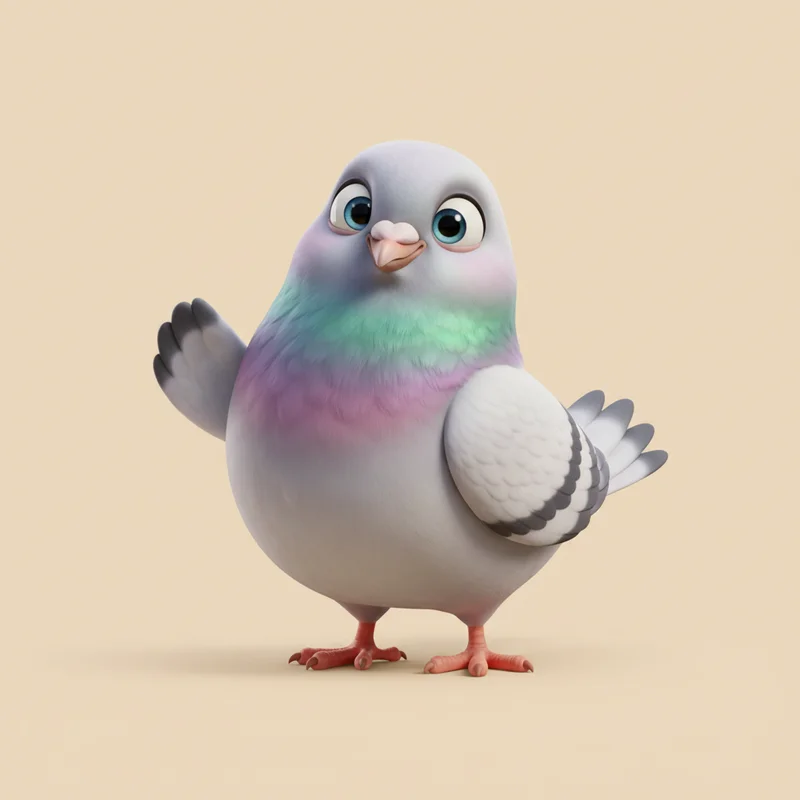
Pigeon

Pigeon

Urban survivor, descendant of war heroes, professional breadcrumb enthusiast. Either a "rat with wings" or a "rock dove" depending on whether you're trying to sound sophisticated. Has seen things. Judges you anyway.

VS
Spider-Man

Spider-Man

Web-slinging hero with great responsibility.

Battle Analysis

Urban navigation pigeon Wins
70%
30%
Pigeon Spider-Man

Pigeon

The pigeon possesses magnetoreception capabilities that allow it to sense Earth's magnetic field, effectively carrying an internal GPS system that predates the technology by several millennia. Historical records document pigeons returning home across thousands of kilometres with accuracy that shamed early cartographers. In urban environments, pigeons demonstrate what researchers term landmark-based navigation, memorising street layouts, building facades, and optimal roosting locations with photographic precision. They can locate food sources across boroughs and return to preferred perches with unfailing reliability. The pigeon requires no technological assistance, no web-shooters, no Stark Industries innovations. Their navigation system operates continuously, requires no charging, and functions in all weather conditions. Studies have shown pigeons can distinguish between Picasso and Monet paintings, suggesting visual processing capabilities that would make many humans envious.

Spider-Man

Spider-Man navigates New York through a combination of web-slinging kinetics and precognitive awareness. His methodology, whilst visually spectacular, depends entirely upon the presence of tall structures from which to anchor web lines. Remove the skyscrapers, and Spider-Man's primary transportation mode becomes functionally useless. The Spider-Sense provides advance warning of obstacles and dangers, effectively creating a 360-degree awareness field that compensates for the inherent risks of hurling oneself through traffic at high velocity. However, this system consumes web fluid, requires constant attention, and has resulted in numerous collisions with pigeons, ironically enough. Spider-Man has been observed apologising to birds mid-swing, suggesting even he recognises his intrusion into established avian transit corridors. His navigation remains impressive but fundamentally infrastructure-dependent.

VERDICT

Pigeons navigate globally without equipment; Spider-Man cannot function without buildings to swing from.
Public perception pigeon Wins
70%
30%
Pigeon Spider-Man

Pigeon

The pigeon occupies a curious position in public consciousness, simultaneously despised and tolerated in equal measure. Tourists feed them in Trafalgar Square whilst residents curse their presence on windowsills. Cities allocate budgets for pigeon control whilst acknowledging these efforts accomplish nothing. The pigeon has been labelled a 'rat with wings,' yet continues to feature in romantic comedy establishing shots and children's books about urban nature. This ambivalent relationship represents perfect parasitic integration: the pigeon takes what it needs from human society whilst providing just enough visual interest to avoid extermination campaigns. They appear in religious iconography as symbols of peace, in scientific history as Darwin's favourite research subject, and in military records as decorated war heroes. The pigeon exists precisely at the threshold of human tolerance, never beloved, never quite unwelcome.

Spider-Man

Spider-Man's public perception has fluctuated dramatically across his career, ranging from beloved hero to public menace to Avenger to criminal and back again. The Daily Bugle's decades-long campaign against him has shaped public opinion into a confused mixture of gratitude and suspicion. He saves lives publicly, yet operates outside legal frameworks. He wears a mask, generating distrust. He causes property damage during battles, generating insurance claims. Unlike the pigeon's stable position of mild irritation, Spider-Man exists in a state of perpetual reputational warfare. Each heroic act must combat accumulated negative press. Certain citizens cheer; others call for his arrest. This volatility exhausts both the hero and observers. The pigeon, by contrast, inspires no passionate opinions whatsoever, which may represent the superior evolutionary position.

VERDICT

The pigeon maintains consistent public standing; Spider-Man's reputation changes weekly.
Reproductive success pigeon Wins
70%
30%
Pigeon Spider-Man

Pigeon

The pigeon reproductive strategy represents biological efficiency perfected. Breeding pairs produce up to six clutches annually, with offspring reaching sexual maturity within six months. Monogamous pair bonds provide stable parental investment, whilst the ability to produce crop milk ensures offspring nutrition regardless of food availability. Pigeons can breed year-round in urban environments, their reproductive cycle unconstrained by seasonal limitations. The global pigeon population exceeds 400 million individuals, a number so staggering that attempts at control have been officially abandoned in most major cities. Each generation passes on genes optimised for urban survival: tolerance of pollution, ability to digest human food waste, and a profound resistance to deterrent measures. The pigeon, as a species, has achieved what biologists term demographic explosion.

Spider-Man

Spider-Man's reproductive prospects present a considerably more complicated picture. Peter Parker's romantic relationships have included Gwen Stacy (deceased due to supervillain involvement), Mary Jane Watson (multiple breakups, one marriage erased from existence by demonic intervention), and various other partners whose involvement in his life invariably attracts danger. The statistical probability of maintaining a stable family whilst fighting cosmic-level threats appears vanishingly small. In certain continuities, Parker has produced offspring, but these timelines tend toward tragedy or alternate universe complications. The very nature of his existence renders domestic stability improbable. Villains specifically target loved ones. His secret identity creates trust issues. His income proves insufficient for family support. From a purely biological perspective, Spider-Man represents a reproductive dead-end.

VERDICT

Pigeons produce billions of offspring; Spider-Man cannot maintain a relationship without interdimensional complications.
Threat neutralisation spider-man Wins
30%
70%
Pigeon Spider-Man

Pigeon

The pigeon's approach to threats relies primarily on evasive manoeuvres and numerical superiority. When danger approaches, pigeons execute rapid takeoff sequences, dispersing in multiple directions to confuse predators through sensory overload. Their flight speed reaches 150 kilometres per hour, sufficient to evade most urban threats. Against human aggression, pigeons deploy a strategy of tactical retreat followed by immediate return, waiting until the threat departs before resuming previous activities as though nothing occurred. Against natural predators such as peregrine falcons, pigeons rely on urban cover, ducking into structures inaccessible to larger raptors. This approach, whilst not heroic, proves remarkably effective. The pigeon population continues to increase despite all predation pressure. Their threat response prioritises species survival over individual glory.

Spider-Man

Spider-Man approaches threats with direct confrontation enhanced by superhuman capabilities. His proportional spider strength allows him to lift approximately ten tonnes, whilst wall-crawling and web-slinging provide three-dimensional combat mobility that most opponents cannot match. The Spider-Sense provides advance warning of incoming attacks, enabling evasive manoeuvres that appear almost precognitive. Against adversaries ranging from street criminals to cosmic entities, Spider-Man has demonstrated remarkable combat effectiveness. His wit during battle serves psychological warfare functions, destabilising opponents through confusion and irritation. The web-shooters provide both offensive restraint capabilities and environmental manipulation options. When threats emerge in New York, Spider-Man neutralises them directly rather than waiting for natural resolution. This approach has saved countless lives, though at significant personal cost.

VERDICT

Against the Green Goblin, tactical retreat proves insufficient; superhuman combat abilities remain essential.
Territorial persistence pigeon Wins
70%
30%
Pigeon Spider-Man

Pigeon

Humanity has attempted to remove pigeons from urban environments using every conceivable method: spikes, nets, sonic deterrents, trained falcons, architectural modifications, and public awareness campaigns. The pigeons have responded by adapting to each challenge with what ornithologists describe as aggressive indifference. Anti-pigeon spikes become nesting material. Sonic deterrents are ignored. Falcons are outnumbered and eventually give up. The pigeon population of New York City exceeds one million individuals, each one representing a lineage that has successfully resisted every human attempt at displacement. They occupy subway stations, bridge supports, air conditioning units, and the heads of public statues with equal territorial confidence. A pigeon that establishes a roosting spot will return to it indefinitely, regardless of how many times humans attempt intervention. This is not stubbornness; this is evolutionary triumph.

Spider-Man

Spider-Man's territorial claim on New York remains perpetually contested. Every week brings new villains attempting to claim the city, from the Green Goblin to Doctor Octopus to Kingpin's various criminal enterprises. Despite decades of heroic intervention, Spider-Man has never achieved lasting peace in his territory. Each victory merely delays the next incursion. His claim on New York exists only through constant, exhausting vigilance, whilst villains proliferate seemingly faster than he can apprehend them. The Daily Bugle actively campaigns against his presence. Police departments maintain ambivalent relationships with his activities. Even fellow superheroes occasionally dispute his jurisdiction. Spider-Man has been ejected from the Avengers, hunted by authorities, and publicly vilified, yet persists through sheer determination. His territorial persistence, whilst admirable, requires constant energy expenditure that the pigeon would find baffling.

VERDICT

Pigeons have occupied cities for millennia; Spider-Man cannot secure his territory for a single month.
👑

The Winner Is

Pigeon

53 - 47

This investigation has revealed a truth that will discomfort admirers of superhuman capability: the pigeon has outcompeted Spider-Man across multiple metrics of urban success. Whilst the webbed wonder possesses objectively superior physical abilities, the pigeon has achieved something far more significant from an evolutionary perspective. It has become permanent. Spider-Man fights to protect a city that cannot decide whether to arrest or celebrate him. The pigeon simply exists, breeding, feeding, and roosting with absolute indifference to human opinion. Spider-Man must constantly justify his presence through heroic action; the pigeon justifies nothing and continues regardless. The pigeon population grows whilst Spider-Man's stress levels compound. In one million years, descendants of current pigeons will still occupy urban ledges. Spider-Man's legacy will depend on comic book preservation and cultural memory. The contest between flash and fundamentals has reached its conclusion, and the fundamentals have prevailed through sheer, unrelenting persistence.

Pigeon
53%
Spider-Man
47%

Share this battle

More Comparisons