
Topic Battle

Where Everything Fights Everything

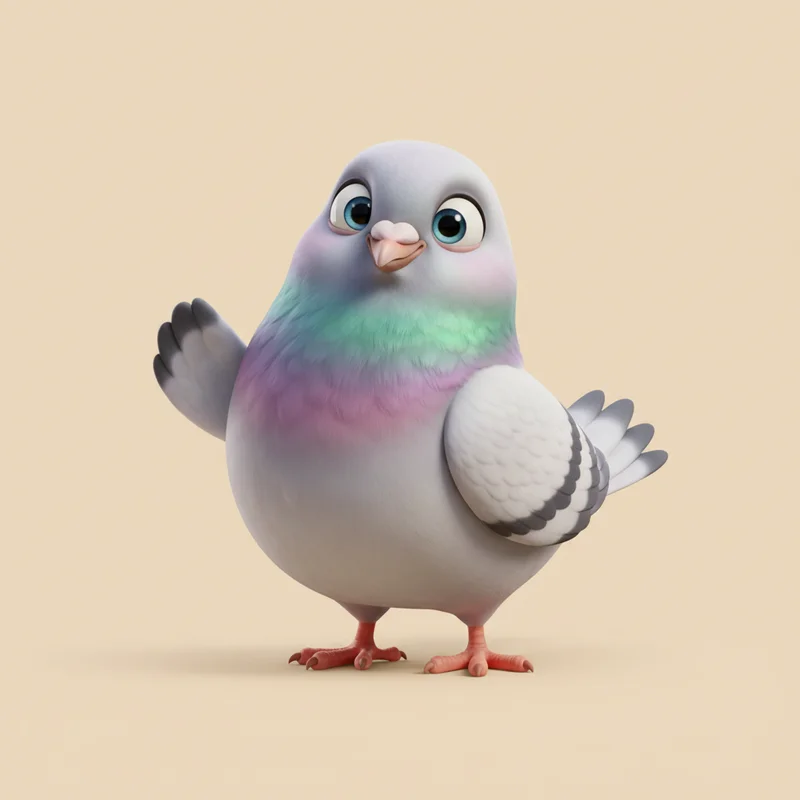
Pigeon

Pigeon

Urban survivor, descendant of war heroes, professional breadcrumb enthusiast. Either a "rat with wings" or a "rock dove" depending on whether you're trying to sound sophisticated. Has seen things. Judges you anyway.

VS
Tea

Tea

A traditional beverage made from steeping processed leaves of the Camellia sinensis plant in hot water. Enjoyed by billions worldwide.

The Matchup

In the comprehensive taxonomy of urban existence, few pairings illuminate the divergent paths to civilizational dominance quite like the common pigeon and the cup of tea. One is a living organism capable of sustained flight at velocities exceeding most residential speed limits. The other is heated water containing dissolved plant matter.

The pigeon, Columba livia domestica, has maintained continuous presence in human settlements for approximately 5,000 years, having been domesticated in ancient Mesopotamia before systematically colonizing every major metropolitan area on Earth. Its military service record spans from the Roman Empire through both World Wars, where it operated as an encrypted biological communications network capable of 90 mph delivery speeds.

Tea, Camellia sinensis in processed form, emerged from ancient Chinese cultivation to become the second most consumed beverage on the planet, surpassed only by water itself. Its global expansion triggered trade wars, colonial enterprises, and the complete restructuring of afternoon schedules across the British Empire. Both entities now compete for the same resource: human attention during moments of urban contemplation.

Battle Analysis

Speed Pigeon Wins
70%
30%
Pigeon Tea

Pigeon

The common pigeon maintains a cruising velocity of 50-60 mph during sustained flight operations, with documented sprint capabilities exceeding 90 mph when evading aerial predators such as the peregrine falcon.

Racing pigeons, bred specifically for velocity optimization, have achieved verified speeds of 92.5 mph over measured distances. A pigeon can traverse one mile in under sixty seconds, a performance specification that enabled its deployment as military communications infrastructure from ancient Rome through World War II, where over 250,000 pigeons served in the Allied forces.

The bird Cher Ami received the Croix de Guerre for delivering a message across 25 miles of enemy territory in 25 minutes while sustaining severe injuries. This level of performance under adverse conditions remains undocumented in beverage applications.

Tea

Tea achieves a velocity of precisely zero miles per hour under standard conditions. The liquid is incapable of self-propulsion and requires external intervention for all spatial displacement.

When forcibly relocated via human transport or gravity-assisted spillage, tea may briefly achieve velocities comparable to its container or the coefficient of friction of the relevant surface. However, these are not inherent operational characteristics but rather circumstantial physics.

The fastest recorded tea-related movement involves the 1773 Boston Tea Party, where approximately 92,000 pounds of tea achieved terminal velocity during forced deployment into Boston Harbor. This remains an outlier event attributed entirely to external political forces rather than tea initiative.

VERDICT

The velocity differential in this category proves mathematically absolute. The pigeon operates at speeds that have historically served military communications requirements. Tea operates at speeds that have historically served gravitational constants.

While defenders of tea might argue that its cultural spread moved rapidly across trade routes, the tea itself remained stationary while humans performed all logistical functions. The pigeon, by contrast, personally delivered wartime intelligence at speeds exceeding residential traffic regulations.

This category belongs to the pigeon by an insurmountable kinetic margin. Evolution produced a 90 mph biological drone. Agriculture produced a beverage that requires carrying.

Durability Pigeon Wins
70%
30%
Pigeon Tea

Pigeon

Individual pigeons achieve operational lifespans of 3-6 years in urban environments, with exceptional specimens documented surviving beyond 15 years in protected circumstances. The species demonstrates remarkable resilience to environmental stressors including temperature extremes, atmospheric pollution, and dietary inconsistency.

More significantly, the pigeon possesses biological self-repair capabilities unavailable to beverage products. The organism regenerates feathers, heals bone fractures, and recovers from moderate injuries without external maintenance intervention. A pigeon damaged by urban hazards may return to operational status within weeks.

At the population level, pigeon durability approaches effective immortality. The species has maintained continuous urban presence through plagues, world wars, and municipal eradication programs. Individual units are continuously replaced through autonomous reproductive processes requiring no manufacturing infrastructure.

Tea

A prepared cup of tea maintains optimal operational parameters for 15-45 minutes before thermal degradation renders it culturally unacceptable. Cold tea, while technically extant, has exited the functional definition of the product.

Dry tea leaves demonstrate superior shelf stability, with properly stored specimens remaining viable for 2-3 years in sealed containers. Premium aged pu-erh teas have been documented maintaining quality for decades, though this represents a specialized storage category rather than standard operational resilience.

Tea cannot repair itself when damaged. A spilled cup of tea has permanently ceased to function as tea and transitioned into the category of floor moisture. No amount of waiting will restore its beverage status.

VERDICT

When evaluating durability across temporal scales, the pigeon presents advantages that manufactured beverages cannot replicate. A single pigeon outlasts approximately 500-1,000 cups of tea prepared during its lifetime, while requiring no procurement, preparation, or disposal logistics.

The pigeon population has survived every historical event since its domestication, including deliberate extermination efforts. Tea supply chains, by contrast, have been disrupted by trade embargoes, colonial conflicts, and insufficient hot water availability.

For authentic durability credentials, biological systems with self-repair and autonomous reproduction capabilities fundamentally outperform products requiring human intervention for existence.

Versatility Pigeon Wins
70%
30%
Pigeon Tea

Pigeon

The pigeon's functional portfolio extends well beyond its primary classification as an urban bird. Historically, the species has served as military communications infrastructure, a role documented from ancient Persian empires through World War II, when pigeons maintained a message delivery success rate exceeding 95%.

Additional verified pigeon applications include: food source (squab remains a culinary delicacy), medical research subjects, racing sport participants, religious sacrifice components in multiple traditions, pest control consumers, and art installation subjects. Pigeons have been trained to distinguish between Picasso and Monet paintings with 90% accuracy.

The pigeon's biological systems enable functions impossible for beverages: navigation using Earth's magnetic field, visual processing at 80 frames per second (versus human 24 fps), and autonomous reproduction without manufacturing oversight.

Tea

Tea demonstrates considerable versatility within the beverage category. Preparation methods range from simple bag steeping through elaborate ceremonial practices requiring specialized training and equipment.

The base product manifests as: black tea, green tea, white tea, oolong tea, pu-erh tea, and countless regional variations including chai, matcha, and bubble tea. Non-beverage applications include cosmetics, traditional medicine, food flavoring, and textile dyeing.

Tea has served as currency in certain historical contexts, diplomatic gift in international relations, and central element of cultural ceremonies from Japanese tea traditions to British afternoon rituals. However, tea cannot deliver messages, reproduce, or distinguish between paintings.

VERDICT

Versatility assessment reveals a categorical asymmetry between biological and agricultural entities. Tea excels at being tea in various forms. The pigeon excels at being an autonomous, self-replicating, message-delivering, art-appreciating organism.

The pigeon can perform every function tea performs (providing sustenance, serving as cultural symbol) while additionally offering capabilities fundamentally unavailable to liquids: flight, reproduction, navigation, and visual processing.

When measuring versatility as range of functional applications, biological systems inherently outperform products limited to the beverage category. The pigeon wins through categorical breadth rather than depth within a single domain.

Global reach Tea Wins
30%
70%
Pigeon Tea

Pigeon

Pigeons maintain permanent breeding populations in virtually every city on Earth exceeding 10,000 inhabitants, spanning all inhabited continents and most isolated island territories.

This global distribution was achieved without marketing budgets, distribution agreements, or international trade negotiations. The pigeon accomplished comprehensive urban market saturation through independent biological initiative over approximately five millennia, colonizing new territories via a combination of deliberate human transport and autonomous range expansion.

Current global pigeon population estimates suggest 260-400 million individuals operating in feral urban conditions, with billions of additional specimens in domestic and racing populations. The pigeon has achieved what global corporations spend billions attempting: ubiquitous worldwide presence.

Tea

Tea consumption spans virtually every nation on Earth, with estimated annual consumption exceeding 6.3 billion kilograms globally. The beverage maintains particularly dominant cultural positions in China, India, the United Kingdom, Turkey, and Japan.

Tea's global reach was achieved through extensive trade networks, colonial enterprises, and several armed conflicts including the Opium Wars and the aforementioned Boston Tea Party. The beverage reshaped global economics, establishing trade routes that defined international commerce for centuries.

However, tea requires human infrastructure for global presence. Unlike the pigeon, tea cannot establish independent populations in new territories. Each cup of tea consumed represents an active human decision and preparation effort.

VERDICT

This category presents a more nuanced competitive landscape. Both entities have achieved global presence of remarkable scope, yet through fundamentally different mechanisms.

Tea's cultural penetration runs deeper into human civilization, having shaped trade policies, triggered revolutions, and established daily rituals across billions of households. The pigeon, while geographically ubiquitous, occupies urban spaces rather than cultural consciousness.

The decisive factor: tea is actively desired and purchased by billions. Pigeons are passively tolerated. For genuine global reach measured by intentional human engagement, tea maintains a measurable advantage.

Affordability Pigeon Wins
70%
30%
Pigeon Tea

Pigeon

Pigeons require zero acquisition cost in the conventional sense. Specimens are freely available in unlimited quantities across all urban environments worldwide, having distributed themselves without retail infrastructure or venture capital funding.

Operational costs from the passive observer perspective total precisely zero dollars, as pigeons independently source nutrition from environmental resources including discarded food items, spilled grain, and the abandoned remains of human meals.

For those seeking active pigeon engagement, racing pigeon acquisition costs range from $50 to $400,000 depending on pedigree and competitive history. However, the default urban pigeon model operates on a completely cost-free basis that has remained stable for millennia.

Tea

Tea acquisition costs demonstrate significant variability based on quality tier and preparation method. Basic tea bags retail for approximately $0.05-0.15 per serving, while premium loose-leaf varieties command $0.50-5.00 per cup.

Exceptional specimens such as Da Hong Pao oolong have achieved auction prices exceeding $1,400 per gram, placing certain teas among the most expensive agricultural products per unit weight.

Total cost of ownership calculations must include tea preparation infrastructure: kettles ($15-200), teapots ($10-500), and the ongoing electricity or gas expenditure required to achieve appropriate water temperatures. A dedicated tea consumer may invest several hundred dollars annually in their practice.

VERDICT

From a pure economic standpoint, meaningful competition does not exist in this category. Tea requires continuous financial investment across multiple supply chain stages, from cultivation through retail distribution to home preparation equipment.

The pigeon operates on what economists would term a zero-marginal-cost model, having externalized all operational expenses to the urban environment itself. The pigeon has achieved what tea cannot: complete independence from human economic systems while maintaining full access to human civilization.

The pigeon's cost structure is mathematically unassailable. Free defeats any positive price point in comparative analysis.

👑

The Winner Is

Pigeon

60 - 40

This analysis concludes with a definitive 60-40 victory for the pigeon across the evaluated criteria. The bird prevails in four of five categories through advantages inherent to biological systems refined over millions of years of evolutionary optimization.

Tea demonstrates decisive superiority only in Global Reach measured by intentional human engagement, a metric that favors products explicitly designed for human consumption over organisms that achieved global distribution through parallel existence rather than human desire.

The pigeon represents what tea cannot become: an autonomous entity capable of independent action, self-repair, reproduction, and 90 mph flight speeds. Tea represents what the pigeon cannot provide: a warm, culturally significant beverage suitable for afternoon consumption. Both have achieved remarkable success within their respective categories. The pigeon simply operates in a more expansive category.

Pigeon
60%
Tea
40%

Share this battle

More Comparisons