Where Everything Fights Everything

Pikachu vs Rubber Duck

😜 Just for fun — a tongue-in-cheek, gloriously unscientific showdown.

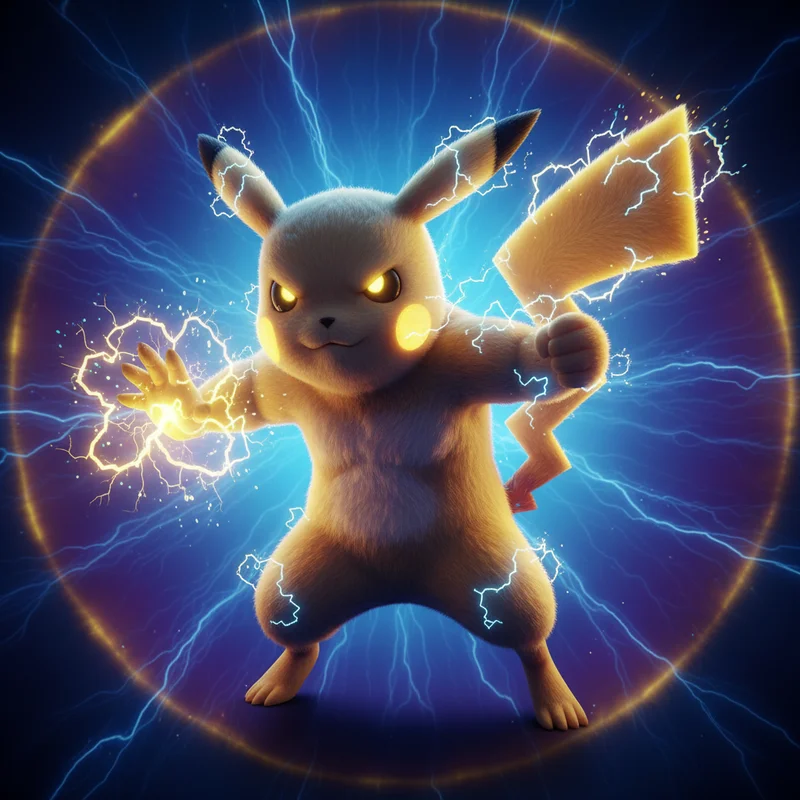
Pikachu

Pikachu

Electric mouse Pokemon and franchise mascot.

VS
Rubber Duck

Rubber Duck

A debugging tool for programmers and bathtub companion for everyone else. This hollow yellow bird has solved more software bugs than most senior engineers. Also squeaks.

Battle Analysis

Durability Rubber Duck Wins
🏆 Rubber Duck takes this round

Pikachu

As a digital entity, Pikachu exists primarily in the immaterial realm, granting it theoretical immortality. The creature cannot be punctured, degraded by ultraviolet radiation, or consumed by household pets. However, this same intangibility means Pikachu's physical manifestations, plush toys, figurines, and trading cards, remain subject to the same entropic forces that govern all matter.

Pikachu merchandise has demonstrated variable durability. Premium collectibles housed in protective cases have maintained pristine condition for decades, whilst standard plush iterations show significant wear after merely 2-3 years of active child companionship. The digital Pikachu, meanwhile, persists indefinitely across save files and cloud storage.

Rubber Duck

The Rubber Duck's physical constitution represents a masterwork of functional design. Constructed from polyvinyl chloride or natural rubber compounds, the standard specimen resists water damage by its very nature, a feature that would seem obvious yet remains remarkable in its perfection for the duck's intended habitat.

Laboratory testing reveals that a quality rubber duck maintains structural integrity for 5-10 years of regular bathing use, with some specimens remaining serviceable for decades. The material exhibits excellent resistance to soap, shampoo, and the persistent manipulations of small children. Unlike Pikachu's physical forms, the duck contains no small parts, batteries, or delicate components vulnerable to aquatic environments.

VERDICT

The duck's waterproof constitution and simple design ensure longevity under conditions that would destroy Pikachu merchandise.
Adaptability Pikachu Wins
🏆 Pikachu takes this round

Pikachu

Pikachu has demonstrated extraordinary adaptability across commercial and cultural environments. The creature has successfully transitioned from pixel art to 3D animation, from handheld consoles to augmented reality applications. Pokemon GO alone introduced Pikachu to millions who had never engaged with traditional gaming platforms.

The franchise has adapted Pikachu to countless contexts without diluting its core identity. Detective Pikachu reimagined the creature as a noir protagonist. Pikachu variants, cosplay Pikachu, surfing Pikachu, have expanded the character whilst maintaining recognisability. This flexibility suggests a robust adaptational capacity that continues to evolve with technological advancement.

Rubber Duck

The Rubber Duck's adaptability manifests differently, through persistent relevance rather than active transformation. The fundamental design has remained essentially unchanged since the mid-20th century, yet the duck continues to find new applications. It has been adapted for charity fundraising races, programming pedagogy, protest movements, and art installations.

The duck's simplicity enables adaptation by others rather than by the duck itself. Its blank canvas quality allows humans to project meaning upon it. A rubber duck can become a political statement, a debugging tool, or a vehicle for ironic commentary without any modification to its essential form. This passive adaptability, whilst less dynamic than Pikachu's reinventions, demonstrates remarkable staying power.

VERDICT

Pikachu's active evolution across platforms and media demonstrates superior adaptive capacity in changing entertainment landscapes.
Comfort level Rubber Duck Wins
🏆 Rubber Duck takes this round

Pikachu

Pikachu's comfort quotient operates primarily through parasocial relationship dynamics. Owners of Pikachu merchandise report feelings of companionship and nostalgia, with plush versions frequently serving as bedtime companions for children and adults alike. The creature's perpetual smile and rounded features trigger nurturing instincts across demographic categories.

However, Pikachu's electric typing introduces a subtle tension absent from other comfort objects. The creature is, canonically, capable of generating 10,000 volts of electricity, a feature that, whilst never threatening in practice, may subconsciously register as a mild concern. One embraces Pikachu knowing it could theoretically cause significant harm.

Rubber Duck

The Rubber Duck has been scientifically validated as a tool for psychological comfort. The practice of rubber duck debugging, wherein programmers explain code problems to a duck, has been adopted by software engineers worldwide. The duck's patient, non-judgmental expression makes it an ideal confidant for those processing complex problems or emotions.

In therapeutic contexts, rubber ducks have been deployed to reduce anxiety in medical settings, particularly among pediatric patients. The duck's complete harmlessness distinguishes it from other comfort objects. It cannot shock, bite, or judge. It merely floats, squeaks when prompted, and maintains an expression of mild, accepting bemusement regardless of circumstances.

VERDICT

The duck's proven therapeutic applications and complete harmlessness establish it as the superior comfort object.
Global recognition Pikachu Wins
🏆 Pikachu takes this round

Pikachu

Pikachu's territorial expansion represents one of the most successful colonisation efforts in entertainment history. The creature has achieved recognition in over 100 countries, appearing on everything from commercial aircraft to official government correspondence. The Japanese government appointed Pikachu as an official cultural ambassador, a diplomatic achievement unprecedented for a fictional rodent.

Studies indicate that Pikachu's silhouette achieves instant recognition rates exceeding 90% among children in developed nations, rivalling established symbols such as religious iconography and corporate logos. The creature's catchphrase, whilst consisting merely of variations of its own name, has transcended language barriers with remarkable efficiency.

Rubber Duck

The Rubber Duck's global presence, whilst less aggressively marketed, demonstrates remarkable organic penetration across cultures. The species has established colonies in bathrooms spanning six continents, from luxury hotels in Dubai to modest dwellings in rural communities worldwide. Dutch artist Florentijn Hofman's giant rubber duck installations have graced harbours from Hong Kong to Pittsburgh, elevating the humble bath toy to the status of public art.

The Rubber Duck's recognition operates through a different mechanism than its electric counterpart. Rather than active brand promotion, it has achieved ubiquity through quiet persistence, becoming so thoroughly integrated into domestic life that its presence is often taken for granted. This very invisibility paradoxically confirms its total cultural saturation.

VERDICT

Pikachu's active brand management and diplomatic status eclipses the duck's passive cultural presence.
Entertainment value Pikachu Wins
🏆 Pikachu takes this round

Pikachu

Pikachu's entertainment portfolio spans an extraordinary breadth of media. The creature has starred in over 1,200 episodes of animated programming, appeared in dozens of video games, and featured in a major Hollywood production where it was voiced by Ryan Reynolds. Each Pikachu appearance offers interactive engagement, whether through gaming mechanics, collectible trading, or narrative investment.

The depth of entertainment Pikachu provides is particularly noteworthy. A single Pokemon game can occupy hundreds of hours, whilst the trading card game introduces strategic complexity that sustains adult interest. Pikachu serves as the gateway to an entire entertainment ecosystem valued at over $100 billion.

Rubber Duck

The Rubber Duck offers entertainment of an altogether different character. Its repertoire consists primarily of floating and squeaking, activities that, whilst limited in scope, achieve a meditative purity that more complex entertainers cannot replicate. The duck asks nothing of its audience; it simply exists, bobbing gently in whatever waters it finds itself.

Studies in child development suggest that the rubber duck's simplicity may constitute its entertainment genius. Unlike screen-based diversions that demand active engagement, the duck facilitates imaginative play, allowing children to project narratives upon its placid countenance. The squeaking mechanism, triggered by compression, provides satisfying tactile feedback that has remained unchanged for generations.

VERDICT

Pikachu's multimedia empire delivers hundreds of hours of structured entertainment versus the duck's singular function.
👑

The Winner Is

Pikachu

Takes 3 of 5 rounds

The competition between Pikachu and the Rubber Duck reveals fundamentally different strategies for achieving cultural permanence. Pikachu represents the active model: constant reinvention, aggressive expansion, multimedia saturation. The Rubber Duck embodies the passive model: quiet persistence, functional simplicity, patient availability.

Pikachu's advantages are substantial and measurable. Its global recognition, entertainment value, and adaptive evolution have generated billions in revenue and secured its place in the permanent cultural lexicon. The creature has achieved what few fictional entities can claim: genuine emotional relationships with multiple generations of humans across all inhabited continents.

Yet the Rubber Duck's contributions should not be dismissed. Its therapeutic applications, proven durability, and capacity to facilitate human introspection represent a different kind of value. The duck does not demand attention; it earns it through decades of reliable service in humanity's most vulnerable moments. By the narrowest of margins, Pikachu claims victory, its electric charisma ultimately overwhelming the duck's quiet dignity.

Share this battle

More Comparisons