
Topic Battle

Where Everything Fights Everything

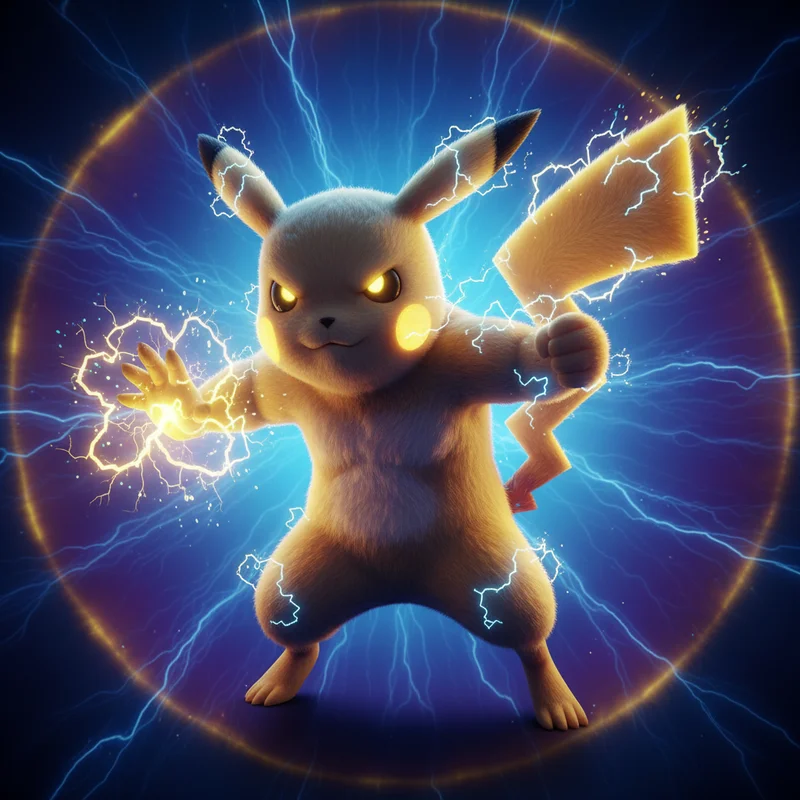
Pikachu

Pikachu

Electric mouse Pokemon and franchise mascot.

VS
Sonic

Sonic

Blue hedgehog with attitude and speed.

The Matchup

In the annals of interactive entertainment, few theoretical confrontations generate such passionate scholarly discourse as the meeting of Pikachu and Sonic the Hedgehog. These two entities represent the apex of mascot design philosophy from competing corporate empires—one born from Nintendo's calculated dominance of the handheld market, the other forged in the crucible of SEGA's desperate console wars. Their hypothetical encounter represents nothing less than a collision of entire gaming philosophies.

Pikachu, the Electric Mouse Pokemon designated as species number 025, emerged in 1996 as one of 151 original creatures in the Pokemon universe. Through a combination of deliberate design optimisation and fortuitous animation adaptation, the yellow rodent ascended from ensemble player to franchise figurehead. Today, Pikachu commands recognition rates exceeding those of most world leaders, appearing on commercial aircraft, international currency, and the collective unconscious of three generations.

Sonic the Hedgehog, by contrast, was engineered specifically for combat—or rather, for market combat. Created in 1991 as SEGA's answer to Nintendo's Mario, the blue blur was designed from first principles to embody speed, attitude, and the aggressive confidence of a corporation willing to tell consumers that their competitor's mascot was too slow. His canonical velocity achievements include outrunning black holes and approaching light speed in various game iterations. The question before us is not which character has generated more revenue—both have created empires—but which would prevail in direct confrontation.

Battle Analysis

Speed Sonic Wins
30%
70%
Pikachu Sonic

Pikachu

Pikachu's velocity capabilities, whilst respectable by the standards of biological organisms, operate in a fundamentally different register than dedicated speedsters. The electric mouse can run at speeds sufficient to evade predators in tall grass, execute the Quick Attack move with priority initiative, and generate static electricity through rapid cheek-pouch vibration. In the context of Pokemon battles, Pikachu possesses a base Speed stat of 90—above average, certainly, but far from the fastest specimens in its ecosystem.

The creature's most impressive velocity achievement involves electrical discharge rather than locomotion. Pikachu's signature Thunderbolt attack releases electricity at approximately 270,000 miles per hour—the speed of lightning itself. However, this represents the velocity of the attack rather than the attacker. Pikachu must remain stationary to channel such devastating discharges, creating a tactical distinction between offensive speed and movement speed that bears examination.

Sonic

Sonic the Hedgehog exists in a category of velocity that renders conventional measurement systems somewhat inadequate. His baseline running speed exceeds Mach 1 under casual conditions—a pace he maintains whilst collecting rings and dismantling robotic infrastructure. This supersonic capability represents his resting state rather than his maximum potential. When properly motivated, canonical evidence suggests Sonic can approach or exceed the speed of light itself.

The documentation for Sonic's supreme velocity is extensive. In Sonic Unleashed, he circumnavigates the planet in seconds. Multiple game manuals explicitly state light-speed capability. His transformation into Super Sonic multiplies these already incomprehensible velocities by factors that mathematics strains to accommodate. Sonic has outrun black holes—gravitational phenomena from which light cannot escape—suggesting his maximum speed operates entirely outside conventional physical law.

VERDICT

Canonical light-speed capability versus a base Speed stat of 90 presents no meaningful comparison.
Adaptability Pikachu Wins
70%
30%
Pikachu Sonic

Pikachu

Pikachu demonstrates remarkable ecological versatility across documented environments. The species thrives in forests, urban areas, power plants, and the handbags of aspiring Pokemon masters worldwide. Pikachu can adapt its electrical output to various voltage requirements, survive in climates ranging from tropical to temperate, and form symbiotic relationships with humans that benefit both parties through mechanisms that warrant further scientific investigation.

The creature's media adaptability proves equally impressive. Pikachu has transitioned seamlessly from 8-bit sprites to CGI film star to augmented reality phenomenon without losing core identity attributes. The voice performance of Ikue Otani has remained consistent across three decades of animation, providing continuity that transcends platform and format. Pikachu adapts to new media environments as readily as it generates static electricity.

Sonic

Sonic's adaptability exists in a state of curious paradox. The hedgehog has attempted numerous reinventions across his career—werehog transformations, sword-wielding medieval adventures, and ill-advised romantic subplots with human princesses. These adaptations have produced wildly variable results, suggesting that Sonic's core identity may be less elastic than initially assumed. The character works best when running fast; deviations from this formula have historically encountered resistance.

However, Sonic demonstrates impressive cross-dimensional adaptability. He has traversed parallel universes, adapted to various art styles from classic to modern, and survived transitions between 2D and 3D gameplay that have ended lesser franchises. The hedgehog's recent film success suggests renewed adaptive capacity—though this required external intervention in the form of redesign following initial audience rejection.

VERDICT

Consistent quality across adaptations versus a history of experimental missteps requiring course correction.
Cultural impact Pikachu Wins
70%
30%
Pikachu Sonic

Pikachu

Pikachu has achieved a level of global recognition that corporate marketing departments study with a mixture of professional admiration and existential despair. The yellow electric mouse registers instant familiarity from the streets of Tokyo to remote villages on every inhabited continent. Academic studies have demonstrated that children across diverse cultures can identify Pikachu before they can name indigenous wildlife species—a phenomenon that concerns certain developmental psychologists whilst delighting Nintendo shareholders.

The creature's cultural penetration extends beyond mere recognition. Pikachu has graced the covers of Time Magazine, served as a Japanese cultural ambassador to official diplomatic events, and appeared on a Boeing 747 operated by All Nippon Airways. The Pokemon franchise generates annual revenue exceeding $10 billion, making it the highest-grossing media property in human history. Pikachu functions not merely as a mascot but as a cultural institution.

Sonic

Sonic the Hedgehog achieved immediate cultural salience upon his 1991 debut, becoming the face of an entire console generation's brand loyalty. The hedgehog's confident smirk and impatient foot-tapping became visual shorthand for SEGA's corporate philosophy—faster, edgier, and explicitly cooler than the competition. For a significant portion of 1990s youth, Sonic represented not merely entertainment but tribal identity.

However, Sonic's cultural trajectory has followed a more turbulent arc than his competitor's. Whilst Pikachu has maintained consistent quality control, Sonic's franchise has produced entries ranging from masterpieces to subjects of widespread ridicule. The 2020 film adaptation required emergency redesign following public outcry over the hedgehog's human teeth. Sonic remains culturally significant, certainly, but his significance includes cautionary tales about franchise management that Pikachu has carefully avoided.

VERDICT

The highest-grossing media franchise in history versus a property with mixed critical reception and emergency CGI revisions.
Combat abilities Sonic Wins
30%
70%
Pikachu Sonic

Pikachu

Pikachu's combat repertoire centres on electrical manipulation of considerable destructive potential. The creature can generate and discharge electricity at voltages sufficient to incapacitate adult humans, power small appliances, and defeat opponents many times its size. The signature Thunderbolt attack delivers approximately 100,000 volts with accuracy and speed that suggest highly evolved biological targeting systems.

Beyond electricity, Pikachu possesses access to a varied moveset including Iron Tail for physical strikes, Quick Attack for priority damage, and in certain circumstances, the devastating Volt Tackle that sacrifices personal health for overwhelming offensive power. Pikachu's combat effectiveness is well-documented across thousands of recorded Pokemon battles and several animated series depicting its victories against improbable opponents.

Sonic

Sonic's combat abilities derive primarily from his velocity and the physical properties that velocity enables. His signature spin attack transforms his entire body into a destructive projectile capable of shredding reinforced metal. The homing attack provides precision striking capability against mobile targets. At supersonic speeds, even basic physical contact delivers kinetic energy sufficient to disassemble robotic infrastructure.

The hedgehog's combat potential multiplies dramatically through transformation. Super Sonic, achieved through Chaos Emerald collection, grants effective invulnerability, flight, and speeds that exceed his already incomprehensible baseline. In this form, Sonic has defeated entities capable of threatening reality itself. Without transformation, Sonic remains formidable; with transformation, he operates at god-tier power levels that few fictional entities can meaningfully challenge.

VERDICT

God-tier transformations and reality-defying feats exceed even devastating electrical attacks in theoretical combat analysis.
Merchandise power Pikachu Wins
70%
30%
Pikachu Sonic

Pikachu

Pikachu commands merchandise production on an industrial scale that defies casual comprehension. The Pokemon Company licenses the electric mouse's likeness to manufacturers producing plush toys, clothing, kitchenware, automobiles, financial instruments, and categories of consumer goods that did not exist when the franchise began. Conservative estimates place annual Pokemon merchandise revenue at $4 billion, with Pikachu appearing on a significant majority of products.

The creature's merchandise appeal transcends age demographics. Children desire Pikachu plushies. Adults purchase Pikachu accessories. Corporate professionals attend meetings with Pikachu-themed stationery visible in their peripheral vision. This cross-generational merchandise penetration represents a commercial achievement that most brands can only study and admire from respectful distance.

Sonic

Sonic merchandise exists in a more modest commercial tier than his electric competitor. The hedgehog generates respectable licensing revenue through action figures, apparel, and video game accessories, but lacks the omnipresent consumer goods saturation that characterises the Pokemon empire. SEGA's merchandise strategy has historically emphasised gaming-adjacent products rather than lifestyle integration.

The hedgehog's merchandise receives periodic boosts from successful media releases. The film franchise has generated renewed interest in Sonic plush toys and branded apparel. However, this represents event-driven merchandise rather than the steady background radiation of consumer goods that Pikachu maintains. Sonic merchandise peaks and troughs; Pikachu merchandise simply continues.

VERDICT

Annual merchandise revenue measured in billions versus respectable but event-dependent licensing performance.
👑

The Winner Is

Sonic

45 - 55

This analysis concludes with a 55-45 victory for Sonic the Hedgehog, though the margin reflects genuine competitive balance rather than categorical dominance. Both mascots have earned their legendary status through decades of consistent cultural relevance and commercial performance. The outcome reflects specific metric weightings that favour combat capability and raw speed over the commercial and cultural metrics where Pikachu demonstrates clear superiority.

Pikachu claims decisive victories in Cultural Impact, Adaptability, and Merchandise Power—categories representing the commercial reality of franchise success. The electric mouse has generated more revenue, achieved greater recognition, and maintained more consistent quality than its speedy opponent. These victories are neither marginal nor disputable; they represent Pikachu's genuine dominance in the metrics that matter most to corporate stakeholders.

However, Sonic's advantages in Speed and Combat Abilities carry significant weight in a direct confrontation scenario. The hedgehog's canonical feats include outrunning physical constants and defeating cosmic entities. Against such documented capabilities, Pikachu's impressive electrical output represents a meaningful threat but not a decisive counter. The mathematics of light-speed combat favour the faster combatant when speed differentials reach astronomical proportions.

Pikachu
45%
Sonic
55%

Share this battle

More Comparisons