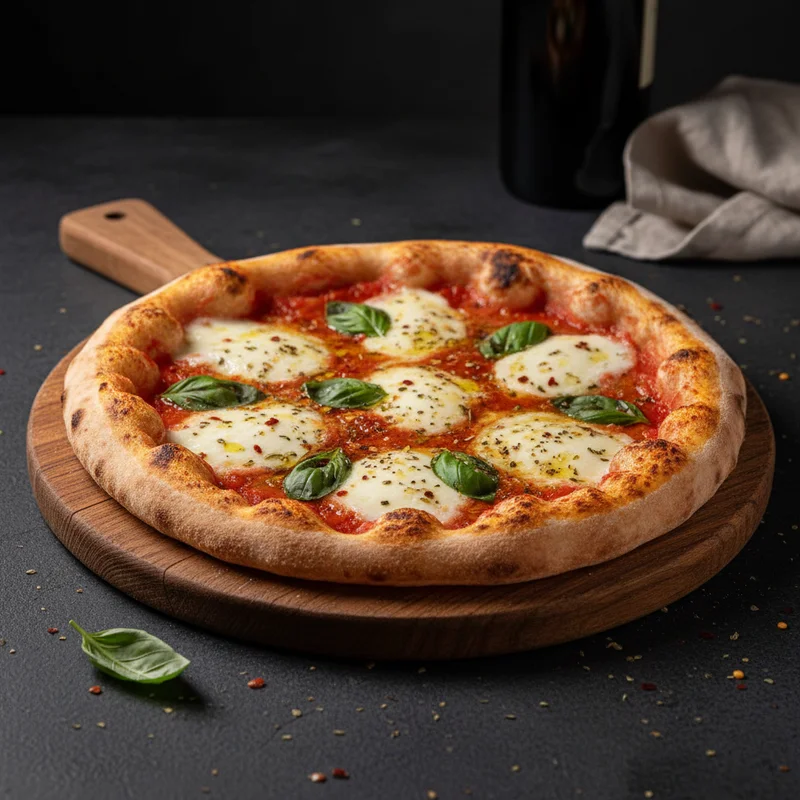
Pizza
The pizza demonstrates extraordinary morphological flexibility. Its flat surface functions as a canvas upon which infinite variations may be painted. From the controversial Hawaiian iteration featuring pineapple to the Japanese mayonnaise and corn specimens, pizza absorbs local ingredients with remarkable tolerance. The crust itself varies from the gossamer-thin Roman style to the substantial Chicago deep-dish, a variation so extreme it arguably constitutes a separate species entirely. Vegetarian, vegan, gluten-free—the pizza accommodates all dietary restrictions with minimal structural compromise. This adaptability extends to consumption context: pizza functions equally at children's parties and corporate boardrooms, a versatility few foods achieve.
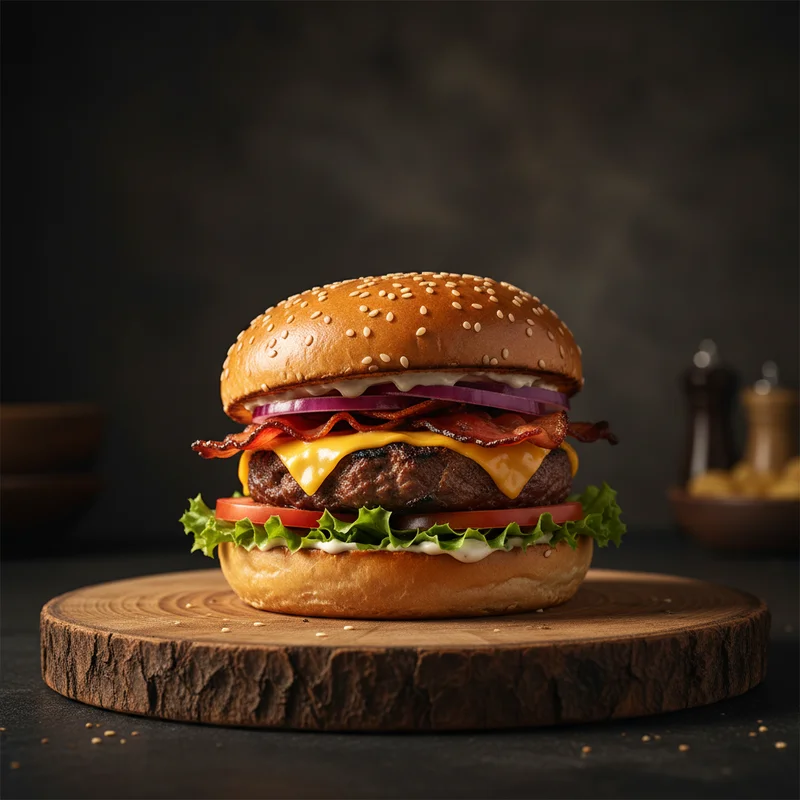
Burger
The burger's adaptability, whilst genuine, operates within more constrained parameters. The fundamental architecture—protein patty between bread hemispheres—permits variation but resists radical reimagining. Attempts to transcend these boundaries, such as the sushi burger or ramen burger, often read as novelty rather than evolution. The burger excels in protein substitution, readily accepting beef, chicken, fish, or plant-based alternatives without existential crisis. However, its vertical construction creates practical limitations; beyond a certain height, the burger becomes an engineering challenge rather than a food item. The infamous 'Instagram burger'—stacked impossibly high—represents adaptability's dark extreme, where form overwhelms function entirely.