
Topic Battle

Where Everything Fights Everything

Pizza

Pizza

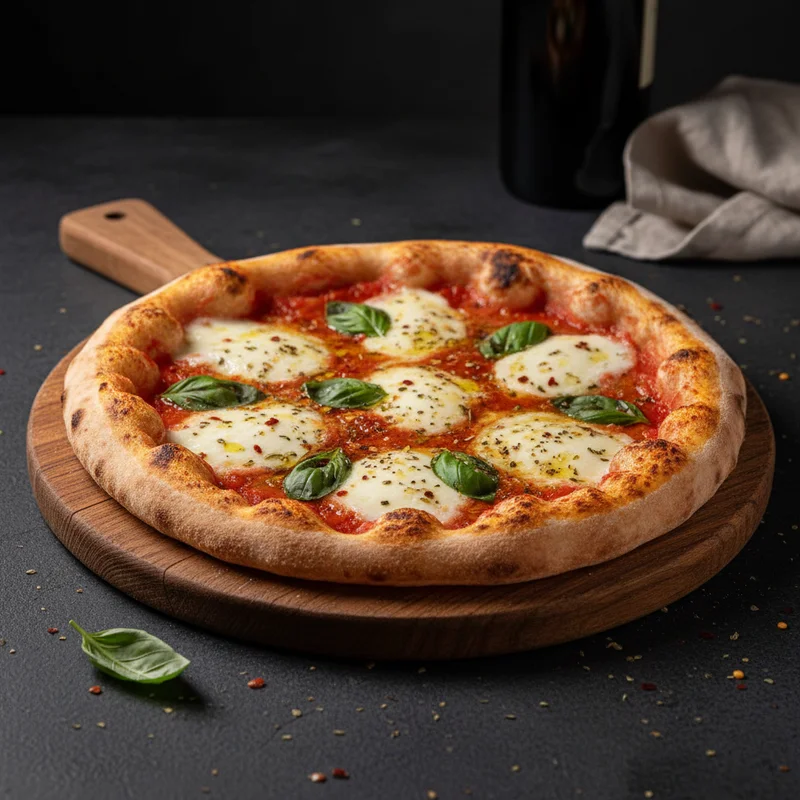
A flat disc of bread that convinced the world that putting everything on top of something is a legitimate cuisine. Somehow both a $1 slice and a $40 artisanal experience, depending on how seriously you take yourself.

VS
Dog

Dog

Loyal canine companion celebrated for unconditional love, tail wagging, and being humanity's best friend for millennia.

Battle Analysis

Adaptability dog Wins
30%
70%
Pizza Dog

Pizza

The pizza demonstrates extraordinary morphological flexibility in response to environmental pressures. It has adapted to local tastes across every cuisine—accepting pineapple in Hawaii, corn and mayonnaise in Japan, and reindeer meat in Finland without losing its fundamental identity. Its crust thickness varies from the paper-thin Roman style to the substantial Chicago deep dish; its shape has expanded from circles to rectangles to heart-shaped Valentine's specials. This adaptability has allowed the pizza to infiltrate markets that initially resisted foreign foods.

Technologically, pizza has evolved with remarkable agility. It was among the first foods to embrace delivery applications, tracking technology, and contactless payment systems. It has adapted to dietary restrictions, spawning gluten-free, vegan, and cauliflower-crusted variants. The pizza has even adapted to space travel, with specialised versions developed for astronaut consumption aboard the International Space Station. Its willingness to modify itself for any context represents evolutionary success of the highest order.

Dog

The domestic dog represents one of evolution's most spectacular demonstrations of adaptive radiation. From the ancestral wolf, humans have shaped over 340 recognised breeds, ranging from the two-kilogram Chihuahua to the 90-kilogram English Mastiff. Dogs have adapted to climates from the Arctic (where Huskies thrive) to the Sahara (where the Basenji hunts). Their behavioural adaptability is equally impressive—the same species serves as guide dog, police dog, therapy dog, and fashion accessory depending on training and context.

Unlike the pizza's passive adaptation to market forces, dogs demonstrate active behavioural plasticity. They learn to interpret human language, recognising an average of 165 words with some exceptional individuals understanding over 1,000. They adapt their sleep schedules to match their owners, their activity levels to available space, and their demeanour to social situations. The dog's adaptability includes emotional calibration—adjusting their interaction style based on whether they encounter children, elderly individuals, or other dogs. This represents adaptation of consciousness itself, not merely form.

VERDICT

Pizza adapts its physical form to markets; dogs adapt behaviour, physiology, and emotional responses across 340 breeds to serve virtually any human need.
Comfort level dog Wins
30%
70%
Pizza Dog

Pizza

The comfort offered by pizza is immediate, predictable, and universally accessible. Its warmth radiates from the box upon opening; its aroma triggers anticipatory pleasure responses in the human brain. The act of consuming pizza requires no emotional vulnerability, no commitment beyond the moment of purchase, and no risk of rejection. Pizza does not judge its consumer's appearance, career choices, or relationship status. It arrives, it satisfies, it departs—a perfect transaction of comfort without complication.

The psychological comfort of pizza operates on deeply embedded neurological pathways. The combination of carbohydrates, fats, and salt triggers dopamine release with pharmaceutical precision. For humans experiencing stress, grief, or simple exhaustion, pizza offers reliable solace. Its presence at celebrations creates positive associations; its availability during crises provides stability. The pizza asks nothing in return for this comfort—no walks, no veterinary bills, no guilt when one returns home late from work.

Dog

Canine comfort operates through an entirely different mechanism—one of active, responsive emotional engagement. A dog perceives its owner's emotional state and adjusts its behaviour accordingly, moving closer during moments of distress, offering physical contact through leaning or placing a head upon the lap. This comfort is not passive like the pizza's; it is dynamic and intentional. Research confirms that the human-canine gaze triggers mutual oxytocin release, the same hormone responsible for maternal-infant bonding.

The physical warmth of a dog—typically between 38 and 39 degrees Celsius—exceeds that of any pizza and, crucially, maintains itself indefinitely without cooling. The softness of fur against human skin activates tactile comfort receptors. Dogs provide what psychologists term secure attachment: a reliable presence that does not diminish with repeated interaction. Unlike pizza, whose comfort ends with the final bite, a dog's comfort accumulates over years, deepening through shared experience and genuine emotional connection.

VERDICT

Pizza offers reliable but temporary comfort through consumption; dogs provide active, responsive emotional support that deepens over time and includes genuine attachment.
Daily utility dog Wins
30%
70%
Pizza Dog

Pizza

In terms of practical daily application, the pizza presents a compelling argument for efficiency. It serves as breakfast, lunch, dinner, and midnight sustenance without requiring modification. Its portability allows consumption while walking, driving, or attending to other matters. A single pizza can feed between one and eight humans, depending on individual appetites and social dynamics. The average preparation time of twelve to fifteen minutes for a delivery order represents a remarkable return on temporal investment.

The pizza's utility extends beyond mere nutrition. It serves as a universal social lubricant—the default choice for office meetings, children's parties, and awkward first dates. Its divisibility into equal portions promotes fairness; its variety of toppings accommodates diverse preferences within a single order. Unlike most foods, pizza maintains acceptable palatability when cold, extending its useful lifespan well beyond initial service. For the busy human, it represents sustenance with minimal cognitive overhead.

Dog

The domestic dog offers a fundamentally different category of utility—one that operates on emotional and psychological rather than nutritional frequencies. Studies published in peer-reviewed journals confirm that dog ownership correlates with reduced blood pressure, decreased cortisol levels, and increased oxytocin production. Dogs provide security services, alerting their humans to potential threats with an enthusiasm that home alarm systems cannot replicate. They serve as exercise motivators, compelling their owners to walk an average of twenty-two additional minutes daily.

Beyond physical benefits, dogs offer companionship that operates continuously rather than in discrete meal-sized portions. They greet their owners with genuine enthusiasm regardless of the owner's professional success or social standing. Dogs serve as conversation initiators in public spaces, grief counsellors during difficult periods, and judgement-free witnesses to human behaviour that might otherwise cause embarrassment. Their utility, while less immediately tangible than a pizza's caloric contribution, operates across every waking hour of their owners' lives.

VERDICT

Pizza provides essential but intermittent nutrition; dogs deliver continuous psychological benefits including stress reduction, security, and companionship throughout each day.
Global recognition dog Wins
30%
70%
Pizza Dog

Pizza

The pizza has achieved a form of culinary world domination that would make any empire envious. From the streets of Naples to the frozen food aisles of Reykjavik, from the delivery apps of Shanghai to the wood-fired ovens of Melbourne, the circular flatbread maintains an estimated global market value exceeding 150 billion dollars annually. Its silhouette requires no translation—the distinctive triangle slice has become a universal symbol of sustenance, celebration, and late-night regret. Even nations with ancient culinary traditions have surrendered to its appeal, adapting local ingredients to fit its undemanding template.

The pizza's recognition transcends mere commerce. It appears in emoji keyboards worldwide, serves as the default food of choice in children's programming across all cultures, and has been successfully launched into space for astronaut consumption. Its image adorns clothing, accessories, and tattoos on every inhabited continent. The pizza asks nothing of its admirers except consumption, making friendship with it remarkably uncomplicated.

Dog

The domestic dog, Canis lupus familiaris, maintains an even more profound position in global consciousness. With an estimated population of 900 million individuals worldwide, dogs have established themselves on every continent where humans reside, including research stations in Antarctica. Their recognition is not merely visual but deeply emotional—the word for dog exists in every human language, often among the first words children learn to speak. Archaeological evidence confirms their presence in human settlements dating back over fourteen thousand years, making them humanity's oldest non-human companion.

The dog's global footprint extends beyond mere presence. They serve in military and police forces of virtually every nation, guide the visually impaired across six continents, and appear in the mythology and folklore of cultures from the Arctic Circle to the Australian Outback. Their image adorns ancient Egyptian tombs, Roman mosaics, and contemporary social media feeds with equal frequency. The dog has achieved something the pizza cannot claim: recognition as a legitimate family member in legal systems worldwide.

VERDICT

While pizza commands impressive commercial recognition, the dog's fourteen millennia of cultural integration and legal status as a family member represents deeper global significance.
Historical significance dog Wins
30%
70%
Pizza Dog

Pizza

The pizza's historical journey, while impressive, spans a relatively modest timeframe. The flatbread with toppings concept emerged in ancient Mediterranean cultures, but the pizza as we recognise it today—with tomato sauce—could only exist after the sixteenth-century Columbian Exchange brought tomatoes to Europe. The modern pizza was codified in Naples during the eighteenth century, achieving international recognition only when Italian immigrants carried it to the Americas in the late 1800s. Its global dominance is thus a phenomenon of the twentieth and twenty-first centuries.

Nevertheless, pizza has accumulated significant historical markers. The Margherita pizza of 1889, allegedly created for Queen Margherita of Italy, represents a documented moment of culinary nationalism. Pizza's role in American post-war culture—fuelling the suburbs, feeding the counterculture, democratising dining—constitutes genuine social history. Its recognition by UNESCO as part of Neapolitan cultural heritage in 2017 confirms its transition from mere food to protected cultural artifact.

Dog

The historical significance of the domestic dog dwarfs that of any food item, pizza included. Archaeological evidence places dogs alongside humans at least 14,000 years ago, with some studies suggesting domestication began over 30,000 years ago. This partnership predates agriculture, cities, writing, and every other marker of civilisation. Dogs were present when humans first crossed into the Americas; they accompanied the earliest seafaring peoples across the Pacific. The dog is not merely part of human history—it is co-author of human history.

Dogs appear in the earliest human artwork, guard the underworld in Greek mythology as Cerberus, and guide souls in Egyptian religion as Anubis. They feature in the first written literature—the Epic of Gilgamesh mentions dogs, as do the earliest Chinese texts. Dogs served in every major human conflict, from ancient battles to modern warfare. Laika the dog preceded human spaceflight; dogs aided in the discovery of insulin. The dog's historical significance extends across every domain of human endeavour, from hunting to herding to healing. No food, however beloved, can claim comparable impact on the trajectory of human civilisation.

VERDICT

Pizza's history spans centuries; dogs have co-evolved with humans for over 14,000 years, shaping mythology, warfare, exploration, and the fundamental structure of civilisation.
👑

The Winner Is

Dog

45 - 55

Our investigation reveals what careful observers might have suspected: these two subjects, though superficially incomparable, compete for the same fundamental resource—human affection. Both have achieved remarkable success in this competition, embedding themselves so deeply into human life that their absence would create genuine psychological distress. The pizza offers reliable, uncomplicated comfort requiring nothing beyond monetary exchange. The dog offers something more demanding and more profound—a relationship that evolves, deepens, and persists across the years of a human life.

The pizza's advantages are not inconsiderable. Its accessibility, its predictability, and its complete absence of obligation make it an ideal companion for the commitment-averse. It will never need walking in the rain, never require expensive veterinary intervention, never destroy furniture during periods of separation anxiety. For pure efficiency of comfort delivery per unit of effort invested, the pizza remains unmatched in the animal and culinary kingdoms alike.

Yet the dog prevails in this assessment, scoring 55 to the pizza's 45, because its contributions operate on a different order of magnitude. The dog does not merely satisfy a need; it creates needs we did not know we had and then satisfies them completely. The bond between human and dog represents something the pizza cannot offer: genuine reciprocity. The dog cares whether its human returns home; it experiences joy at reunion and distress at separation. This emotional investment, this mutual attachment forged over fifteen millennia of co-evolution, elevates the dog beyond the category of comfort object into something approaching partnership.

Pizza
45%
Dog
55%

Share this battle

More Comparisons