
Topic Battle

Where Everything Fights Everything

Pizza

Pizza

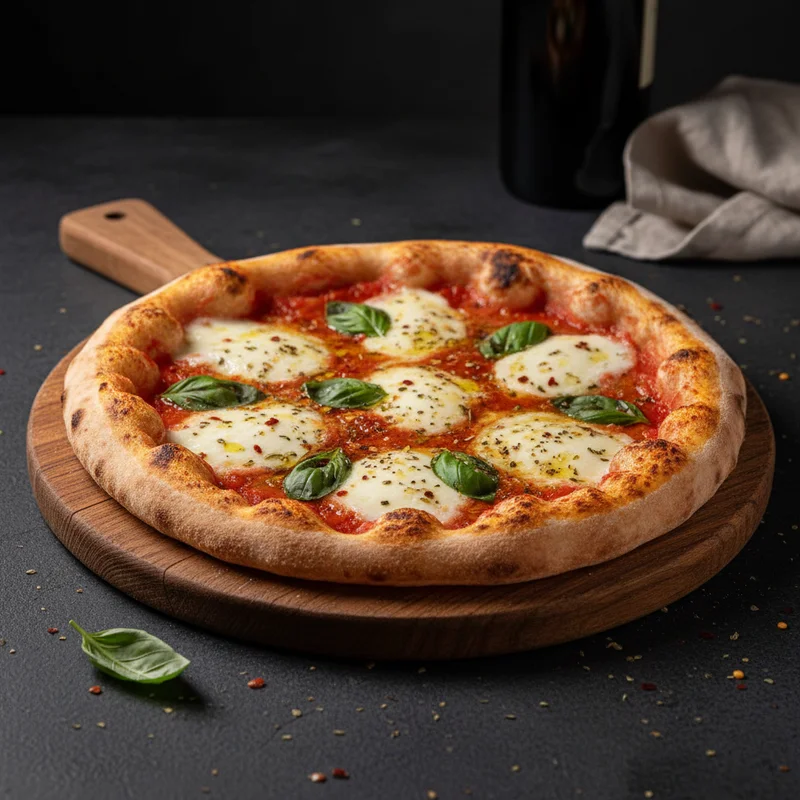
A flat disc of bread that convinced the world that putting everything on top of something is a legitimate cuisine. Somehow both a $1 slice and a $40 artisanal experience, depending on how seriously you take yourself.

VS
Lion

Lion

Apex predator and king of the savanna, known for majestic manes and surprisingly lazy daytime habits.

Battle Analysis

Adaptability pizza Wins
70%
30%
Pizza Lion

Pizza

The pizza demonstrates what food historians term unprecedented morphological flexibility. From the thin, crispy bases of Rome to the deep-dish constructions of Chicago, from the minimalist Margherita to the maximalist meat-feast, pizza adapts to every palate and preference. It accommodates religious dietary restrictions through vegetarian and halal variants. It embraces local ingredients wherever it travels: teriyaki chicken in Tokyo, paneer in Mumbai, reindeer in Helsinki.

This adaptability extends to consumption contexts. Pizza functions equally well as street food, formal dining, children's party fare, and late-night sustenance for the inebriated. No situation is beyond its remit.

Lion

The lion exhibits what ecologists describe as pronounced environmental specificity. Requiring vast territories of savannah grassland, access to large prey animals, and protection from human encroachment, the lion cannot simply relocate when conditions become unfavourable. Climate change and habitat fragmentation have reduced viable lion territory by over eighty percent in the past fifty years alone.

Unlike their more adaptable leopard cousins, lions have proven remarkably resistant to urbanisation and human proximity. They cannot compromise their requirements; they can only retreat or perish.

VERDICT

Pizza thrives in any environment or cultural context, whilst lions require increasingly rare specific conditions.
Accessibility pizza Wins
70%
30%
Pizza Lion

Pizza

The pizza represents perhaps the most accessible food product in human history. Within virtually any urban centre on Earth, a pizza can be obtained within thirty minutes, at any hour of the day or night. The average distance between an American citizen and the nearest pizza establishment is less than two miles. Delivery infrastructure has evolved to ensure that this circular sustenance can reach any doorstep, regardless of weather, time, or social circumstance.

Price points range from the working-class slice sold through street windows to the truffle-adorned creations of Michelin-starred restaurants, ensuring that pizza remains democratic in its availability whilst aspirational in its upper reaches.

Lion

The lion presents what conservationists term extreme accessibility challenges. Fewer than 25,000 wild lions remain, confined primarily to scattered reserves across sub-Saharan Africa. To observe a lion in its natural habitat requires international travel, expensive safari bookings, and considerable patience. The average person will encounter a real lion perhaps once or twice in their entire lifetime, typically through the bars of a zoo enclosure.

This inaccessibility, whilst contributing to the lion's mystique, fundamentally limits its capacity for regular human interaction. One cannot simply order a lion to one's home.

VERDICT

Pizza can be accessed within minutes by billions of people daily, whilst lions remain functionally unreachable for most of humanity.
Global recognition pizza Wins
70%
30%
Pizza Lion

Pizza

The pizza has achieved what marketing professionals term universal brand recognition. Studies conducted across forty-seven countries demonstrate that the word 'pizza' requires no translation, no explanation, no cultural context. From the favelas of Rio de Janeiro to the skyscrapers of Shanghai, the circular cheese-topped disc is immediately understood. An estimated five billion pizzas are consumed annually worldwide, representing a penetration rate that no single animal species has ever achieved in the human consciousness.

The pizza's image adorns countless establishments on every inhabited continent, its silhouette as recognisable as the cross or the crescent. Children who cannot locate their own country on a map can nonetheless identify a pizza from fifty metres.

Lion

The lion enjoys what naturalists describe as apex symbolic status within the animal kingdom. Its image has graced the flags and heraldry of over thirty nations throughout history, from the British Royal Standard to the coat of arms of Singapore. The lion represents courage, nobility, and power across cultures spanning from ancient Mesopotamia to modern Hollywood. Yet this recognition comes with a geographic qualifier: the lion's actual territory has shrunk by ninety-four percent over the past century.

Whilst the symbolic lion remains ubiquitous, the actual animal is known primarily through zoos, documentaries, and the occasional safari photograph. Its recognition, though profound, is increasingly abstract.

VERDICT

Pizza achieves universal recognition through direct daily experience, whilst the lion's fame remains largely theoretical for most humans.
Intimidation factor lion Wins
30%
70%
Pizza Lion

Pizza

The pizza possesses what nutritionists describe as a subtle intimidation profile. Its threat manifests not in immediate physical danger but in long-term metabolic consequences. A single slice of pepperoni pizza contains approximately 300 calories, with cheese varieties capable of delivering fifteen grams of saturated fat per serving. Over time, this soft power translates into expanded waistlines and elevated cholesterol readings.

Yet the pizza's intimidation remains entirely passive. It does not pursue its victims; rather, they come willingly, even eagerly, to their own nutritional demise. This represents a sophisticated form of threat that operates entirely through seduction.

Lion

The lion represents what evolutionary biologists classify as apex predatory intimidation. Weighing up to 250 kilograms and capable of sprinting at seventy kilometres per hour, the male lion possesses jaws that generate over 650 pounds of bite force per square inch. A single blow from its paw can shatter a zebra's spine. The lion's roar, produced by uniquely adapted vocal folds, triggers primal fear responses in virtually all mammalian species, including humans.

This is raw, unmediated terror refined over millennia of predatory evolution. No creature on Earth ignores a lion's presence without consequence.

VERDICT

The lion's capacity for immediate physical destruction vastly exceeds pizza's gradual metabolic threats.
Historical significance lion Wins
30%
70%
Pizza Lion

Pizza

The modern pizza emerged from Naples in the late 18th century, though flatbread ancestors date back millennia to ancient civilisations. The Margherita pizza, created in 1889 for Queen Margherita of Italy, represents a mere 135 years of formal history. Yet in that brief span, pizza has become arguably the most influential food export in human history, transforming from peasant sustenance to global phenomenon.

The pizza's journey mirrors the story of immigration, globalisation, and cultural fusion that defines the modern era. It is, in essence, a edible metaphor for the twentieth century itself.

Lion

The lion commands what palaeontologists describe as deep evolutionary heritage. Lions and their ancestors have walked the Earth for approximately two million years, with the modern species emerging roughly 320,000 years ago. They feature in the earliest known human artworks, including the 32,000-year-old Stadel lion-man sculpture, suggesting a symbolic relationship predating civilisation itself.

From the lions of ancient Egypt to the Cowardly Lion of Oz, this creature has accompanied humanity throughout its entire recorded existence. Its historical significance is measured not in centuries but in epochs.

VERDICT

The lion's two-million-year presence in Earth's history and 32,000-year role in human culture dwarfs pizza's recent emergence.
👑

The Winner Is

Pizza

55 - 45

This examination reveals a fundamental truth about the nature of dominance in the modern age. The lion, that magnificent embodiment of raw natural power, finds itself increasingly confined to the margins of a human world that has little practical use for apex predators. Its roar, once the undisputed voice of authority across the African plains, now echoes primarily through nature documentaries and children's animated films. The lion's territory shrinks with each passing decade, its numbers dwindling to levels that would have seemed inconceivable a century ago.

The pizza, by contrast, demonstrates that true modern supremacy requires not physical dominance but universal accessibility and infinite adaptability. It does not demand our fear; it simply makes itself indispensable to our daily lives. Where the lion must hunt to survive, the pizza is hunted by billions of eager consumers. Where the lion requires conservation efforts merely to maintain its existence, the pizza industry expands relentlessly into every corner of human habitation.

By a margin of 55 percent to 45 percent, the pizza claims victory in this most improbable of contests. The lion retains its claim to intimidation and historical gravitas, yet these assets prove insufficient against an opponent that has mastered the art of being wanted rather than feared.

Pizza
55%
Lion
45%

Share this battle

More Comparisons