
Topic Battle

Where Everything Fights Everything

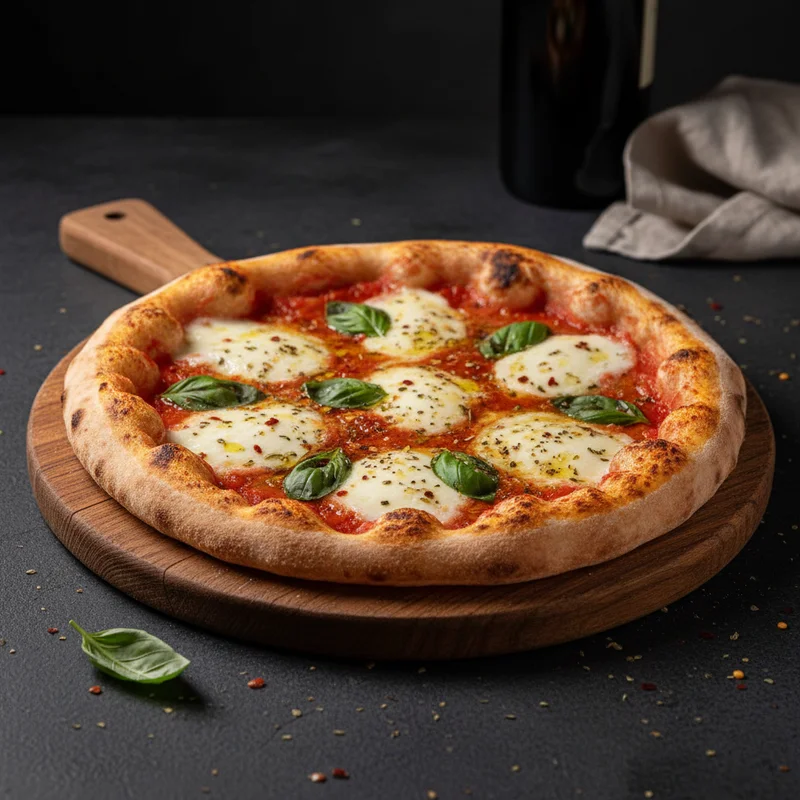
Pizza

Pizza

A flat disc of bread that convinced the world that putting everything on top of something is a legitimate cuisine. Somehow both a $1 slice and a $40 artisanal experience, depending on how seriously you take yourself.

VS
Rabbit

Rabbit

Prolific burrowing mammal known for impressive reproduction rates and twitchy nose appeal.

The Matchup

The pizza and the rabbit represent two distinct evolutionary success stories. The pizza evolved through human culinary innovation, spreading across continents through flavor optimization. The rabbit evolved through biological reproduction, spreading across continents through extraordinary breeding efficiency.

Pizza generates annual global revenues exceeding $150 billion, with major markets in North America, Europe, and increasingly Asia. The delivery infrastructure supporting pizza distribution rivals major logistics operations, deploying hundreds of thousands of delivery personnel nightly.

The Oryctolagus cuniculus, European rabbit, has achieved global distribution through both natural colonization and human introduction. Australian rabbit populations reached 10 billion before myxomatosis introduction, demonstrating reproductive capacity that no food item can match. Both entities now submit to rigorous comparative evaluation.

Battle Analysis

Speed Rabbit Wins
30%
70%
Pizza Rabbit

Pizza

Pizza delivery systems target 30-45 minute fulfillment from order placement. Premium services in dense urban areas achieve sub-20-minute delivery through optimized routing and proximate kitchen networks. The fastest pizza preparation on record occurred in 31.68 seconds.

However, pizza possesses exactly zero autonomous velocity. It cannot hop, run, or otherwise relocate without external transportation assistance. Dropped pizza achieves gravitational acceleration briefly before impact, but this hardly qualifies as controlled locomotion.

Rabbit

Rabbits achieve running speeds of 25-35 mph depending on species, with European rabbits typically reaching 25 mph during evasion. Acceleration from stationary to maximum velocity occurs within seconds. Directional changes execute with agility that confounds pursuing predators.

Reproduction speed represents the rabbit's signature velocity metric. Gestation periods of 28-31 days yield litters averaging 4-12 kits. A single doe can produce 12 litters annually under optimal conditions. This biological velocity enables population explosions that reshape ecosystems.

VERDICT

Speed comparison yields unambiguous rabbit victory. The rabbit achieves autonomous locomotion at 25 mph while pizza achieves autonomous locomotion at 0 mph. This differential admits no reasonable debate.

The rabbit's reproductive velocity compounds the advantage. While pizza requires continuous human production for existence, rabbits produce themselves at rates exceeding any manufacturing capability. Australia's pre-myxomatosis rabbit population demonstrated what autonomous reproduction achieves at scale.

Durability Rabbit Wins
30%
70%
Pizza Rabbit

Pizza

Fresh pizza maintains optimal quality for 30-60 minutes post-preparation. Refrigeration extends acceptable consumption window to 3-4 days. Freezing achieves preservation of 6-12 months, though textural degradation accumulates. Beyond these parameters, pizza becomes inadvisable.

Environmental vulnerability characterizes pizza existence. Heat desiccates. Cold congeals. Humidity promotes mold. Physical impact damages presentation. The pizza lacks any self-repair mechanism, accepting all damage as permanent condition.

Rabbit

Individual rabbits achieve lifespans of 1-2 years in wild conditions, with predation representing primary mortality factor. Domestic rabbits routinely reach 8-12 years. The species demonstrates biological self-repair capabilities addressing minor injuries without intervention.

Population-level durability proves extraordinary. Rabbits have survived ice ages, predator pressure, habitat transformation, and intensive human control efforts. Australian rabbit populations resisted myxomatosis through evolved immunity within decades. The rabbit's durability manifests at population rather than individual level.

VERDICT

Durability assessment delivers categorical rabbit advantage. While individual rabbits may not outlive frozen pizza under certain storage conditions, the species demonstrates resilience that no food product can match.

The rabbit repairs itself, reproduces itself, and adapts to threats through evolutionary response. Pizza depends entirely on continuous human production. Without humans, pizza ceases to exist. Without humans, rabbits likely flourish even more successfully.

Global reach Pizza Wins
70%
30%
Pizza Rabbit

Pizza

Pizza has achieved planetary distribution rivaling any single food item. From Tokyo to Toronto, from Moscow to Melbourne, pizza establishments operate in virtually every urban center. The international pizza market generates revenues across 195 countries.

Local adaptations reflect cultural integration: Japanese pizza with mayonnaise and corn, Indian pizza with paneer, Brazilian pizza with catupiry. Pizza demonstrates memetic flexibility that enables penetration of resistant markets through localized variation.

Rabbit

Rabbits occupy every continent except Antarctica, though this distribution reflects intentional and unintentional human introduction rather than natural colonization. Native range encompasses Europe and Northwest Africa. Introduced populations thrive in Australia, New Zealand, and the Americas.

The rabbit has demonstrated concerning success in novel environments. Australian introduction produced ecological catastrophe as populations exceeded carrying capacity. This expansion, while impressive, represents biological invasion rather than welcomed cultural integration.

VERDICT

Global reach comparison yields pizza victory based on quality of integration. While rabbits technically occupy similar geographic range, their presence often represents ecological problem rather than cultural asset.

Pizza arrives by invitation, generating economic activity and culinary enjoyment. Rabbits often arrive through accidental or ill-advised introduction, generating agricultural damage and ecosystem disruption. Pizza's global reach creates value; rabbit global reach creates management challenges.

Affordability Pizza Wins
70%
30%
Pizza Rabbit

Pizza

Pizza spans price points from $1 frozen varieties to $50+ artisanal configurations. Average delivery pizza costs $15-25 including tip. Pizza's cost-per-calorie ratio compares favorably against most prepared food alternatives.

Large pizza serves 3-4 people, reducing per-person expenditure. Value promotions, loyalty programs, and competitive market dynamics maintain downward price pressure. Pizza represents one of the most affordable prepared foods in developed economies.

Rabbit

Rabbit meat retails at $8-15 per pound, significantly exceeding chicken or pork prices. Pet rabbits cost $20-50 for common breeds, with ongoing care expenses of $500-800 annually for proper maintenance.

Wild rabbit acquisition through hunting requires licensing, equipment, and time investment. The rabbit resists cheap acquisition through any legitimate channel. Its perceived value, whether as food or companion, maintains price points above commodity levels.

VERDICT

Affordability comparison delivers decisive pizza victory. Pizza provides accessible nutrition and entertainment at price points available to most consumers. Rabbit acquisition, whether for consumption or companionship, requires substantially greater investment.

The pizza economy has optimized toward accessibility through scale, competition, and delivery innovation. The rabbit economy remains constrained by biological production limitations and specialized market positioning. Pizza wins on pure economics.

Sustainability Rabbit Wins
30%
70%
Pizza Rabbit

Pizza

Pizza production carries significant environmental footprint. Cheese production generates approximately 13.5 kg CO2 equivalent per kilogram. Wheat cultivation requires substantial water resources. Meat toppings multiply carbon costs. Delivery vehicles emit additional greenhouse gases.

The pizza industry depends on continuous resource extraction from agricultural systems, dairy operations, and petroleum-based logistics. Packaging waste accumulates in landfills. Pizza sustainability requires fundamental industry transformation.

Rabbit

Rabbits operate as remarkably efficient protein converters. Feed conversion ratios of 3:1 to 4:1 compare favorably against beef (6:1) and pork (5:1). Water requirements remain minimal compared to larger livestock. Rabbit manure provides excellent garden fertilizer.

Wild rabbit populations require zero resource inputs, maintaining themselves through natural foraging. However, introduced populations can devastate native vegetation, causing sustainability problems of different character. The rabbit's sustainability depends on appropriate population management.

VERDICT

Sustainability assessment yields narrow rabbit victory based on fundamental resource efficiency. Rabbit protein production requires fewer inputs than most alternatives, while wild populations operate within natural ecosystem parameters.

Pizza's industrial production model generates ongoing environmental costs that rabbit husbandry can minimize. However, the rabbit's sustainability advantage diminishes when populations exceed carrying capacity, as Australian experience demonstrates. Both entities require management for sustainable outcomes.

👑

The Winner Is

Pizza

55 - 45

This analysis concludes with a 55-45 victory for pizza across evaluated metrics. The rabbit demonstrates superiority in speed and durability through biological capabilities, and edges pizza in sustainability through production efficiency. Pizza excels in affordability and global reach through economic accessibility and cultural integration.

The rabbit represents evolutionary success measured in population explosions and continental colonization. Its reproductive efficiency and adaptive capacity command respect from biological perspectives. The species has conquered continents through sheer reproductive mathematics.

However, pizza integrates into human life at frequencies and depths the rabbit cannot approach. Pizza provides nutrition, entertainment, and social facilitation daily for billions of consumers worldwide. The rabbit's relationship with humanity remains more complex, ranging from agricultural pest to beloved pet to protein source. Pizza's role is simpler: beloved food, reliably delivered.

Pizza
55%
Rabbit
45%

Share this battle

More Comparisons