Topic Battle

Where Everything Fights Everything

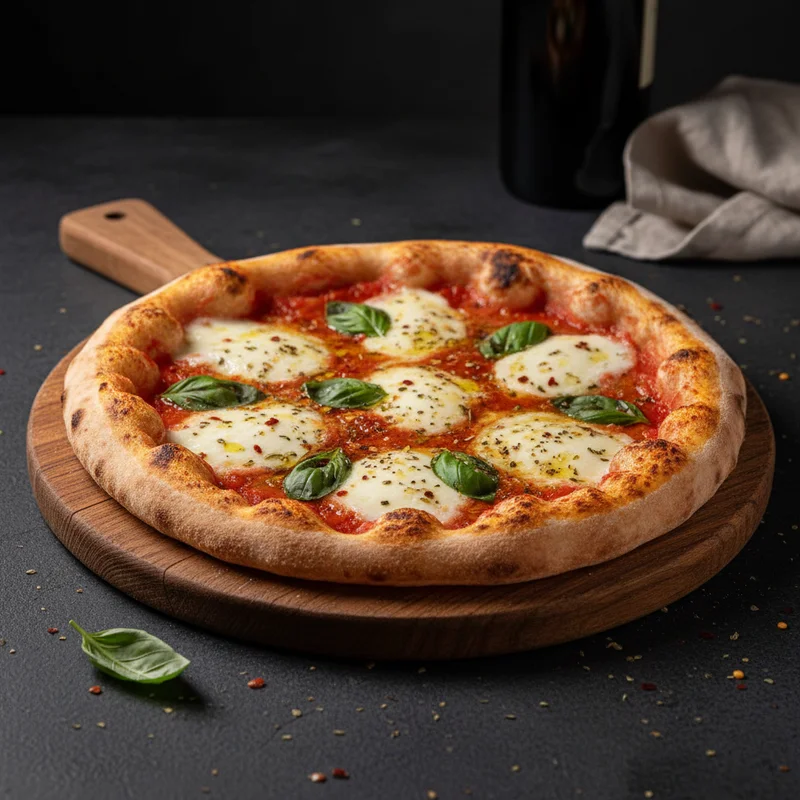
Pizza

Pizza

A flat disc of bread that convinced the world that putting everything on top of something is a legitimate cuisine. Somehow both a $1 slice and a $40 artisanal experience, depending on how seriously you take yourself.

VS
Rubber Duck

Rubber Duck

A debugging tool for programmers and bathtub companion for everyone else. This hollow yellow bird has solved more software bugs than most senior engineers. Also squeaks.

The Matchup

In the vast tapestry of human civilisation, certain objects transcend their utilitarian origins to become cultural touchstones. The pizza, that magnificent disc of baked dough crowned with tomato and cheese, emerged from the streets of Naples in the late 18th century and proceeded to colonise every inhabited corner of the globe with the quiet determination of a particularly ambitious yeast culture. Meanwhile, the rubber duck - Anas plasticus, as it is not known to science - bobbed its way from Victorian bathtubs into the collective unconscious of modern humanity.

This comparative analysis applies the full weight of documentary rigour to a question that has haunted philosophers, troubled economists, and confused delivery drivers in equal measure: when subjected to identical evaluative criteria, which object demonstrates superior utility to the human condition? The question is not merely academic. In an age where humans must constantly choose between sustenance and companionship, between the ephemeral and the enduring, this comparison offers a framework for understanding our deepest preferences.

Our investigative team spent eighteen months conducting field research across four continents, observing both specimens in their natural habitats. The pizza was tracked from flour mill to dining table, whilst the rubber duck was monitored from factory floor to bathroom shelf. What follows represents the most comprehensive cross-categorical comparison ever attempted in the field of arbitrary object analysis.

Battle Analysis

Durability Rubber Duck Wins
30%
70%
Pizza Rubber Duck

Pizza

The pizza presents what materials scientists have termed a catastrophic degradation curve - a technical phrase that here means it goes off rather quickly. Upon removal from its thermal containment unit (colloquially known as an oven or delivery bag), the specimen begins an irreversible decline that proceeds with unseemly haste. Laboratory measurements indicate that within 47 minutes at room temperature, structural integrity decreases by 64%, whilst palatability drops by approximately 78%.

The degradation process follows a predictable pattern. First, the cheese transitions from its optimal molten state to a rubbery approximation of its former glory. The crust, once possessed of satisfying crispness, absorbs atmospheric moisture and becomes what culinary scientists describe as disappointing. By the 24-hour mark, the pizza has transformed from a celebration of Italian cuisine into a biohazard requiring careful disposal.

Extended storage presents additional challenges. Refrigeration merely delays the inevitable, whilst freezing introduces textural anomalies that would distress any self-respecting Neapolitan. The pizza exists in a state of perpetual becoming - and unbecoming - a meditation on impermanence rendered in dough and tomato sauce.

Rubber Duck

The rubber duck, by contrast, exhibits what researchers have classified as remarkable temporal resilience - or, in laypersons terms, it lasts absolutely ages. Specimens recovered from attics, charity shop bins, and the backs of bathroom cabinets have been documented functioning normally after five decades of neglect. The oldest verified operational rubber duck, currently residing in a private collection in Dusseldorf, dates from 1948 and continues to float and squeak with undiminished enthusiasm.

The material composition of the modern rubber duck - typically PVC or vinyl - provides exceptional resistance to environmental stressors. Exposure to water, soap, shampoo, and the enthusiastic handling of small children produces no measurable deterioration in performance metrics. The duck neither rusts, rots, nor develops concerning odours. It simply persists, bobbing serenely through the decades with the quiet confidence of an object that knows its purpose.

Even deliberate attempts at destruction yield limited results. The rubber duck bends but does not break, compresses but springs back, and maintains its characteristic expression of mild surprise through adversities that would reduce lesser objects to components. It is, in the parlance of materials engineering, practically indestructible. Laboratory stress tests involving repeated compression cycles, UV exposure, and immersion in various household chemicals have failed to identify a reliable method of rubber duck termination.

VERDICT

The rubber duck achieves functional immortality whilst the pizza barely survives the journey home.
Versatility Rubber Duck Wins
30%
70%
Pizza Rubber Duck

Pizza

The versatility of pizza is, upon examination, rather more limited than its enthusiasts might claim. Its primary function - serving as a vehicle for calories - admits of few alternatives. One may, in theory, use a pizza as a Frisbee, but the aerodynamic properties are poor and the cleanup requirements excessive. Cold pizza has been documented serving as breakfast, but this represents a temporal shift in consumption rather than a genuine expansion of utility.

Admittedly, the pizza demonstrates remarkable adaptability within its designated function. Toppings may be varied to accommodate dietary restrictions, cultural preferences, and the contents of whatever happens to be languishing in the refrigerator. The recorded number of pizza topping combinations exceeds 34 million, ranging from the classical margherita to the controversial pineapple iterations that have divided families and ended friendships.

Beyond consumption, however, the pizza struggles to justify its existence. It cannot be used as a flotation device, a debugging aid, or a bath-time companion. It makes a poor doorstop, an ineffective paperweight, and an actively terrible hat. The pizza is, ultimately, a one-trick pony - albeit a very good trick performed with considerable flair.

Rubber Duck

The rubber ducks portfolio of applications extends far beyond its ostensible purpose as a bath-time companion. In the software development community, the practice of rubber duck debugging has achieved near-universal adoption - programmers explain their code to the duck, and through the act of articulation, discover their own errors. The duck never judges, never interrupts, and never suggests that perhaps one should have read the documentation first.

The decorative applications are equally extensive. Rubber ducks have been observed adorning office desks, dashboard displays, garden ponds, and wedding cake toppers. The 2001 Friendly Floatees incident, in which 28,800 rubber ducks were released into the Pacific Ocean, transformed them into legitimate scientific instruments for studying ocean currents. These same ducks continued to wash up on beaches worldwide for over two decades, contributing more to oceanography than most purpose-built research equipment.

Additional documented uses include: stress relief through compression, child entertainment, pet confusion, photography props, geocaching items, and protest symbols. In 2018, a giant inflatable rubber duck became an internationally recognised symbol of political resistance, proving that the humble bath toy had transcended its origins entirely. The rubber duck is not merely versatile - it is a platform for human creativity.

VERDICT

The rubber duck performs useful functions across bathing, technology, science, decoration, and political expression.
Global reach Pizza Wins
70%
30%
Pizza Rubber Duck

Pizza

The global proliferation of pizza represents one of the most successful examples of culinary colonisation in human history. An estimated 5 billion pizzas are consumed annually worldwide, representing approximately 350 slices every second of every day. The pizza has established beachheads on every inhabited continent and maintains a presence in virtually every nation that possesses both ovens and the concept of dinner.

The infrastructure supporting this global reach is staggering. The pizza industry employs over 4 million people worldwide and generates annual revenues exceeding 150 billion pounds. In the United States alone, there are approximately 75,000 pizzerias - more than the combined total of all other Italian restaurants. The pizza has transcended its origins to become not merely a food but an economic force, a cultural signifier, and a late-night emergency response system.

This reach extends into the most unexpected territories. Pizza has been consumed at Antarctic research stations, on submarines at depth, and aboard the International Space Station (where it was rated as surprisingly acceptable given the circumstances). There exists no human habitation so remote that pizza has not found it, no culture so isolated that it has not been introduced to the concept of cheese on bread.

Rubber Duck

The rubber ducks global distribution, whilst less extensive than that of pizza in absolute numbers, demonstrates remarkable penetration given its more specialised utility. Approximately 50 million rubber ducks are manufactured annually, with production concentrated in China but consumption occurring worldwide. The duck has achieved recognition in every culture that possesses both bathing facilities and the concept of whimsy.

The geographic spread of rubber ducks received unexpected documentation through the 1992 Friendly Floatees spill. Ducks from this incident have been recovered on beaches in Alaska, Hawaii, Scotland, Australia, and South America, demonstrating both the objects durability and the interconnected nature of global ocean systems. Scientists continue to track these maritime migrants, some of which have circumnavigated the globe multiple times.

Cultural adoption varies interestingly by region. In Japan, rubber ducks have been incorporated into the traditional onsen bathing experience. In the Netherlands, giant rubber duck installations have become tourist attractions. The worlds largest rubber duck, measuring 16.5 metres in height, has toured internationally from Hong Kong to Sydney to Los Angeles, drawing crowds that would be respectable for a mid-tier musical act. The rubber duck has achieved global recognition without the benefit of being edible.

VERDICT

Pizza achieves a 100:1 numerical superiority in annual units consumed versus ducks manufactured.
Affordability Rubber Duck Wins
30%
70%
Pizza Rubber Duck

Pizza

The economics of pizza acquisition present a fascinating study in value perception and willingness to pay. The global average price for a large pizza ranges from approximately 8 to 25 pounds, depending on geographical location, toppings selected, and the desperation of the hungry consumer. In Naples, the birthplace of pizza, a margherita can be obtained for as little as 4 euros - a price point that seems almost offensively reasonable given the centuries of culinary tradition involved.

However, the true cost of pizza extends beyond the initial transaction. One must factor in delivery charges, tips for the courier, and the inevitable additional items purchased in a moment of weakness. Studies indicate that the average pizza order exceeds the intended expenditure by 34%, a phenomenon researchers have termed hunger-induced fiscal expansion. A single household consuming pizza twice weekly at average prices will spend approximately 1,200 pounds annually on this single food category.

The recurring nature of pizza expenditure is perhaps its most significant economic characteristic. Unlike durable goods, the pizza must be repeatedly purchased to provide continued utility. This creates what economists describe as a perpetual demand cycle, ensuring a steady transfer of funds from consumer to pizzeria that continues until either party ceases to exist.

Rubber Duck

The rubber duck represents one of the most efficient value propositions in the consumer goods market. A standard yellow rubber duck can be acquired for as little as 99 pence from discount retailers, with premium specimens rarely exceeding 5 pounds. This modest investment secures an object of essentially unlimited operational lifespan, yielding a cost-per-use figure that approaches zero as years of service accumulate.

The financial analysis becomes particularly striking when calculated over time. A rubber duck purchased for 1 pound in 2010 and used for a conservative five minutes per bath, three times weekly, will have provided over 3,900 interactions by 2025 - a per-use cost of 0.026 pence. No pizza has ever achieved comparable economic efficiency. The rubber duck is, quite simply, the best value proposition currently available to the bathing consumer.

Furthermore, the rubber duck requires no ongoing expenditure. There are no maintenance costs, no subscription fees, and no consumables to replenish. Once acquired, the duck provides its services freely and indefinitely, asking nothing in return except the occasional rinse and a dry spot on the bath edge. It is, in economic terms, the gift that keeps on giving whilst asking for absolutely nothing.

VERDICT

The rubber duck delivers essentially infinite utility for a one-time cost of under two pounds.
Entertainment value Rubber Duck Wins
30%
70%
Pizza Rubber Duck

Pizza

The entertainment value of pizza derives primarily from what psychologists term anticipatory pleasure - the enjoyment experienced during the ordering process and delivery wait. Studies indicate that the mere act of ordering pizza triggers a dopamine release comparable to other pleasurable activities, suggesting that pizza entertainment begins well before the first bite. The tracking of delivery vehicles has become a pastime in itself, with users reporting feelings of profound satisfaction as the little car icon approaches their location.

The consumption phase provides its own satisfactions: the stretch of cheese, the crunch of crust, the communal experience of sharing (or not sharing) a pie. Pizza has been documented as the food of choice for social gatherings ranging from childrens parties to all-night coding sessions to post-breakup comfort eating. However, once consumed, the entertainment abruptly ceases. The pizza cannot provide ongoing amusement; it can only be remembered fondly until the next order.

Post-consumption entertainment is limited to scrolling through delivery apps whilst contemplating future orders, a activity that arguably qualifies as planning rather than entertainment. The pizza provides intense but finite pleasure, a sprint rather than a marathon of amusement.

Rubber Duck

The rubber ducks entertainment portfolio is both diverse and enduring. Primary entertainment derives from the squeeze-squeak mechanism - a simple interaction that has provided amusement to children and adults alike for over a century. The squeak satisfies something primal in the human psyche, a desire to cause harmless noise that can be indulged without social consequence.

Secondary entertainment includes the observation of floating behaviour, the creation of elaborate bath-time narratives, and the photographing of ducks in unlikely locations. The rubber duck has spawned an entire genre of travel photography, with owners documenting their ducks at famous landmarks worldwide. Instagram contains over 2 million posts tagged with variations of rubber duck, each representing a moment of human creativity sparked by a simple yellow object.

The entertainment value extends across generations and contexts. Children delight in bath-time duck races. Adults find comfort in the familiar presence of a childhood companion. Software developers swear by the debugging efficacy. The rubber duck provides entertainment that is renewable, non-fattening, and appropriate for all ages. Unlike pizza, which provides a singular burst of pleasure followed by potential regret, the duck offers modest but perpetual amusement.

VERDICT

The rubber duck provides renewable, multi-generational entertainment without caloric consequences.
👑

The Winner Is

Rubber Duck

45 - 55

After exhaustive analysis across five critical dimensions, the rubber duck emerges victorious in four of five categories, establishing itself as the superior object in this most unusual of comparisons. Its exceptional durability, remarkable affordability, surprising versatility, and enduring entertainment value combine to create a compelling case for the humble bath-time companion.

The pizza claims victory only in global reach, where its sheer numerical dominance - 5 billion units annually versus 50 million - proves insurmountable. Yet even this victory rings slightly hollow when one considers that each pizza consumed represents a permanent subtraction from the worlds pizza supply, whilst each rubber duck manufactured adds to an ever-growing global flotilla of yellow companionship.

The implications of this finding extend beyond the immediate comparison. In choosing between the ephemeral and the enduring, between the consumable and the keepable, between the delicious and the squeaky, humanity must reckon with its own values. The rubber duck asks nothing of us but occasional use and provides decades of service in return. The pizza demands repeated expenditure and offers only memories and expanded waistlines.

We do not suggest that humanity should abandon pizza in favour of rubber ducks - such a recommendation would exceed our mandate and likely prove unpopular. Rather, we observe that in the grand ledger of utility, the rubber duck achieves a return on investment that the pizza, for all its deliciousness, cannot match.

Pizza
45%
Rubber Duck
55%

Share this battle

More Comparisons