
Topic Battle

Where Everything Fights Everything

Pizza

Pizza

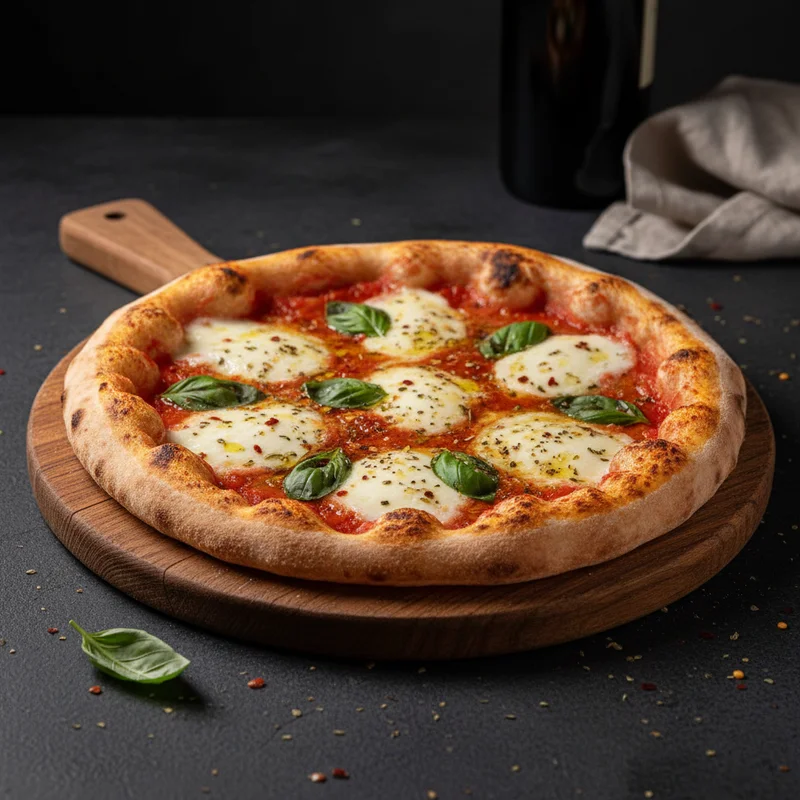
A flat disc of bread that convinced the world that putting everything on top of something is a legitimate cuisine. Somehow both a $1 slice and a $40 artisanal experience, depending on how seriously you take yourself.

VS
Spider-Man

Spider-Man

Web-slinging hero with great responsibility.

Battle Analysis

Adaptability spider-man Wins
30%
70%
Pizza Spider-Man

Pizza

The pizza has demonstrated an extraordinary capacity for transformation whilst maintaining its essential identity. It has been reimagined as deep-dish in Chicago, thin-crust in New York, and topped with everything from traditional mozzarella to pineapple, causing considerable controversy. Cultural adaptations include the mayonnaise and corn pizzas of Japan, the curry pizzas of India, and the reindeer-topped varieties of Scandinavia. This flexibility has been key to its global conquest. The pizza absorbs local preferences whilst remaining fundamentally, recognisably itself.

Spider-Man

Spider-Man has shown remarkable narrative flexibility, adapting to changing times with consistent success. The character has been portrayed by multiple actors, reimagined across various comic book universes, and reinterpreted for different generations. The Spider-Verse concept has introduced audiences to countless variations: Miles Morales, Spider-Gwen, Spider-Man 2099, and even a cartoon pig named Spider-Ham. This creative elasticity has kept the franchise commercially viable across decades. The character bends without breaking, evolving to reflect contemporary concerns whilst maintaining core thematic elements.

VERDICT

Both demonstrate remarkable adaptability, but Spider-Man's narrative multiverse concept represents a more radical form of reinvention.
Daily utility pizza Wins
70%
30%
Pizza Spider-Man

Pizza

The practical utility of pizza in daily human existence is beyond serious dispute. It provides sustenance, delivering protein, carbohydrates, and essential nutrients in a single convenient package. It serves as the cornerstone of social gatherings, from children's birthday parties to late-night study sessions. The average American alone consumes approximately twenty-three pounds of pizza annually. It requires no special equipment to consume, generates employment for millions, and has spawned an entire ecosystem of delivery services and dining establishments. Its utility is tangible, measurable, and repeatable.

Spider-Man

Spider-Man's utility exists exclusively within the realm of the psychological and emotional. He provides entertainment, a temporary escape from the mundane realities of existence. The character has inspired countless children to believe in heroism and has generated considerable academic discourse on themes of responsibility and power. However, one cannot consume Spider-Man when hungry. He cannot feed a family of four on a Friday evening. His utility, whilst genuine, operates on an entirely different plane of human need, one several steps removed from basic survival requirements.

VERDICT

Nutritional sustenance and daily consumption patterns outweigh entertainment value when measuring practical utility in human life.
Global recognition pizza Wins
70%
30%
Pizza Spider-Man

Pizza

The pizza has achieved what few human inventions can claim: true planetary ubiquity. From the street corners of Naples, where it began its journey as a humble peasant food, to the frozen food aisles of supermarkets in over 180 countries, this circular creation has demonstrated remarkable adaptability. The word 'pizza' requires no translation in most major languages. It has been consumed at the summit of Mount Everest and in the depths of Antarctic research stations. An estimated five billion pizzas are sold annually, a figure that speaks to a kind of cultural penetration that borders on the absolute.

Spider-Man

Spider-Man has spun his web across the global consciousness with considerable success, though his reach remains fundamentally tethered to media distribution networks. The character is recognised in markets where Marvel's influence has penetrated, which, whilst substantial, does not achieve the universality of his opponent. In rural communities across Africa, Asia, and South America, the spider-themed vigilante remains an unfamiliar figure. The character has generated over thirty billion dollars in merchandise and box office revenue, yet this impressive figure represents consumption patterns rather than true recognition across all demographic strata.

VERDICT

Pizza transcends media access and economic status, achieving recognition in communities where Spider-Man remains entirely unknown.
Entertainment value spider-man Wins
30%
70%
Pizza Spider-Man

Pizza

Pizza provides a form of entertainment that operates through the sensory apparatus rather than the imagination. The experience of consuming a well-crafted pizza engages taste, smell, texture, and visual presentation. The social ritual of sharing pizza creates bonds between individuals. However, this entertainment is necessarily brief, lasting only as long as the meal itself. Once consumed, the pizza ceases to entertain. It cannot sustain hours of narrative engagement or provoke discussions about character development and plot structure.

Spider-Man

In the realm of pure entertainment, Spider-Man excels without serious competition. The character has generated billions of hours of human engagement across various media formats. A single film can occupy audiences for over two hours, whilst comic book collections can sustain interest across decades. The character provokes emotional investment: audiences care about Peter Parker's struggles, celebrate his victories, and mourn his losses. This capacity to generate sustained narrative engagement represents a fundamentally different category of entertainment than the transient pleasures of a meal.

VERDICT

Sustained narrative engagement over hours and decades surpasses the brief sensory pleasure of a single meal consumed in minutes.
Historical significance pizza Wins
70%
30%
Pizza Spider-Man

Pizza

The lineage of pizza stretches back through the mists of antiquity. Flatbreads with toppings appear in records from ancient Persia, Greece, and Egypt. The modern iteration emerged in 18th-century Naples, where the Margherita was allegedly created to honour Queen Margherita of Savoy in 1889. This dish has witnessed the rise and fall of empires, survived two world wars, and accompanied humanity through industrialisation and into the digital age. It represents an unbroken culinary tradition spanning centuries, a tangible connection to generations past who sought the same simple pleasure of melted cheese upon bread.

Spider-Man

Spider-Man's history, whilst culturally significant, spans merely six decades. Created by Stan Lee and Steve Ditko, the character first appeared in Amazing Fantasy #15 in August 1962. He emerged during the Cold War, a period of profound anxiety about radiation and scientific progress. The character has since evolved through multiple iterations: comic books, animated series, live-action films, and video games. However, his historical footprint remains that of a 20th-century creation, a relative newcomer when measured against the deep time of human culinary tradition.

VERDICT

Three thousand years of documented history versus sixty years of publication renders this comparison asymmetrical in the extreme.
👑

The Winner Is

Pizza

52 - 48

Our investigation has revealed a competition far closer than initial impressions might suggest. Pizza, that venerable disc of sustenance, has demonstrated superiority in three critical dimensions: global recognition, historical significance, and daily utility. These are not trivial victories. They speak to a presence in human life that is both ancient and ongoing, both universal and intimate. Every day, in every nation, pizza continues its quiet work of nourishing and bringing people together.

Spider-Man, for his part, has shown remarkable strengths in adaptability and entertainment value. The character's capacity for reinvention and his ability to sustain hours of narrative engagement represent genuine achievements. However, these strengths exist within a more limited domain. One cannot survive on stories alone, and fictional heroism, however inspiring, cannot substitute for actual sustenance.

The final tally of 52 to 48 reflects a narrow but meaningful victory for pizza. In the end, the simple disc of dough, cheese, and tomato has proven more essential to the human experience than even the most beloved superhero. Pizza feeds us; Spider-Man merely entertains us. In the hierarchy of human needs, the former must take precedence, however enjoyable the latter may be.

Pizza
52%
Spider-Man
48%

Share this battle

More Comparisons