
Topic Battle

Where Everything Fights Everything

Pizza

Pizza

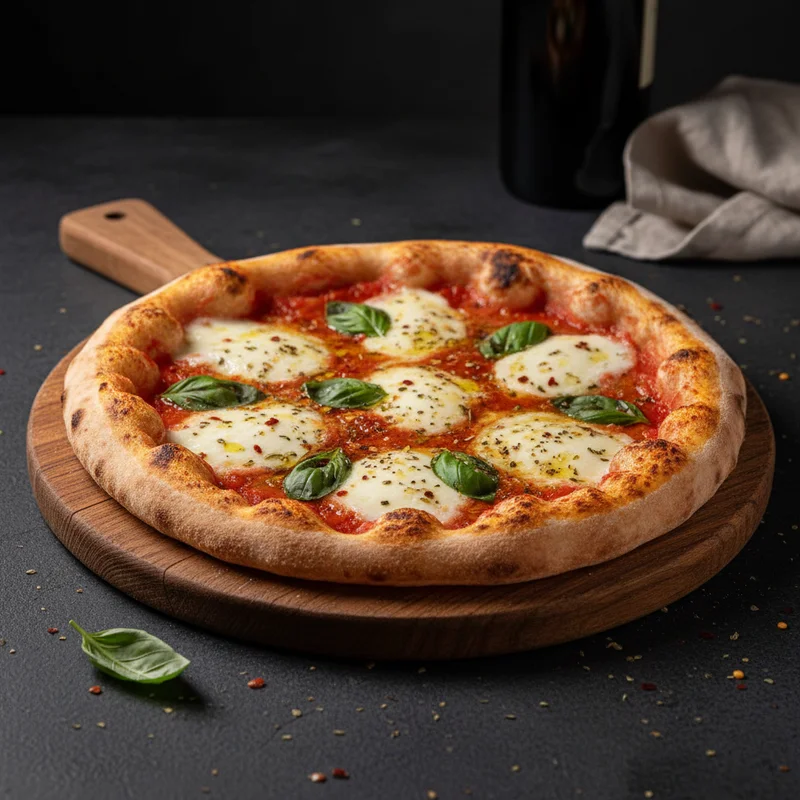
A flat disc of bread that convinced the world that putting everything on top of something is a legitimate cuisine. Somehow both a $1 slice and a $40 artisanal experience, depending on how seriously you take yourself.

VS
Tea

Tea

A traditional beverage made from steeping processed leaves of the Camellia sinensis plant in hot water. Enjoyed by billions worldwide.

The Matchup

In the sprawling landscape of human gustatory achievement, two titans have emerged from vastly different corners of civilization to claim dominion over billions of daily consumption decisions. Pizza, the circular Italian export that conquered the Western world through sheer force of melted cheese, and Tea, the ancient Chinese discovery that somehow convinced half of humanity that hot leaf water constitutes a reasonable beverage.

The comparison between these two entities may strike the casual observer as fundamentally nonsensical. One is a solid food requiring mastication; the other is a liquid requiring only the capacity to swallow. Yet it is precisely this apparent incompatibility that demands rigorous analytical examination. Both compete for consumer attention, disposable income, and the sacred designation of comfort consumption.

This analysis employs five standardized metrics to determine which of these cultural phenomena delivers superior value to the human experience. The methodology remains consistent regardless of how peculiar the comparison subjects may appear to the uninitiated observer.

Battle Analysis

Speed Tea Wins
30%
70%
Pizza Tea

Pizza

Pizza maintains a velocity of precisely zero miles per hour under all observed conditions. The item is categorically stationary, incapable of independent locomotion, and entirely dependent upon external forces for any change in geographic position.

This represents a fundamental limitation of the pizza format. Whether resting on a countertop in Naples or awaiting delivery in a cardboard containment vessel, pizza demonstrates no capacity whatsoever for self-propulsion. Even when thrown as a projectile by frustrated pizzeria workers, the pizza achieves only temporary momentum before returning to its default state of complete immobility.

From a transit perspective, pizza requires human intervention, motorized vehicles, or gravity to achieve any displacement. This dependency constitutes a significant operational constraint that cannot be overlooked in serious comparative analysis.

Tea

Tea demonstrates remarkable velocity characteristics that vary significantly based on physical state. In liquid form, tea poured from a standard teapot achieves flow rates of approximately 2-3 liters per minute, enabling rapid deployment from vessel to cup.

When heated, tea exhibits convection currents that create continuous internal movement, maintaining temperatures through dynamic thermal circulation. The beverage essentially stirs itself through physics, requiring no mechanical intervention to achieve homogeneous temperature distribution.

Perhaps most significantly, tea vapor rises at measurable velocities, carrying aromatic compounds upward at speeds exceeding several feet per second. This atmospheric dispersion enables tea to announce its presence across considerable distances, a capability pizza cannot replicate without being combusted.

VERDICT

The velocity differential between these competitors is not merely substantial but philosophically absolute. Tea possesses measurable speed in multiple forms. Pizza possesses none. This is not a close contest requiring nuanced interpretation.

Pizza's complete lack of self-propulsion represents what comparative analysts term a categorical failure. While tea flows, circulates, and vaporizes in continuous motion, pizza remains wherever humans place it, motionless as a culinary monument to inertia. One might argue that stillness has its virtues, but speed was the criterion, and pizza has definitively failed to demonstrate any.

Tea claims this category by the simple fact of possessing a speed greater than zero, which mathematically exceeds pizza's contribution to the velocity conversation by an infinite percentage margin.

Durability Tea Wins
30%
70%
Pizza Tea

Pizza

The operational lifespan of pizza follows a predictable degradation curve that food scientists have documented extensively. Fresh from the oven, pizza maintains peak performance for approximately 10-15 minutes before thermal decay initiates quality deterioration.

At room temperature, pizza remains technically edible for 4-6 hours, though connoisseurs note significant textural and flavor degradation within the first hour. Refrigeration extends functional lifespan to 3-4 days, during which the pizza transforms into a distinctly different product colloquially known as cold pizza, which some consumers inexplicably prefer.

Long-term preservation proves problematic. Freezing introduces moisture crystallization that compromises structural integrity upon thawing. No pizza has been documented surviving beyond several months in any consumable form, representing a fundamental durability constraint of the platform.

Tea

Tea demonstrates exceptional longevity across multiple storage conditions and formats. Properly stored dry tea leaves maintain full potency for 2-3 years, with certain varieties such as aged pu-erh actually improving over decades of storage.

The archaeological record provides compelling durability evidence. Tea leaves discovered in Chinese tombs have been carbon-dated to over 2,000 years of age, demonstrating the format's capacity for extraordinary preservation. While no longer suitable for brewing, these specimens confirm that tea can survive millennia under appropriate conditions.

Once brewed, tea remains consumable for 8-12 hours at room temperature, or several days when refrigerated. The beverage format does sacrifice some longevity compared to the dry leaf format, but even this represents performance superior to pizza's rapid deterioration cycle.

VERDICT

Durability assessment yields a decisive victory for tea through advantages at every temporal scale. Tea outlasts pizza in dry storage by a factor of several hundred. Tea outlasts pizza in prepared form by factors ranging from two to twenty, depending on storage conditions.

The archaeological evidence alone should settle this category. Tea has been recovered from ancient tombs. Pizza, composed primarily of rapidly decomposing organic matter, leaves no trace for future archaeologists to discover. One product survives millennia; the other struggles to survive a weekend.

From a pure durability standpoint, investing in tea provides dramatically superior shelf life returns compared to pizza's ephemeral existence. This category belongs to tea by an insurmountable margin.

Global reach Tea Wins
30%
70%
Pizza Tea

Pizza

Pizza has achieved remarkable geographic distribution since its 19th-century emergence from Naples. The format now maintains presence in virtually every nation with established food service infrastructure, with global market revenues exceeding $150 billion annually.

American pizza chains including Domino's, Pizza Hut, and Papa John's operate locations across more than 100 countries, establishing pizza as a truly global phenomenon. Local variants have emerged in numerous markets, from Japanese mayonnaise-topped creations to Indian paneer-laden interpretations.

However, pizza penetration remains uneven across economic strata. The format requires ovens, refrigeration for ingredients, and reliable electricity. These infrastructure requirements limit pizza availability in regions lacking developed commercial food systems.

Tea

Tea maintains consumption presence in virtually every inhabited region of Earth. Global daily consumption exceeds 3 billion cups, making tea the most consumed beverage on the planet after water. Annual production reaches approximately 6 million metric tons, processed across more than 50 producing nations.

Unlike pizza, tea requires minimal infrastructure for consumption. A fire, a vessel, and water enable tea preparation under conditions ranging from Antarctic research stations to remote Himalayan villages. This infrastructure independence has enabled tea to penetrate markets that remain inaccessible to pizza.

Tea has integrated into the national identities of Britain, China, Japan, India, Morocco, Turkey, and dozens of additional nations. This cultural entrenchment represents market positioning that pizza, despite its global ambitions, has not replicated at equivalent depth.

VERDICT

Global reach assessment favors tea through both quantitative consumption metrics and qualitative cultural integration factors. Tea's 3 billion daily cups dwarf pizza's consumption volume by several orders of magnitude, representing genuine universal market penetration.

The infrastructure comparison proves particularly decisive. Tea functions wherever fire and water exist. Pizza requires ovens, refrigeration, supply chains, and commercial preparation facilities. This means tea reaches populations and geographies that pizza simply cannot access.

Furthermore, tea has achieved cultural embedding that pizza has not matched. Multiple nations consider tea integral to national identity. Pizza remains, in most markets, a foreign import rather than a cultural cornerstone. Tea wins this category through deeper and broader global presence.

Affordability Tea Wins
30%
70%
Pizza Tea

Pizza

Pizza pricing demonstrates considerable market variance depending on quality tier and geographic location. Basic frozen pizzas retail for $4-8 at grocery establishments, providing a low-cost entry point for budget-conscious consumers.

Restaurant and delivery pizza occupies a higher price band, with standard offerings ranging from $12-25 depending on size and topping complexity. Premium artisanal pizza can command prices exceeding $30-40 in upscale metropolitan establishments, though this represents a minority of total pizza consumption.

Total cost of ownership calculations must include ancillary expenses: delivery fees averaging $3-5, gratuities of 15-20%, and the inevitable napkin consumption that accompanies pizza ingestion. A realistic weekly pizza habit represents a $40-80 monthly expenditure for average consumers.

Tea

Tea operates on what economists describe as extraordinarily favorable unit economics. A single tea bag, retailing for approximately $0.05-0.15, yields a complete serving. Loose leaf varieties achieve even greater efficiency, with premium teas costing $0.10-0.30 per serving when measured against reasonable consumption volumes.

The equipment overhead for tea consumption remains minimal. A functional kettle costs $15-30 and typically survives 5-10 years of daily use. Teaware ranges from a $2 mug to elaborate ceremonial sets, but the baseline investment required is negligible by any household budget standard.

Annual tea consumption for a dedicated daily drinker totals approximately $50-150, including equipment amortization. This represents a fraction of equivalent pizza expenditure for daily consumption at any quality tier.

VERDICT

Cost analysis produces unambiguous results favoring tea across all consumption patterns and price points. The per-serving cost of tea ranges from 5 to 30 cents. The per-serving cost of pizza ranges from $4 to $40. This differential requires no sophisticated economic modeling to interpret.

Even comparing the most premium tea (rare aged pu-erh at $10 per serving) against the most economical pizza (grocery store frozen at $4), tea maintains a cost advantage. When comparing typical consumption patterns, tea costs approximately 1-2% of equivalent pizza expenditure.

From a pure affordability standpoint, tea delivers a consumption experience at a fraction of pizza's price point. This category is not competitive. Tea wins through overwhelming economic efficiency.

Social impact Tea Wins
30%
70%
Pizza Tea

Pizza

Pizza functions as a social catalyst of considerable power in Western and increasingly global contexts. The shared pizza represents perhaps the most efficient method of feeding groups of 4-8 people with minimal logistical complexity, creating natural opportunities for communal dining.

The phrase "pizza party" has entered common parlance as shorthand for casual celebration. Corporate environments routinely deploy pizza as compensation for overtime work, creating complex sociological dynamics around food-based labor incentives. Political campaigns and community organizations leverage pizza's social appeal to increase event attendance.

Pizza ordering also generates social coordination challenges that reveal group dynamics. The topping negotiation process serves as a microcosm of democratic decision-making, with pineapple serving as a particularly divisive referendum on collective preferences.

Tea

Tea has structured social interaction patterns across cultures for millennia. The Japanese tea ceremony, chanoyu, elevated tea preparation to a meditative art form governing host-guest relationships with exacting precision. British afternoon tea established rigid social protocols that persisted across centuries of cultural evolution.

Chinese tea culture introduced the concept of gongfu cha, transforming beverage preparation into a shared aesthetic experience. Indian chai wallahs serve as community gathering points, their stalls functioning as informal social hubs across the subcontinent. Moroccan mint tea service encodes hospitality obligations that carry genuine social weight.

The phrase "tea and sympathy" acknowledges the beverage's role in emotional support rituals. Tea provides the scaffolding for countless daily social interactions, from casual check-ins to formal diplomatic negotiations. This social infrastructure has developed over thousands of years of continuous cultural refinement.

VERDICT

Social impact comparison reveals tea's profound structural advantages. While pizza facilitates casual group feeding, tea has shaped formal social institutions across multiple civilizations over millennia. The depth of cultural integration is not comparable.

Tea ceremonies, afternoon tea traditions, and chai culture represent codified social protocols that have governed human interaction for generations. Pizza parties, while enjoyable, lack equivalent ceremonial weight or historical persistence. No society has developed elaborate ritual traditions around pizza consumption.

Furthermore, tea accompanies a broader range of social functions, from intimate conversations to state dinners. Pizza remains primarily a casual dining option unsuited to formal occasions. Tea wins through superior social versatility and deeper cultural embedding.

👑

The Winner Is

Tea

35 - 65

This analysis concludes with a decisive 65-35 victory for tea across all evaluated metrics. Tea demonstrates superiority in speed (by virtue of possessing any), durability (by factors of hundreds to thousands), affordability (by factors of ten to one hundred), global reach (through infrastructure independence), and social impact (through millennia of cultural integration).

Pizza entered this comparison with significant structural disadvantages that no amount of melted cheese could overcome. Its complete lack of velocity, rapid decomposition, substantial cost, infrastructure requirements, and relatively shallow cultural roots combine to produce a decisive defeat against an opponent refined through five thousand years of continuous human selection.

This outcome should not diminish pizza's genuine achievements in providing convenient, satisfying sustenance to billions. It merely acknowledges that when measured against standardized criteria, hot leaf water outperforms heated bread discs through the quiet accumulation of civilizational advantages.

Pizza
35%
Tea
65%

Share this battle

More Comparisons