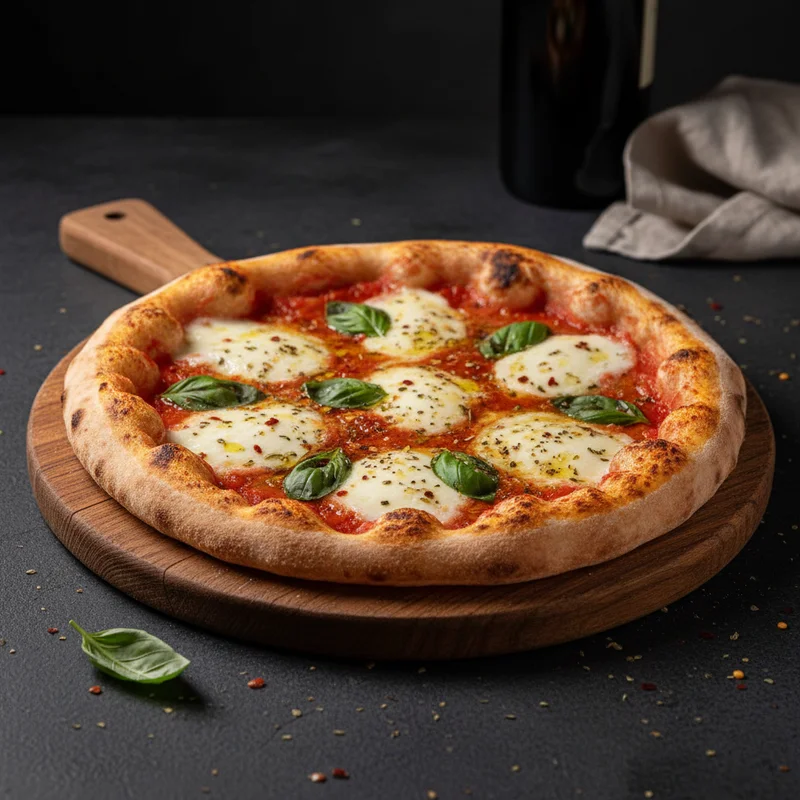

Pizza
The pizza's capacity for infinite variation represents perhaps its most remarkable characteristic. The basic template—dough, sauce, cheese—accepts virtually any topping combination human imagination can conceive. Hawaiian pizza incorporates pineapple. Japanese pizza features mayonnaise and corn. Indian pizza offers paneer and tandoori chicken. Each culture has adapted the pizza to local tastes whilst preserving its essential identity.
This adaptability extends to preparation methods and consumption contexts. Pizza can be thin-crust or deep-dish, wood-fired or microwaved, shared communally or consumed solo. It accommodates dietary restrictions through gluten-free crusts, vegan cheeses, and countless vegetable options. The pizza has demonstrated evolutionary flexibility that few food items can match, ensuring its survival across changing culinary trends.
Yoda
Yoda's adaptability manifests through narrative reinterpretation across multiple Star Wars eras. He has appeared in original trilogy films, prequel trilogy films, and contemporary series. Each appearance has expanded his character whilst maintaining core identity. The transition from puppet to CGI demonstrated technical adaptability, though not without controversy regarding aesthetic continuity.
However, Yoda remains fundamentally fixed within his fictional universe. He cannot be reimagined outside Star Wars without losing essential meaning. His character parameters—species, appearance, philosophy—remain constrained by canon. Whilst creative teams have explored different periods of his 900-year life, Yoda cannot adapt to cultural tastes with the fluidity pizza demonstrates. He is, ultimately, a specific character rather than an infinitely variable template.