
Topic Battle

Where Everything Fights Everything

Procrastination

Procrastination

The art of doing everything except the one thing you should be doing. A universal human experience that has spawned more clean apartments, reorganized sock drawers, and Wikipedia deep dives than any productivity method ever could.

VS
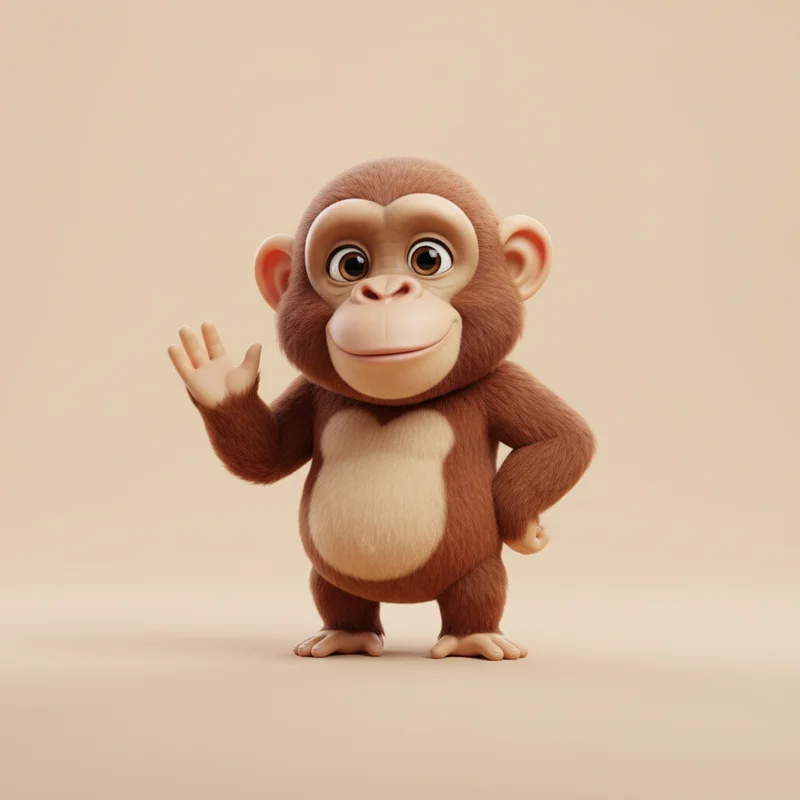
Chimpanzee

Chimpanzee

Highly intelligent great ape using tools, displaying emotions, and sharing 99% genetic similarity with humans.

Battle Analysis

Economic impact procrastination Wins
70%
30%
Procrastination Chimpanzee

Procrastination

The economic consequences of procrastination achieve truly staggering proportions when calculated rigorously. Studies estimate that procrastination costs the US economy alone $10,396 per employee annually, translating to aggregate losses exceeding $1.8 trillion. The phenomenon drains productivity through missed deadlines, suboptimal work quality, and the cognitive overhead of perpetual task anxiety. Beyond direct productivity losses, procrastination generates secondary economic effects: increased healthcare costs from stress-related illness, reduced innovation from deferred creative projects, and opportunity costs that compound across careers and lifetimes. The procrastination industry—self-help books, productivity applications, coaching services—generates additional billions annually, representing an economy built entirely upon human inability to simply begin tasks when intended.

Chimpanzee

Quantifying the chimpanzee's economic impact requires examining multiple sectors. The ecotourism industry centred on great ape observation generates approximately $50-100 million annually across African nations, providing critical revenue for conservation efforts and local communities. Research involving chimpanzees has produced pharmaceutical and medical advances worth billions, though ethical concerns have largely ended such practices in recent decades. Zoo attendance attributable to chimpanzee exhibits contributes perhaps $200-400 million globally to entertainment and education sectors. However, these figures pale against the economic weight of procrastination. The chimpanzee creates modest positive economic value; procrastination destroys value on an industrial scale.

VERDICT

Procrastination's $1.8 trillion annual cost to the US economy alone dwarfs all chimpanzee-related economic activity combined.
Global prevalence procrastination Wins
70%
30%
Procrastination Chimpanzee

Procrastination

Procrastination's territorial reach is nothing short of extraordinary. Research indicates that 95% of humans engage in procrastination to some degree, with approximately 20% qualifying as chronic procrastinators for whom the behaviour constitutes a persistent life impairment. The phenomenon recognises no boundaries: it afflicts students in Seoul and São Paulo with equal enthusiasm, disrupts deadlines in both democracies and dictatorships, and has been documented across every professional sector from academic research to zoological management. Unlike most psychological conditions that vary by culture, procrastination appears to be a universal human constant—as fundamental to our species as bipedal locomotion or the capacity for abstract thought. One might argue it has achieved greater market penetration than any product, ideology, or infectious agent in human history.

Chimpanzee

The chimpanzee's global distribution, while impressive for a great ape, remains geographically constrained. Wild populations exist across 21 African nations, spanning from Senegal in the west to Tanzania in the east, with total numbers estimated between 170,000 and 300,000 individuals. This represents a 90% decline from historical populations, a sobering statistic that underscores the species' vulnerability. Beyond Africa, chimpanzees exist primarily in captive environments: approximately 2,000 in zoos worldwide, with additional populations in research facilities and sanctuaries. Their physical presence, therefore, touches perhaps 50 nations at most. However, their cultural reach extends further—appearing in documentaries, advertisements, and the public consciousness across virtually every country with television access.

VERDICT

Procrastination affects 95% of humans globally; chimpanzees physically inhabit merely 21 nations with declining numbers.
Cultural influence procrastination Wins
70%
30%
Procrastination Chimpanzee

Procrastination

Procrastination has embedded itself so thoroughly in human culture that it has generated its own literary and artistic tradition. From Hamlet's famous indecision to countless contemporary memes about leaving tasks until tomorrow, the phenomenon permeates creative expression across all media. The word itself, derived from the Latin pro (forward) and crastinus (belonging to tomorrow), has equivalents in virtually every language. Procrastination has inspired philosophical treatises, psychological studies numbering in the thousands, and a self-help publishing category that generates $800 million annually. The behaviour has achieved the ultimate cultural status: it has become a recognised identity category. People describe themselves as procrastinators with the same definitional certainty they might describe their nationality or profession.

Chimpanzee

The chimpanzee's cultural influence, while different in character, achieves remarkable breadth. The species has inspired some of humanity's most beloved entertainment: from Tarzan's companion Cheeta to the Planet of the Apes franchise, from children's tea party advertisements to serious documentaries watched by hundreds of millions. Chimpanzees serve as cultural ambassadors for wildlife conservation, representing the broader cause of species preservation. They have appeared in countless advertisements, often controversially, and have inspired scientific metaphors used across disciplines. The phrase our closest relatives has entered common parlance specifically because of chimpanzees. Yet their cultural presence lacks the personal, confessional quality that procrastination enjoys—one relates to procrastination; one merely observes the chimpanzee.

VERDICT

Procrastination has achieved personal cultural identification; chimpanzees inspire observation and conservation but not self-recognition.
Cognitive complexity chimpanzee Wins
30%
70%
Procrastination Chimpanzee

Procrastination

Procrastination represents a fascinatingly sophisticated failure mode of human cognition. The behaviour requires multiple advanced cognitive capacities: the ability to conceptualise future states, emotional processing that prioritises immediate comfort over delayed reward, and the meta-cognitive awareness that one is, in fact, procrastinating. Research using fMRI scanning reveals that procrastination involves complex interactions between the prefrontal cortex (future planning), the limbic system (emotional processing), and the anterior cingulate cortex (conflict monitoring). Paradoxically, procrastination may require more cognitive resources than simply completing the avoided task—one must maintain awareness of the deferred obligation whilst actively suppressing the anxiety it generates. It is, in essence, sophisticated self-sabotage.

Chimpanzee

The cognitive achievements of chimpanzees rank among the most impressive in the non-human animal kingdom. Documented capabilities include: tool manufacture and use involving multi-step planning; symbolic communication through learned sign language, with vocabularies exceeding 350 signs; numerical cognition demonstrating understanding of quantity and sequencing; theory of mind showing awareness that others possess different knowledge; and cultural transmission of behavioural innovations across generations. Chimpanzees have demonstrated problem-solving abilities, tactical deception, and emotional sophistication that challenge anthropocentric assumptions about intelligence. The species represents the highest cognitive achievement among non-human primates—and yet, notably, they do not procrastinate. They lack the particular form of self-defeating abstract reasoning that burdens their human relatives.

VERDICT

Chimpanzees demonstrate sophisticated adaptive intelligence; procrastination, whilst cognitively complex, represents maladaptive self-sabotage.
Evolutionary significance chimpanzee Wins
30%
70%
Procrastination Chimpanzee

Procrastination

The evolutionary origins of procrastination remain a subject of considerable academic debate. Some researchers propose that the behaviour represents a vestigial adaptation—that deferring action in ancestral environments may have conserved energy for more critical survival tasks. Others suggest procrastination is merely a byproduct of the cognitive complexity that enables humans to conceptualise future deadlines in the first place. What cannot be disputed is that procrastination has persisted despite offering no apparent survival advantage in modern contexts. Indeed, it actively undermines reproductive fitness by reducing professional success, increasing stress-related health conditions, and creating interpersonal conflicts. From an evolutionary perspective, procrastination is a maladaptive mystery—a behaviour that natural selection should have eliminated but somehow did not.

Chimpanzee

The chimpanzee occupies a position of unparalleled importance in understanding human evolution. As our closest living relatives, chimpanzees provide a window into the common ancestor we shared approximately 6 million years ago. Studies of chimpanzee behaviour have revolutionised understanding of tool use, social structures, communication, and emotional processing in early hominids. The species has contributed to discoveries in genetics, neuroscience, and behavioural ecology that reshape our understanding of what it means to be human. Jane Goodall's research alone has generated over 35,000 citations and fundamentally altered scientific paradigms. The chimpanzee is not merely an interesting animal—it is a living laboratory for human evolutionary history, preserving behavioural patterns that illuminate our own origins.

VERDICT

Chimpanzees provide irreplaceable insights into 6 million years of human evolution; procrastination offers only psychological puzzlement.
👑

The Winner Is

Chimpanzee

42 - 58

This investigation has revealed an unexpectedly competitive contest between fundamentally different categories of existence. Procrastination, an abstract behavioural pattern, competes against the chimpanzee, a living species of considerable sophistication. That such a comparison can proceed at all speaks to the remarkable influence both have achieved over human affairs.

Procrastination demonstrates superior metrics in raw prevalence, economic impact, and cultural identification. It has achieved what marketing professionals term total market penetration—affecting virtually every human whilst requiring no physical infrastructure, conservation efforts, or feeding schedules. Its economic footprint, measured in trillions of dollars of destroyed productivity, exceeds that of most nations.

Yet the chimpanzee prevails through criteria of greater fundamental importance. Our primate cousins offer irreplaceable evolutionary insights, demonstrate cognitive achievements that expand understanding of intelligence itself, and represent a tangible, living connection to humanity's deepest origins. Procrastination, for all its prevalence, ultimately represents a bug in human software—a malfunction, however widespread, that contributes nothing constructive to human flourishing.

The chimpanzee creates knowledge and inspires conservation; procrastination merely consumes time and generates regret. The ape builds tools and transmits culture; the behavioural pattern dismantles productivity and transmits only stress. One is a subject worthy of lifelong scientific study; the other is a subject one studies to eliminate it.

In the final accounting, existence triumphs over affliction. The chimpanzee, with its 6 million years of evolutionary refinement, its documented intelligence, and its contribution to human self-understanding, claims victory over humanity's most persistent self-imposed obstacle.

Procrastination
42%
Chimpanzee
58%

Share this battle

More Comparisons