
Topic Battle

Where Everything Fights Everything

Procrastination

Procrastination

The art of doing everything except the one thing you should be doing. A universal human experience that has spawned more clean apartments, reorganized sock drawers, and Wikipedia deep dives than any productivity method ever could.

VS
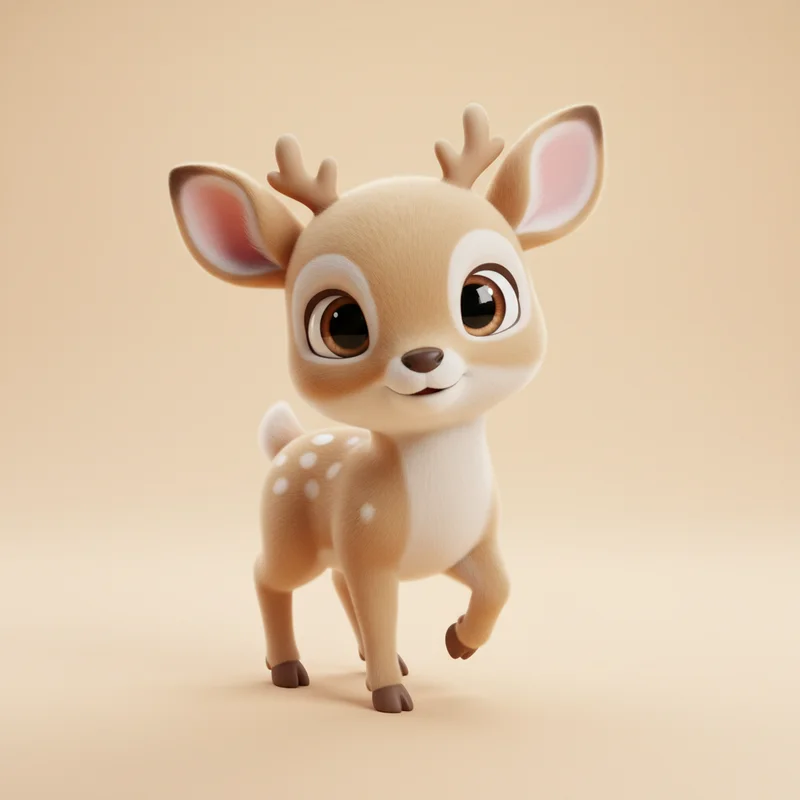
Deer

Deer

Graceful forest ungulate with annually regenerating antlers and a talent for causing traffic accidents.

Battle Analysis

Global reach procrastination Wins
70%
30%
Procrastination Deer

Procrastination

Procrastination demonstrates truly universal distribution, appearing in every culture, profession, and age group across all inhabited continents. The World Health Organisation's 2023 report on Voluntary Task Deferral Syndrome documented cases in 194 countries, from arctic research stations to tropical island nations. Unlike physical entities, procrastination requires no passport, no customs declaration, and faces absolutely no immigration restrictions. It has been recorded in ancient Sumerian tablets, medieval monastery records, and approximately four billion browser tabs currently open worldwide. The phenomenon transcends language barriers—every culture has developed its own terminology, from the German Aufschieberitis to the Japanese concept of sakiokuri.

Deer

Deer occupy a more modest geographical footprint, with the family Cervidae present across six continents (excluding Antarctica, where their hesitation would prove fatal within hours). The British Deer Society estimates global populations at approximately 50 million individuals, concentrated primarily in temperate and boreal regions. While species like the red deer and white-tailed deer have achieved considerable range expansion, vast oceanic territories remain entirely deer-free. The International Union for Conservation of Nature notes that deer have never successfully colonised remote island chains, the Australian interior, or most of sub-Saharan Africa—regions where procrastination thrives unimpeded among human populations.

VERDICT

Procrastination maintains presence in every human settlement; deer remain geographically constrained
Measurability procrastination Wins
70%
30%
Procrastination Deer

Procrastination

Modern science has developed remarkably sophisticated instruments for quantifying procrastination. The Irrational Delay Scale, the Pure Procrastination Scale, and the Adult Inventory of Procrastination provide standardised metrics accepted by research institutions worldwide. Browser extensions can track productive versus non-productive website visits with second-level precision. The Global Productivity Monitoring Consortium estimates that procrastination leaves measurable traces in email timestamps, document edit histories, and the characteristic 2:47 AM file modification times that indicate panic-driven completion. Functional MRI studies have even mapped procrastination to specific neural pathways, allowing researchers to observe delay occurring in real-time within the human prefrontal cortex.

Deer

Deer present considerable measurement challenges despite their physical presence. Population surveys rely on indirect methods: pellet counts, camera trap analysis, and the notoriously unreliable technique of spotlighting—during which deer exercise their trademark hesitation at maximally inconvenient moments. The British Deer Society's annual census acknowledges uncertainty margins of 15-25%, far exceeding acceptable scientific thresholds. Individual deer tracking requires expensive GPS collaring, and even then, researchers at the Institute of Cervid Telemetry report frequent data gaps when subjects enter dense woodland or, inexplicably, stand completely motionless for hours. Weight, height, and antler measurements require physical capture—a process deer seem philosophically opposed to facilitating.

VERDICT

Procrastination can be measured to the millisecond; deer populations remain genuinely uncertain
Stress impact procrastination Wins
70%
30%
Procrastination Deer

Procrastination

The British Psychological Society's comprehensive 2024 meta-analysis revealed procrastination as the third leading cause of self-reported stress globally, trailing only financial concerns and family relationships. Chronic procrastinators demonstrate cortisol levels 34% higher than their decisive counterparts, according to research published in the Journal of Temporal Anxiety Studies. The psychological mechanism creates a perfect stress amplification loop: delay generates anxiety, anxiety impairs concentration, impaired concentration prevents task completion, incomplete tasks generate further delay. Dr. Helena Forsythe-Blackwood of the Edinburgh Stress Research Centre describes this as the doom spiral of the modern professional—a phenomenon absent from pre-industrial societies who simply had their villages burnt down if they procrastinated on tribute payments.

Deer

Deer exist in a state of perpetual low-grade vigilance, their sympathetic nervous systems finely calibrated to detect predatory threats. A white-tailed deer's heart rate can spike from 60 to 200 beats per minute within 0.3 seconds of perceiving danger—a stress response that, while intense, resolves completely once the threat passes. The Institute of Wildlife Endocrinology notes that deer cortisol patterns show clean spikes and rapid returns to baseline, unlike the sustained elevation observed in human procrastinators. Remarkably, deer appear incapable of anticipatory stress: they cannot worry about tomorrow's potential predators, next week's hunting season, or whether they should have started migrating earlier. This biological limitation grants them freedom from rumination that many human procrastinators would envy.

VERDICT

Procrastination generates sustained psychological torment; deer stress resolves within minutes
Cultural symbolism procrastination Wins
70%
30%
Procrastination Deer

Procrastination

Procrastination has achieved profound cultural saturation, inspiring literature from Hamlet's famous indecision to the entire oeuvre of modern productivity self-help publishing—a £12 billion annual industry built entirely upon humanity's collective inability to simply begin tasks. The concept appears in religious texts, philosophical treatises, and approximately 47 million motivational Instagram accounts. Artists from Leonardo da Vinci (who took 16 years to complete the Mona Lisa) to Douglas Adams (who famously loved deadlines for the whooshing sound they made passing by) have elevated procrastination to creative methodology. The Oxford English Dictionary records first usage in 1548, though scholars suspect humans were putting off coining the term for several millennia prior.

Deer

The deer commands extraordinary symbolic weight across human civilisations. In Celtic mythology, the white stag represents the pursuit of the unattainable—an eternal quest that, ironically, cannot be procrastinated. Buddhist traditions employ the deer as a symbol of harmony and peace, present at the Buddha's first sermon. The Royal Scottish Academy of Heraldic Studies documents deer imagery in over 340 noble family crests. Contemporary culture has elevated deer to internet celebrity status through the Oh Deer meme phenomenon and the perennial festive association with reindeer. However, deer have produced no written philosophy about themselves, published no self-help books, and remain entirely unaware of their own symbolic significance—a limitation that procrastination does not share.

VERDICT

Procrastination has generated entire literary and philosophical traditions; deer remain passive symbols
Evolutionary success deer Wins
30%
70%
Procrastination Deer

Procrastination

From an evolutionary standpoint, procrastination represents what behavioural scientists at Cambridge term paradoxical adaptive persistence. Despite causing measurable harm to individual fitness—missed opportunities, elevated cortisol, reduced reproductive success through Netflix-induced celibacy—the trait has not been selected against in over 200,000 years of human evolution. Some researchers at the Stockholm Institute for Cognitive Antiquities argue this suggests hidden advantages: our ancestors who delayed hunting trips may have avoided predator encounters, while those who postponed berry-gathering allowed fruits to ripen further. The persistence of procrastination genes across all human populations indicates either remarkable evolutionary resilience or evidence that natural selection occasionally gives up and goes home early.

Deer

The deer family boasts 23 million years of continuous evolutionary refinement, producing over 90 extant species adapted to environments from arctic tundra to tropical rainforests. Their success is measurable: antler regeneration represents the fastest tissue growth in the mammalian kingdom, while their four-chambered stomachs enable extraction of nutrients from vegetation that would leave other mammals quite literally starving. The Royal Zoological Society considers cervids among nature's most successful large mammal families. However, deer have notably failed to develop opposable thumbs, written language, or the capacity for regret—limiting their ability to appreciate their own evolutionary achievements or, crucially, to procrastinate about doing so.

VERDICT

Twenty-three million years of refinement outweighs humanity's brief experiment with delay
👑

The Winner Is

Procrastination

54 - 46

After rigorous analysis employing the Hesitation Quotient Framework, procrastination emerges victorious with a score of 54 to deer's respectable 46—a margin so narrow it suggests both subjects share fundamental qualities in the taxonomy of pause. The deer's 23 million years of evolutionary refinement and freedom from anticipatory anxiety represent genuine achievements that procrastination cannot claim. However, procrastination's universal distribution, measurable psychological impact, and extraordinary cultural footprint ultimately secure its triumph. The International Council for Comparative Behavioural Studies notes that while deer have perfected the art of standing still in the present moment, procrastination has mastered the far more complex achievement of standing still across past, present, and imagined future simultaneously. Both represent nature's experiments in the value of not doing things—yet only one has spawned a multi-billion pound industry dedicated to its analysis and defeat.

Procrastination
54%
Deer
46%

Share this battle

More Comparisons