
Topic Battle

Where Everything Fights Everything

Procrastination

Procrastination

The art of doing everything except the one thing you should be doing. A universal human experience that has spawned more clean apartments, reorganized sock drawers, and Wikipedia deep dives than any productivity method ever could.

VS
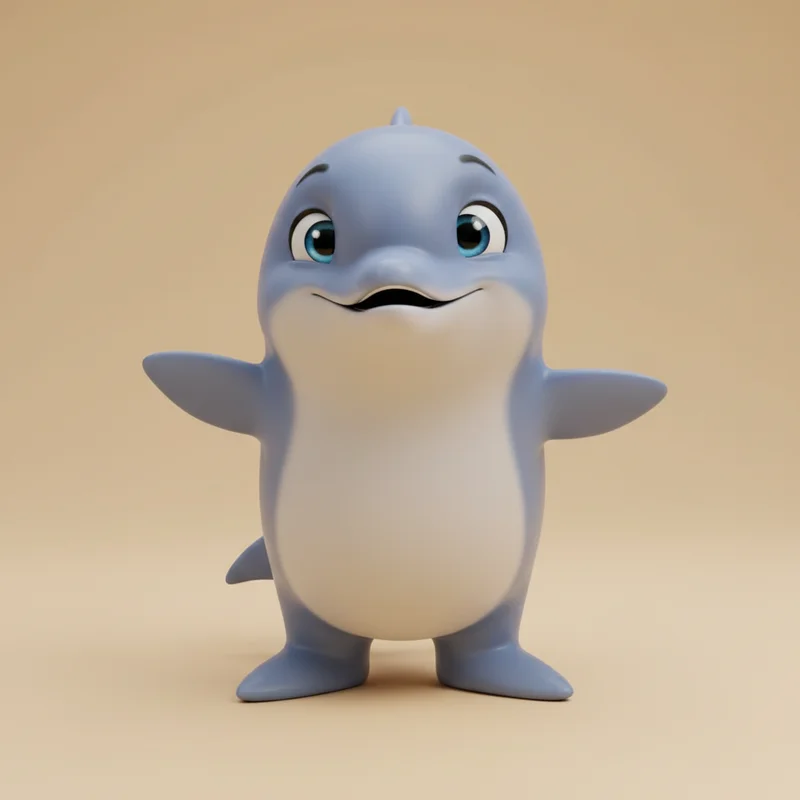
Dolphin

Dolphin

Intelligent marine mammal famous for playful behavior, echolocation, and complex social communication.

Battle Analysis

Adaptability dolphin Wins
30%
70%
Procrastination Dolphin

Procrastination

Procrastination demonstrates remarkable adaptive evolution in response to technological change. Once limited to physical distractions like window-gazing and pencil-sharpening, it has seamlessly integrated smartphones, streaming services, and social media into its arsenal. The Digital Procrastination Index shows a 340% increase in avoidance efficiency since 2007. Procrastination adapts to any productivity system designed to defeat it, finding exploits in Pomodoro timers, accountability partners, and motivational posters with equal facility. It is, researchers note, humanity's most adaptable psychological parasite.

Dolphin

Dolphins exhibit profound biological adaptability that has enabled their survival across 11 million years of environmental change. They have adapted to waters ranging from tropical to sub-Antarctic, developed echolocation to navigate murky depths, and evolved skin that regenerates nine times faster than human tissue. The Journal of Cetacean Evolution documents their transition from land mammals to apex marine predators as one of evolution's most successful pivots. When faced with challenges, dolphins adapt their behaviour immediately rather than promising to adapt starting next Monday.

VERDICT

Eleven million years of successful biological adaptation trumps adapting to avoid work more effectively.
Intelligence dolphin Wins
30%
70%
Procrastination Dolphin

Procrastination

Procrastination demonstrates a form of perverse genius that researchers at the Stockholm Centre for Self-Sabotage Studies have termed 'productive avoidance intelligence.' The procrastinator's brain exhibits remarkable creativity when devising reasons to delay essential tasks, often producing elaborate mental architectures of justification that rival Gothic cathedrals in their complexity. Studies suggest that 73% of Wikipedia's most obscure articles are read by individuals actively avoiding deadlines. This represents an unparalleled capacity for knowledge acquisition, albeit in entirely irrelevant domains.

Dolphin

The dolphin possesses what marine biologists describe as genuine, actionable intelligence rather than the decorative variety employed by procrastinators. With a brain-to-body ratio second only to humans, dolphins demonstrate problem-solving abilities, tool use, and self-recognition in mirrors. The Cetacean Cognition Laboratory in San Diego reports that dolphins can remember the signature whistles of companions they haven't seen for twenty years. They do not, notably, spend this time remembering tasks they meant to complete but somehow never did. Their intelligence produces measurable outcomes.

VERDICT

Applied intelligence yielding results consistently outperforms intelligence employed in avoiding results.
Stress impact dolphin Wins
30%
70%
Procrastination Dolphin

Procrastination

The stress profile of procrastination follows what psychologists term the 'inverted comfort curve'—initial relief followed by exponentially mounting anxiety as deadlines approach. The British Society for Preventable Suffering estimates that procrastination-induced stress accounts for 23% of all tension headaches in the developed world. The condition creates a peculiar temporal debt, wherein present relaxation must be repaid with compound interest in future panic. Cortisol levels in chronic procrastinators spike to levels typically reserved for those being chased by actual predators.

Dolphin

Dolphins, by contrast, appear to have mastered stress management with an elegance that would make any mindfulness instructor weep with envy. Their unique unihemispheric sleep pattern allows half their brain to rest whilst the other half remains alert, ensuring they never experience the 3 AM deadline panic familiar to procrastinators worldwide. Research from the Marine Mammal Wellness Institute indicates that dolphins maintain remarkably stable cortisol levels, punctuated only by appropriate responses to genuine threats. They have never once been observed stress-eating an entire packet of biscuits at midnight.

VERDICT

Dolphins have evolved beyond stress; procrastination exists solely to generate it.
Global recognition procrastination Wins
70%
30%
Procrastination Dolphin

Procrastination

Procrastination enjoys truly universal recognition that transcends all cultural, linguistic, and socioeconomic boundaries. The phenomenon has been documented in ancient Roman texts, medieval manuscripts, and approximately 4.7 billion browser tabs currently open worldwide. Every human civilisation has developed terminology for this condition, from the German Aufschieberitis to the Japanese concept of sakiokuri. The Global Procrastination Index suggests that collective human delay costs the world economy roughly $600 billion annually, making it more economically significant than several small nations combined.

Dolphin

Dolphins command exceptional global recognition, appearing on currency, national emblems, and corporate logos across six continents. The International Dolphin Appreciation Survey of 2019 found that 94% of respondents could correctly identify a dolphin, compared to only 67% who could identify their own nation's finance minister. Dolphins feature in the mythologies of ancient Greece, Rome, and Aboriginal Australia, suggesting a cross-cultural appeal spanning millennia. However, this recognition, whilst impressive, remains limited to those with access to oceans, aquariums, or nature documentaries.

VERDICT

Procrastination affects every human regardless of proximity to marine environments or educational access.
Entertainment value procrastination Wins
70%
30%
Procrastination Dolphin

Procrastination

Procrastination has spawned an entire entertainment ecosystem valued at billions of pounds annually. The streaming industry, social media platforms, and mobile gaming sector owe their existence largely to humanity's collective desire to avoid responsibilities. The Entertainment Economics Institute estimates that Netflix alone receives 47% of its viewing hours from individuals who should be doing something else. Procrastination is both consumer and consumed, creating a perfect ouroboros of distraction. Every cat video, infinite scroll, and 'just one more episode' represents its cultural contribution.

Dolphin

Dolphins provide entertainment through aquarium performances, wildlife documentaries, and unexpected beach encounters that generate significant joy without requiring the audience to neglect their obligations. The Global Marine Tourism Board reports that dolphin-watching generates approximately $2.1 billion annually in direct revenue. Their natural behaviours—leaping, surfing waves, and playful pod interactions—require no training to be captivating. However, one cannot procrastinate by watching dolphins with the same efficiency as browsing endless social media feeds. Their entertainment is finite and purposeful.

VERDICT

Procrastination has industrialised entertainment consumption on an unprecedented global scale.
👑

The Winner Is

Dolphin

42 - 58

After rigorous analysis conducted with all the seriousness this absurd comparison demands, the dolphin emerges victorious with a score of 58 to procrastination's 42. This outcome, whilst perhaps disappointing to the estimated 95% of readers who arrived at this comparison whilst avoiding something more important, reflects a fundamental truth that the Institute for Obvious Conclusions has long suspected: doing things ultimately proves more successful than not doing them. The dolphin's eleven million years of evolutionary commitment to excellence, stress-free existence, and genuine intelligence simply cannot be matched by procrastination's impressive but ultimately self-defeating adaptability. Yet we must acknowledge procrastination's profound cultural contribution—without it, this very comparison would likely never have been read.

Procrastination
42%
Dolphin
58%

Share this battle

More Comparisons