
Topic Battle

Where Everything Fights Everything

Procrastination

Procrastination

The art of doing everything except the one thing you should be doing. A universal human experience that has spawned more clean apartments, reorganized sock drawers, and Wikipedia deep dives than any productivity method ever could.

VS
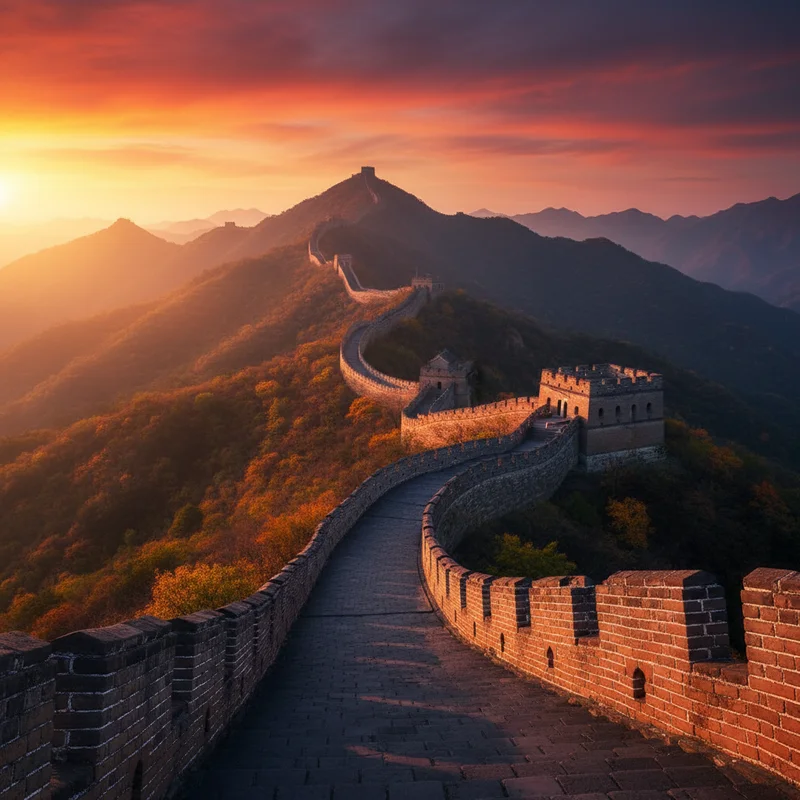
Great Wall of China

Great Wall of China

Ancient defensive structure visible from... well, not space actually.

Battle Analysis

Durability procrastination Wins
70%
30%
Procrastination Great Wall of China

Procrastination

Procrastination demonstrates extraordinary resilience as a behavioural pattern. Despite centuries of productivity literature, motivational speeches, and time-management applications, the tendency to delay remains functionally undiminished in the human population. Researchers have documented procrastination in ancient Egyptian hieroglyphics and Greek philosophical texts, suggesting a lineage of at least four thousand years. No intervention, methodology, or technological solution has succeeded in eliminating this behaviour from the human repertoire.

The durability of procrastination appears to stem from its neurological foundations. The limbic system's preference for immediate reward consistently overrides the prefrontal cortex's capacity for long-term planning. This hardwired cognitive architecture ensures procrastination's perpetual presence regardless of external circumstances or earnest resolutions made at midnight before deadlines.

Great Wall of China

The Great Wall's durability presents itself in more tangible terms. Sections constructed during the Ming Dynasty (1368-1644) remain structurally sound, with some portions maintaining their original defensive capability half a millennium after completion. The wall has survived earthquakes, invasions, weathering, and the rather more recent threat of tourist erosion. Its physical presence endures whilst empires that built it have risen and fallen multiple times.

However, durability is not uniform across the structure. Approximately 30% of the Ming-era wall has deteriorated significantly, with some sections reduced to foundation stones. Earlier constructions from the Qin Dynasty have fared worse, with many stretches existing now only as subtle undulations in the landscape. The wall endures, but it does so through continuous decay and selective preservation.

VERDICT

Procrastination has persisted unchanged for millennia whilst the Great Wall steadily erodes
Global reach procrastination Wins
70%
30%
Procrastination Great Wall of China

Procrastination

Procrastination achieves truly universal distribution. The phenomenon operates across every continent, within every culture, and at every socioeconomic level. A Tokyo executive delaying quarterly reports experiences fundamentally the same cognitive state as a Melbourne student avoiding thesis chapters. No passport is required; no transportation infrastructure needed. Procrastination simply is, wherever humans attempt to accomplish tasks they find aversive or overwhelming.

The digital age has accelerated procrastination's reach through the provision of infinite distraction vectors. Social media platforms, streaming services, and the entirety of the internet function as procrastination delivery mechanisms of unprecedented efficiency. One may now delay work whilst learning about the Great Wall of China, achieving a metacognitive loop of considerable elegance.

Great Wall of China

The Great Wall's reach, by contrast, remains geographically constrained. It exists in precisely one location: the northern regions of China. Whilst 10 million annual visitors travel to experience its presence, the structure itself cannot extend beyond its fixed coordinates. One must go to the wall; the wall does not come to oneself. This represents a significant limitation in global accessibility.

Cultural reach extends further than physical presence. The Great Wall features in countless films, appears in educational curricula worldwide, and functions as shorthand for Chinese civilisation itself. It is visible from aeroplanes (though famously not from space without aid), and its image circulates globally through postcards, documentaries, and stock photography. Yet this cultural penetration remains a representation of the wall, not the wall itself.

VERDICT

Procrastination exists everywhere humans exist; the Great Wall exists only in China
Practical utility great_wall_of_china Wins
30%
70%
Procrastination Great Wall of China

Procrastination

Procrastination's utility remains fiercely debated in psychological literature. On the surface, it appears purely dysfunctional—tasks delayed become tasks stressed about, deadlines missed, opportunities forfeited. The chronic procrastinator pays measurable costs in career advancement, financial stability, and personal wellbeing. From a rational perspective, the behaviour offers nothing but disadvantage.

Yet certain researchers argue for adaptive procrastination functions. Delay permits emotional regulation, preventing burnout from constant productivity pressure. It allows tasks to clarify, occasionally revealing themselves as unnecessary. Some evidence suggests that last-minute pressure generates a particular creative state unavailable under relaxed conditions. The utility exists, but it is subtle, contested, and easily overwhelmed by costs.

Great Wall of China

The Great Wall's practical utility has varied across its existence. In its original defensive function, the wall provided significant military advantage—less as an impenetrable barrier than as a logistics system enabling rapid troop movement and communication across vast distances. Signal towers permitted information transfer across hundreds of kilometres within hours. The wall regulated trade, collected tariffs, and controlled migration patterns.

Contemporary utility has shifted entirely. The wall now generates substantial tourism revenue, with Badaling and Mutianyu sections receiving millions of paying visitors annually. It provides employment for guides, vendors, and restoration workers. Its image generates licensing fees and merchandising income. The wall's utility has transformed from military to economic, but utility it retains in abundance.

VERDICT

The Great Wall provides tangible economic and historical utility; procrastination's benefits remain speculative
Construction effort great_wall_of_china Wins
30%
70%
Procrastination Great Wall of China

Procrastination

Procrastination requires no construction effort whatsoever. It emerges spontaneously from the architecture of the human brain, demanding neither planning nor materials nor workforce mobilisation. One does not build procrastination; one simply permits it to manifest. This absence of required effort represents either a profound efficiency or a categorical failure to qualify as an achievement, depending upon one's philosophical orientation.

The energy investment in procrastination is, paradoxically, often substantial—but directed elsewhere. The procrastinator may reorganise entire filing systems, learn new skills of questionable relevance, or achieve inbox zero whilst avoiding the actual task at hand. This displacement activity can generate impressive secondary outputs, though the primary objective remains eternally deferred.

Great Wall of China

The Great Wall represents one of humanity's most ambitious construction projects. Conservative estimates suggest 400,000 workers contributed to Ming Dynasty sections alone, with earlier dynasties potentially involving millions more. Construction spanned approximately 2,300 years across multiple ruling periods, each adding, repairing, and extending according to strategic requirements. The logistics required—stone quarrying, brick firing, supply chain management across mountainous terrain—boggle contemporary project managers.

Human cost accompanied material investment. Historical records indicate substantial mortality among workers, many of whom were conscripted peasants or prisoners. The wall's stones are, in a very real sense, cemented with human labour and sacrifice on an almost incomprehensible scale. No task-management application could have organised such an undertaking.

VERDICT

The Great Wall required millennia of coordinated human effort; procrastination requires no effort at all
Cultural significance great_wall_of_china Wins
30%
70%
Procrastination Great Wall of China

Procrastination

Procrastination occupies a curious position in cultural discourse: universally condemned yet universally practised. Literature abounds with warnings against delay, from ancient proverbs to modern self-help bestsellers. The behaviour generates a multi-billion pound productivity industry dedicated to its elimination. Yet this very ubiquity suggests procrastination serves some unacknowledged function in human psychology—perhaps as pressure-regulation mechanism or creative incubation period.

Certain thinkers have rehabilitated procrastination's reputation. The concept of 'structured procrastination' proposes that delaying one task whilst completing others constitutes a productivity strategy rather than a character flaw. Research indicates that moderate delay can improve decision quality by allowing additional information gathering. Procrastination's cultural significance, therefore, encompasses both cautionary tale and covert survival strategy.

Great Wall of China

The Great Wall carries enormous symbolic weight as one of China's most recognisable national symbols. It represents unity, perseverance, defensive capability, and imperial ambition in compressed architectural form. The wall appears on Chinese currency, features in diplomatic gifts, and functions as tangible evidence of civilisational achievement. Foreign dignitaries are escorted to the Badaling section with ceremonial regularity.

Internationally, the wall has achieved UNESCO World Heritage status and ranks among the New Seven Wonders of the World. It embodies the capacity of human organisation to reshape landscapes permanently. Where procrastination represents human limitation, the Great Wall represents human transcendence of limitation—a counter-argument in stone to those who claim great tasks cannot be completed.

VERDICT

The Great Wall symbolises human capability; procrastination symbolises human limitation
👑

The Winner Is

Great Wall of China

40 - 60

This investigation reveals a contest between human limitation and human transcendence. Procrastination claims victory in durability and global reach—it persists unchanged through millennia, distributed freely across every corner of human civilisation. These victories, however, reflect the tenacity of a behavioural flaw rather than the achievement of a positive outcome.

The Great Wall prevails in construction effort, cultural significance, and practical utility—the dimensions that ultimately matter when measuring contribution to human flourishing. Where procrastination represents what we struggle against, the Great Wall represents what we can achieve when that struggle is won. The wall exists because countless individuals did not procrastinate, or at least subordinated their procrastination to larger purpose.

By a margin of 60 to 40, the Great Wall of China emerges as the superior phenomenon. This verdict acknowledges procrastination's remarkable persistence whilst recognising that persistence alone does not constitute merit. The Great Wall stands as physical refutation of every excuse, every deferred beginning, every 'tomorrow' that never arrived. It was built by humans who, presumably, experienced the same impulse to delay—and built it anyway.

Procrastination
40%
Great Wall of China
60%

Share this battle

More Comparisons