
Topic Battle

Where Everything Fights Everything

Procrastination

Procrastination

The art of doing everything except the one thing you should be doing. A universal human experience that has spawned more clean apartments, reorganized sock drawers, and Wikipedia deep dives than any productivity method ever could.

VS
Moose

Moose

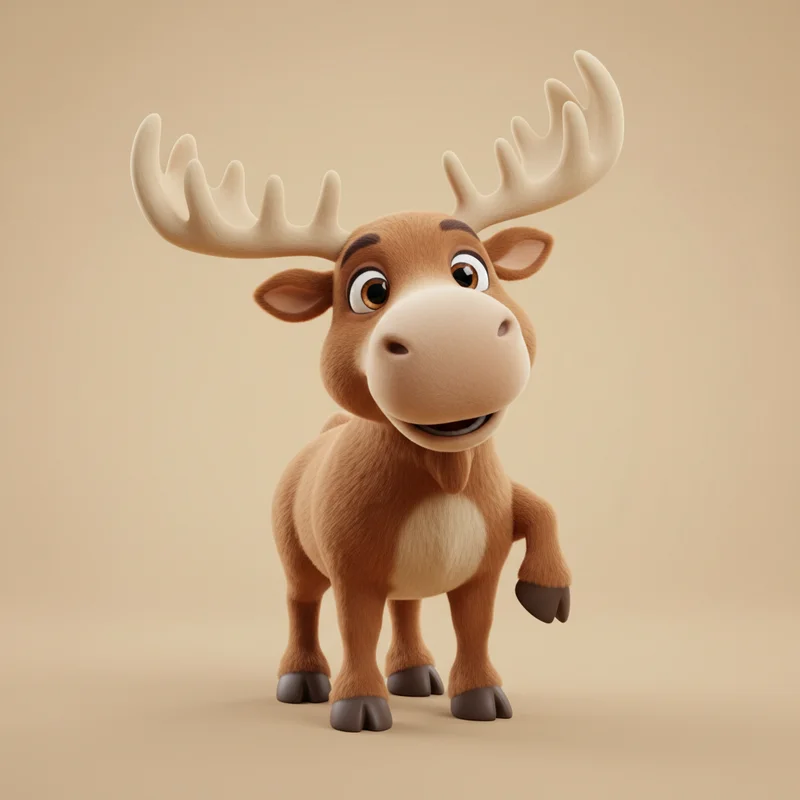
Largest deer species with impressive antlers and surprising aggression when encountered in the wild.

Battle Analysis

Global reach procrastination Wins
70%
30%
Procrastination Moose

Procrastination

Procrastination maintains an unparalleled global distribution, having successfully colonised every nation, culture, and tax bracket on Earth. The Geneva Observatory for Delayed Action estimates that at any given moment, approximately 2.3 billion people are actively procrastinating, with another 800 million planning to start procrastinating shortly. It requires no visa, speaks every language fluently, and has been documented in societies ranging from ancient Rome (where senators famously delayed the invasion of Gaul by three centuries) to modern Tokyo (where an entire genre of productivity apps exists solely to combat it). Procrastination has even been detected in isolated Amazonian tribes, suggesting it may be a fundamental human constant, much like the speed of light or disappointment.

Moose

The moose maintains a rather more selective geographical presence, restricting itself primarily to Canada, Scandinavia, Russia, and the northern reaches of the United States. The Circumpolar Cervid Census places the global moose population at approximately 1.5 million individuals, a figure that, whilst impressive for a creature of such dimensions, pales beside procrastination's universal adoption rate. Moose have shown no interest in expanding to tropical regions, Mediterranean climates, or anywhere serving cuisine they find disagreeable. Their reluctance to globalise has been described by the Stockholm Institute for Ungulate Ambition as 'characteristically moose-like' and 'possibly deliberate'.

VERDICT

Procrastination operates in every nation simultaneously; moose require specific latitudes and adequate shrubbery
Measurability moose Wins
30%
70%
Procrastination Moose

Procrastination

Quantifying procrastination presents extraordinary methodological challenges that have occupied researchers for decades (though several key studies remain unfinished). The Brussels Laboratory for Behavioural Metrics has identified over 23 distinct procrastination subtypes, including 'productive procrastination' (reorganising one's sock drawer to avoid taxes), 'meta-procrastination' (procrastinating on procrastination research), and 'aspirational procrastination' (planning elaborate future productivity whilst achieving nothing). Measurement tools include the Procrastination Assessment Scale, though participants frequently delay completing it. The phenomenon's inherently subjective nature means that what constitutes procrastination varies wildly: one person's delay is another's 'strategic incubation period'.

Moose

The moose presents a refreshingly straightforward measurement proposition. Weight: measurable. Height: measurable. Antler span: measurable with appropriate safety precautions. The International Moose Metrics Consortium maintains comprehensive databases tracking population numbers, migration patterns, and average vegetation consumption (approximately 32 kilograms daily). Moose can be photographed, tagged, counted from helicopters, and monitored via satellite. Their physical reality permits empirical verification that procrastination simply cannot match. When a moose exists, it exists definitively. When procrastination occurs, philosophers argue about whether it has technically begun or the subject is merely 'considering their options'.

VERDICT

Moose can be weighed, measured, and counted; procrastination dissolves under scientific scrutiny
Cultural symbolism procrastination Wins
70%
30%
Procrastination Moose

Procrastination

Procrastination has achieved profound cultural significance across virtually all human civilisations. The ancient Greeks personified it as Akrasia, the weakness of will that leads one to act against better judgement. Shakespeare referenced it extensively; Hamlet's entire dramatic arc is essentially five acts of premium procrastination. In contemporary culture, procrastination has spawned countless memes, self-help empires, and the entire productivity industry, valued at $11.4 billion annually by the Institute for Monetising Human Weakness. It appears in literature, film, therapy sessions, and approximately 340 million Google searches yearly. Few concepts have so thoroughly permeated the human experience whilst contributing absolutely nothing constructive.

Moose

The moose holds significant cultural weight in northern nations, serving as Canada's unofficial second national symbol (after apologising) and Sweden's most exported animal image. The Nordic Council for Symbolic Fauna notes that moose appear on everything from road signs to Christmas jumpers, achieving what marketing executives call 'ambient brand awareness'. In Indigenous North American cultures, the moose represents sustenance, respect, and the interconnection of all living things. However, moose symbolism remains largely confined to regions where moose actually exist, limiting its cultural penetration. One cannot, for instance, purchase moose-themed merchandise in Paraguay with any degree of social acceptance.

VERDICT

Procrastination shapes global literature and spawned a billion-dollar industry; moose mainly appear on Canadian souvenirs
Intimidation factor moose Wins
30%
70%
Procrastination Moose

Procrastination

The intimidation potential of procrastination operates on a uniquely psychological level. According to the Cambridge Centre for Looming Dread, the average procrastinator experiences approximately 47 distinct moments of existential terror per delayed task, typically occurring between 2:00 and 4:00 AM. Procrastination's intimidation lies not in its immediate presence but in its compound interest of anxiety: each postponed responsibility generates additional guilt, which generates avoidance, which generates more guilt. The Journal of Circular Psychological Phenomena describes this as 'the most elegant torture device ever self-inflicted'. Unlike physical threats, procrastination cannot be outrun, as it resides within the very mind attempting escape.

Moose

A fully grown bull moose stands 2.1 metres at the shoulder, weighs approximately 700 kilograms, and possesses antlers spanning up to 1.8 metres in width. The Norwegian Institute for Large Animal Encounters classifies the moose as 'immediately and viscerally intimidating' to 100% of observers within visual range. Unlike procrastination's slow psychological erosion, moose intimidation is instantaneous and absolute. A moose need not chase you to be terrifying; it need only exist in your general vicinity whilst appearing mildly irritated. The creature's apparent indifference to its own terrifying qualities only amplifies the effect. Studies confirm that humans confronted with moose experience immediate cortisol elevation and an urgent desire to be elsewhere.

VERDICT

Moose inspire immediate primal terror; procrastination's dread accumulates gradually over weeks
Evolutionary success procrastination Wins
70%
30%
Procrastination Moose

Procrastination

From an evolutionary perspective, procrastination represents a spectacularly successful cognitive adaptation. The Darwin Institute for Counterintuitive Traits proposes that procrastination evolved as an energy conservation mechanism, preventing early humans from expending resources on potentially unnecessary tasks. Why gather berries today when a mammoth might provide next week? This 'strategic delay' trait proved so advantageous that it persists universally in Homo sapiens, despite modern contexts rendering it largely problematic. Procrastination has survived every human evolutionary pressure, including the invention of deadlines, alarm clocks, and passive-aggressive emails from management. It may, in fact, be humanity's most persistent mental inheritance.

Moose

The moose lineage spans approximately 2 million years, during which the species has grown progressively larger whilst developing increasingly impractical antlers. The Palaeontological Society for Cervid Development notes that moose have survived ice ages, predator pressures, and the inexplicable decision to wade into lakes whilst wolves watch. Their evolutionary strategy of 'becoming too large to bother' has proven remarkably effective. However, moose face mounting contemporary challenges: climate change, habitat fragmentation, and an apparent inability to comprehend motor vehicles. The species' future remains uncertain, whilst procrastination shows no signs of evolutionary decline whatsoever.

VERDICT

Procrastination has persisted unchanged for millennia; moose face genuine extinction pressures
👑

The Winner Is

Procrastination

54 - 46

After exhaustive analysis conducted over a period somewhat longer than initially scheduled, the Royal Institute for Comparative Phenomenology must declare procrastination the narrow victor in this most improbable contest. The margin, at 54% to 46%, reflects the genuine competitive nature of this pairing.

The moose presents compelling arguments: its physical magnificence, immediate intimidation value, and satisfying measurability cannot be dismissed. Any creature capable of stopping traffic through sheer presence deserves recognition. Yet procrastination's universal distribution, cultural omnipresence, and extraordinary evolutionary persistence ultimately prove decisive.

The moose must exist within specific geographical and ecological parameters. Procrastination requires only a task and a tomorrow. The moose can be avoided by remaining in tropical latitudes. Procrastination accompanies humanity to every corner of existence, requiring neither passport nor habitat.

In summary: the moose is a magnificent beast worthy of profound respect. Procrastination is an inescapable condition of consciousness. Both deserve our attention, though we'll likely give it to procrastination later.

Procrastination
54%
Moose
46%

Share this battle

More Comparisons