
Topic Battle

Where Everything Fights Everything

Procrastination

Procrastination

The art of doing everything except the one thing you should be doing. A universal human experience that has spawned more clean apartments, reorganized sock drawers, and Wikipedia deep dives than any productivity method ever could.

VS
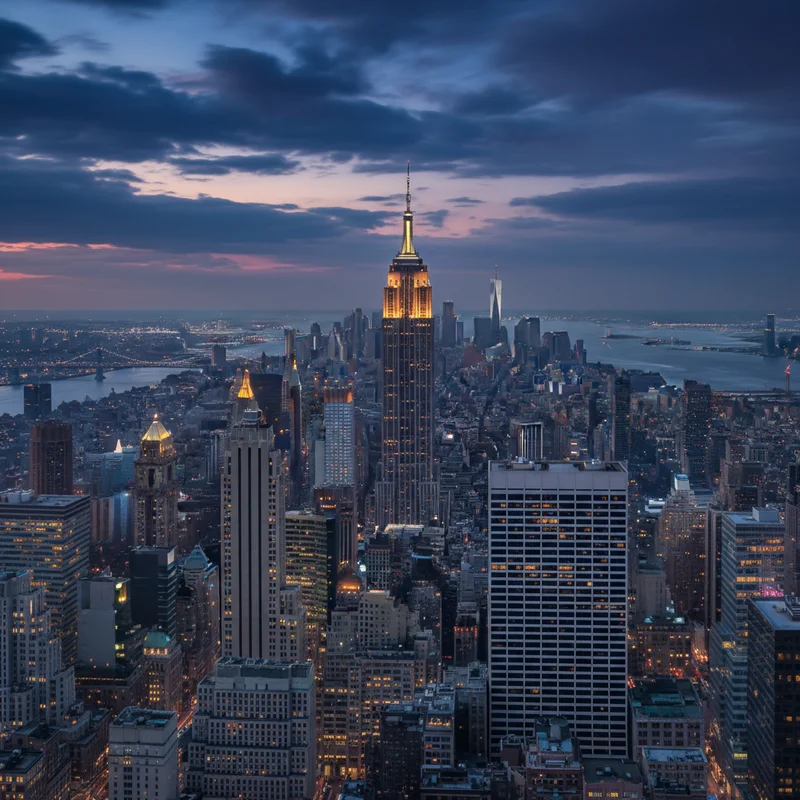
New York City

New York City

City that never sleeps and never stops honking.

Battle Analysis

Reliability procrastination Wins
70%
30%
Procrastination New York City

Procrastination

Procrastination demonstrates remarkable consistency across all documented human populations and historical periods. The Nile's seasonal floods were more variable than humanity's tendency to postpone unpleasant tasks. Studies tracking individual behaviour patterns reveal that procrastinators maintain their habits with 85 percent consistency over multi-year periods, suggesting the behaviour operates as a stable personality trait rather than situational response.

The reliability of procrastination approaches that of physical constants. Place any human before a difficult task with a distant deadline, and procrastination will emerge as reliably as water flows downhill. This consistency has enabled researchers to develop predictive models with accuracy rates exceeding 80 percent for task completion patterns. One may depend upon procrastination absolutely; it will never fail to appear when least convenient.

New York City

New York City's infrastructure reliability presents a more complex assessment. The Metropolitan Transportation Authority moves 5.5 million passengers daily with a punctuality rate that varies seasonally between 58 and 80 percent. Power outages, whilst infrequent, have historically shut down the entire metropolis, as occurred memorably in 1977 and 2003.

Yet the city's fundamental character remains astonishingly consistent. New York has maintained its position as America's largest city for over two centuries, surviving economic collapses, epidemics, and terrorist attacks without fundamental alteration to its essential nature. The delis still serve pastrami at 3 AM. The taxi drivers still navigate with aggressive confidence. The rent still exceeds reasonable expectations. In matters of character if not infrastructure, New York proves remarkably dependable.

VERDICT

Procrastination maintains 85% behavioural consistency; the New York subway achieves merely 58-80% on-time performance.
Global reach procrastination Wins
70%
30%
Procrastination New York City

Procrastination

Procrastination demonstrates unparalleled global penetration, transcending every cultural, linguistic, and socioeconomic boundary known to anthropology. Studies conducted across six continents confirm its presence in every society examined, from remote Amazonian tribes to the corridors of multinational corporations. The phenomenon respects neither wealth nor education; indeed, research suggests that higher cognitive function may correlate with more sophisticated procrastination strategies.

The universality of procrastination has spawned a global industry of self-help literature, productivity applications, and time management consultancies valued at approximately $11 billion annually. Every language contains multiple terms for the behaviour, from the German Aufschieberitis to the Japanese sakiokuri. One cannot escape procrastination by relocating; it travels in the human psyche as faithfully as a shadow.

New York City

New York City's global reach operates through cultural, financial, and symbolic channels rather than direct presence. The city serves as headquarters to 52 Fortune 500 companies and functions as the world's preeminent financial centre, with the New York Stock Exchange processing daily transactions exceeding $200 billion. Its cultural exports—from Broadway productions to hip-hop music—have penetrated every corner of the globe.

Yet New York remains geographically fixed at 40.7128 degrees north latitude. One cannot experience New York City from Lagos or Osaka; one must physically enter its boundaries. The city receives approximately 66 million visitors annually, impressive but representing merely 0.8 percent of the global population. Against procrastination's universal infiltration, New York's reach, however influential, remains fundamentally localised.

VERDICT

Procrastination maintains active presence in 100% of human minds globally; New York City requires physical visitation.
Sustainability procrastination Wins
70%
30%
Procrastination New York City

Procrastination

Procrastination requires zero external resources for its perpetuation. The behaviour emerges spontaneously from the interaction between the human limbic system and prefrontal cortex, requiring neither fuel, maintenance, nor infrastructure investment. It is, in ecological terms, a perfectly self-sustaining psychological phenomenon. One might even argue that procrastination represents the default human state, from which productive activity requires active departure.

The longevity of procrastination across human history suggests unlimited sustainability. No technological advancement has eliminated it; indeed, the internet has vastly expanded procrastination's available substrate. Where previous generations could merely stare out windows or reorganise bookshelves, contemporary humans can access billions of web pages purpose-built for distraction. Procrastination will outlast petroleum reserves, rare earth minerals, and perhaps civilisation itself.

New York City

New York City's sustainability presents significant challenges. The metropolis consumes approximately 11,000 megawatts of electricity daily and imports virtually all food from external sources, its agricultural capacity limited to a handful of rooftop gardens. Rising sea levels threaten $129 billion in property value located within coastal flood zones, whilst infrastructure maintenance requires annual expenditures exceeding $20 billion.

Yet New York has demonstrated remarkable adaptive capacity. The city has survived multiple existential threats, from the 1835 Great Fire that destroyed much of Lower Manhattan to the 2012 Hurricane Sandy that flooded subway tunnels. Each catastrophe has prompted infrastructure improvements that enhance long-term resilience. Nevertheless, New York remains fundamentally dependent upon external resources in ways that procrastination, requiring only a functioning human brain, simply is not.

VERDICT

Procrastination requires zero resource inputs and will persist indefinitely; New York City requires 11,000 megawatts daily just to maintain operations.
Economic impact new_york_city Wins
30%
70%
Procrastination New York City

Procrastination

The economic consequences of procrastination register primarily as losses rather than gains. Research by the American Psychological Association estimates that procrastination costs the United States economy approximately $300 billion annually in lost productivity, with similar proportional impacts across developed economies. The phenomenon manifests in missed deadlines, delayed project completions, and the characteristic pattern of rushed, suboptimal work.

Yet procrastination has generated its own parasitic economy. The productivity software industry, anti-procrastination coaching services, and countless self-help publications exist solely because humans cannot seem to do things when they ought to. The Getting Things Done methodology alone has generated estimated revenues exceeding $500 million. Procrastination creates economic activity, albeit of the remedial variety—much as disease supports the pharmaceutical industry.

New York City

New York City generates economic activity on a scale that renders most national economies modest by comparison. The metropolitan area's gross domestic product of $1.9 trillion would rank it as the world's eighth-largest economy if considered independently. The city collects approximately $53 billion annually in tax revenues, whilst its financial services sector alone employs 330,000 individuals.

The multiplier effects extend globally. A decision made in a Manhattan boardroom can eliminate thousands of jobs in Michigan or create thousands more in Shanghai. New York's real estate market treats parking spaces as luxury commodities, with single spots commanding prices exceeding $300,000. The city does not merely participate in the economy; it substantially defines it. Where procrastination represents economic friction, New York represents economic engine.

VERDICT

New York City generates $1.9 trillion in economic activity; procrastination primarily generates invoices for life coaches.
Cultural significance new_york_city Wins
30%
70%
Procrastination New York City

Procrastination

Procrastination has inspired philosophical inquiry since Aristotle first identified akrasia as a fundamental challenge to human rationality. The behaviour appears throughout literature, from Hamlet's fatal hesitations to Leopold Bloom's Dublin wanderings. Modern psychology has devoted thousands of peer-reviewed studies to understanding its mechanisms, with researchers like Piers Steel developing mathematical models to predict procrastinatory behaviour.

The cultural conversation around procrastination reflects deeper anxieties about human nature, free will, and the gap between intention and action. Religions have grappled with spiritual procrastination; economists have modelled its cost functions; neuroscientists have mapped its neural correlates. Yet procrastination produces no celebratory monuments, no festivals of appreciation. It is acknowledged universally but celebrated nowhere—a cultural presence defined entirely by shame.

New York City

New York City has generated cultural output disproportionate to any comparable geographic area. The city has served as setting for approximately 15 percent of all American films and provided subject matter for countless songs, novels, and television programmes. The phrase "If you can make it there, you can make it anywhere" has entered global consciousness as shorthand for ultimate achievement.

The city's cultural institutions—the Metropolitan Museum of Art, Lincoln Center, Carnegie Hall—represent pinnacles of human artistic achievement. Broadway theatres have entertained audiences continuously since the 1750s. The Harlem Renaissance, Abstract Expressionism, and punk rock all emerged from New York's fervent creative atmosphere. Where procrastination represents cultural failure, New York represents cultural aspiration at its most concentrated and consequential.

VERDICT

New York City has inspired masterpieces across every artistic medium; procrastination has inspired mostly excuses.
👑

The Winner Is

New York City

43 - 57

This rigorous comparative analysis reveals a contest between humanity's most persistent internal saboteur and its most ambitious external achievement. Procrastination claims victory in global reach, reliability, and sustainability—categories that reflect its fundamental nature as an ineradicable feature of human psychology. One cannot escape procrastination; one can merely manage it. The behaviour operates across all cultures with consistency that would impress a Swiss chronometer.

Yet New York City prevails decisively in economic impact and cultural significance—the categories that ultimately matter most to human flourishing. The city generates nearly $2 trillion in annual economic activity against procrastination's $300 billion in losses. Its cultural contributions include masterworks that will endure for centuries; procrastination's contributions include unfinished novels and regret.

The philosophical implications merit reflection. Procrastination represents humanity's tendency toward entropy, the path of least resistance that the laws of thermodynamics seem to favour. New York City represents humanity's defiance of entropy—the concentrated will to build, achieve, and create despite every obstacle. That 8.3 million people manage to function productively within New York's demanding environment, whilst still experiencing procrastination's pull, suggests that human nature contains multitudes.

By a margin of 57 to 43 percent, New York City emerges victorious. Its tangible achievements—the skyscrapers, the museums, the economic engine—ultimately outweigh procrastination's ubiquity. Yet every New Yorker knows procrastination intimately; it whispers in their ears whilst deadlines approach. The city may have won this battle, but the war between ambition and delay continues in every human mind, regardless of postcode.

Procrastination
43%
New York City
57%

Share this battle

More Comparisons