Topic Battle

Where Everything Fights Everything

Procrastination

Procrastination

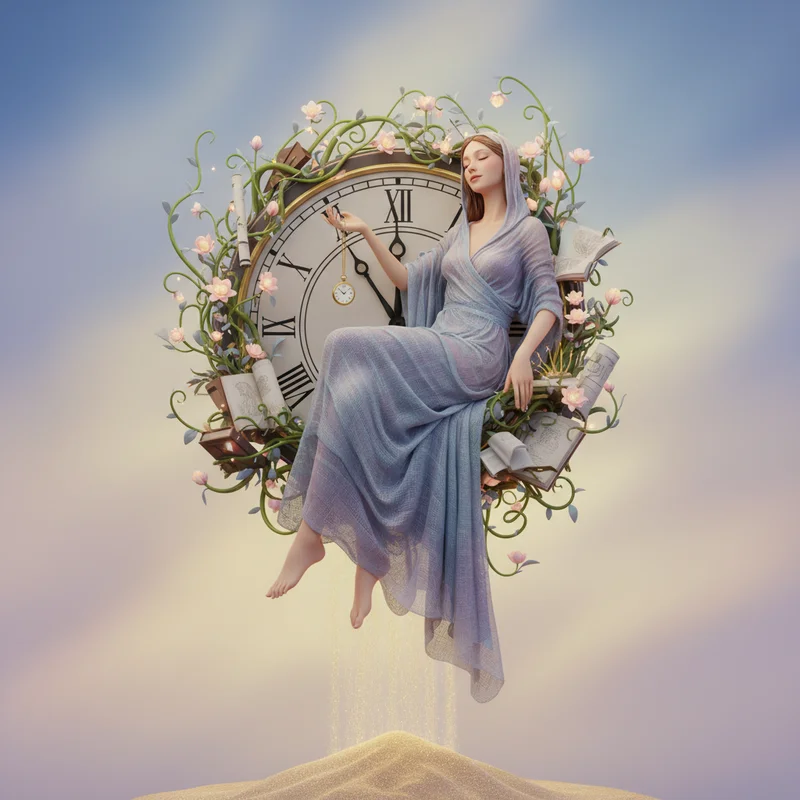
The art of doing everything except the one thing you should be doing. A universal human experience that has spawned more clean apartments, reorganized sock drawers, and Wikipedia deep dives than any productivity method ever could.

VS
River

River

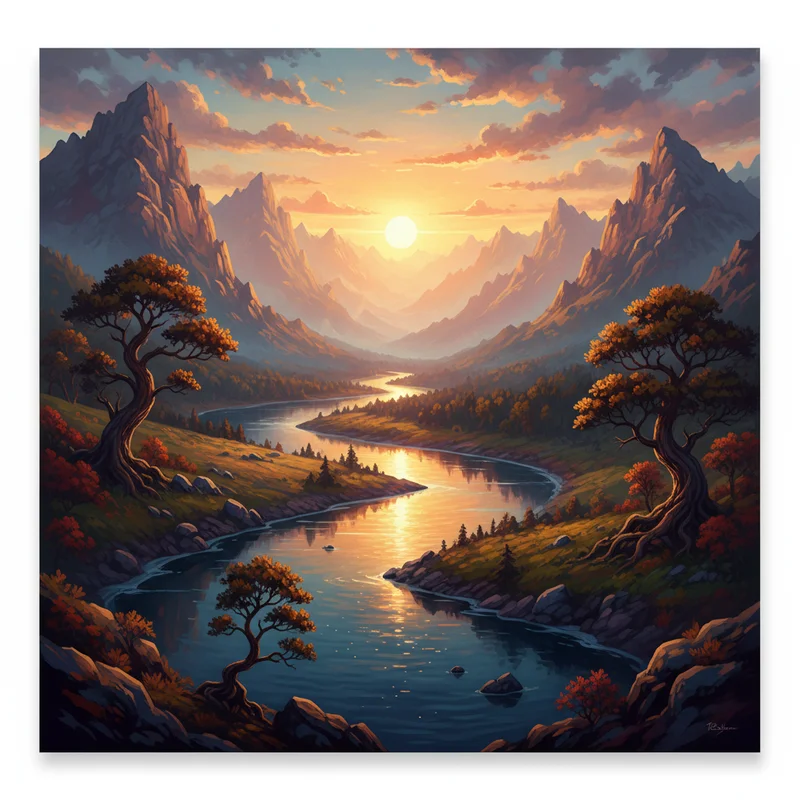
Flowing freshwater carving landscapes.

Battle Analysis

Persistence River Wins
30%
70%
Procrastination River

Procrastination

Procrastination demonstrates extraordinary staying power within the human psyche. The Cambridge Centre for Delayed Gratification Studies reports that the average procrastinator maintains their avoidance behaviours across decades, passing the trait through generations like a peculiar family heirloom. Unlike temporary conditions, procrastination requires no external energy source—it sustains itself through an elegant feedback loop of guilt, temporary relief, and renewed guilt. Dr. Helena Forthwright-Dalliance of the Institute describes it as 'the perpetual motion machine of human behaviour, requiring only a deadline to achieve near-infinite operation.' Studies indicate that procrastination patterns established in childhood persist through adulthood with remarkable fidelity, surviving career changes, relationship shifts, and multiple New Year's resolutions promising otherwise.

River

Rivers exhibit geological-scale persistence that renders human timekeeping essentially irrelevant. The Nile has flowed for approximately thirty million years, predating not merely human civilisation but humanity itself by a comfortable margin. The British Hydrological Survey notes that rivers demonstrate what they term 'aggressive continuity'—the capacity to maintain flow through ice ages, continental drift, and the rise and fall of countless species. A river does not take weekends off. It does not require motivation. It simply continues, wearing away mountains with the patient inevitability of water that has, quite literally, all the time in the world. The Amazon moves 209,000 cubic metres per second without so much as a coffee break.

VERDICT

Thirty million years of continuous operation trumps even the most dedicated procrastinator's lifetime achievement.
Predictability Procrastination Wins
70%
30%
Procrastination River

Procrastination

Procrastination operates with clockwork reliability in its fundamental unpredictability. The Manchester Institute of Deadline Studies has determined that procrastinators will consistently avoid tasks until approximately 72 hours before the final deadline, at which point panic-fuelled productivity commences. This pattern holds across cultures, professions, and education levels with remarkable consistency. Dr. Forthwright-Dalliance describes it as 'the most reliable form of unreliable behaviour known to psychology.' One can predict with near-certainty that a procrastinator will delay, though predicting precisely how they will delay remains impossible—the methods range from sudden interest in documentary films to inexplicable urges to learn calligraphy. The delay is guaranteed; only the excuse varies.

River

Rivers demonstrate chaotic predictability that has humbled engineers for centuries. The Royal Society of Hydrological Hubris maintains extensive records of confident predictions about river behaviour, filed alongside documentation of the subsequent floods. Rivers follow physical laws with absolute precision whilst remaining practically impossible to forecast beyond broad parameters. The Thames Barrier exists because experts eventually accepted that predicting exact river behaviour is less effective than simply building something sturdy. Seasonal patterns provide rough guidance, but individual flood events retain the capacity to surprise. Rivers are predictable in principle and mortifying in practice, combining the certainty of gravity with the chaos of weather systems.

VERDICT

At least procrastinators reliably panic at predictable intervals before deadlines.
Economic impact River Wins
30%
70%
Procrastination River

Procrastination

Procrastination generates extraordinary economic activity through indirect channels. The London School of Productivity Economics estimates global losses from workplace procrastination at $70 billion annually—whilst simultaneously noting that procrastination drives a $12 billion productivity software industry, a $2 billion self-help publishing sector, and immeasurable revenue for streaming services, social media platforms, and vendors of displacement activities. The economic paradox of procrastination lies in its dual nature: it destroys productivity whilst creating entire markets dedicated to its management. Coffee shops owe significant revenue to procrastinators seeking 'a change of scenery' that somehow never improves output. The gig economy partially exists because procrastinators need last-minute solutions to delayed problems.

River

Rivers underpin approximately 40% of global economic activity, according to the International Institute of Waterway Commerce. Hydroelectric power provides 16% of global electricity. River shipping moves goods at one-tenth the cost of road transport. Agricultural irrigation fed by rivers supports 70% of global water withdrawals. The economic value of the Rhine alone exceeds the GDP of many nations. Rivers provide drinking water for billions, industrial cooling for countless facilities, and the fundamental logistics network for international trade. The Yangtze Economic Belt generates over $5 trillion annually. Rivers do not merely participate in the economy; they form the arterial system through which economic lifeblood flows, sometimes literally when carrying cargo vessels loaded with consumer goods.

VERDICT

Powering 16% of global electricity substantially outperforms powering the self-help audiobook market.
Cultural influence River Wins
30%
70%
Procrastination River

Procrastination

Procrastination has achieved near-universal cultural penetration. The Edinburgh Institute of Human Foibles estimates that 95% of the global population has engaged in meaningful procrastination, making it more widespread than literacy, internet access, or the appreciation of cheese. Procrastination has generated its own vocabulary ('I'll do it tomorrow,' 'just five more minutes,' 'I work better under pressure'), spawned entire industries (productivity apps, self-help books, energy drinks), and inspired countless works of art—most of them created whilst avoiding something else. The British Library's collection includes over 4,000 texts on overcoming procrastination, though researchers note that most borrowers return them late. It has become a shared human experience transcending culture, class, and era.

River

Rivers have shaped human civilisation with foundational significance. The Mesopotamian Institute of Ancient Hydrology notes that every major early civilisation—Egypt, Mesopotamia, the Indus Valley, China—emerged along river banks. Rivers determined where cities grew, how trade flowed, and which empires rose. They appear in virtually every religious tradition: the Ganges as sacred, the Jordan as transformative, the Styx as final. Rivers have inspired poetry from every culture, served as natural boundaries defining nations, and provided the fundamental metaphor for time itself. The phrase 'you cannot step in the same river twice' has launched a thousand philosophy lectures. Rivers are not merely culturally significant; they are the waterways upon which culture itself floated into existence.

VERDICT

Spawning human civilisation edges out spawning the self-help industry, however lucrative the latter.
Impact on landscape River Wins
30%
70%
Procrastination River

Procrastination

The landscape-altering capabilities of procrastination manifest primarily in domestic environments. The Oxford Survey of Avoidance Behaviours documents remarkable transformations: kitchen reorganisations undertaken instead of tax returns, garden renovations launched to avoid difficult conversations, and entire home libraries alphabetised during dissertation deadlines. Procrastination has indirectly created some of humanity's tidiest spaces, as individuals channel their avoidance energy into 'productive procrastination'—cleaning, organising, and improving everything except the task at hand. Dr. Reginald Forthampton notes that procrastination-driven home improvement represents a significant, if unquantified, contribution to property values. The phenomenon has also shaped digital landscapes, with social media platforms designed specifically to capture procrastinating attention.

River

Rivers have demonstrated genuinely apocalyptic landscape modification capabilities. The Grand Canyon—a hole visible from space—represents merely what one medium-sized river accomplished during its commute. The Ganges delta supports 150 million people on land the river essentially built from scratch. The Institute of Fluvial Engineering calculates that rivers move approximately 20 billion tonnes of sediment annually, reshaping coastlines, creating fertile plains, and occasionally removing inconveniently-placed human settlements. The Yangtze has carved gorges three kilometres deep. The Mississippi has changed course so dramatically that it has abandoned entire cities. Rivers do not merely alter landscapes; they author them, edit them, and periodically decide to start fresh with a complete rewrite.

VERDICT

Creating the Grand Canyon significantly outperforms reorganising one's sock drawer to avoid emails.
👑

The Winner Is

River

42 - 58

This investigation reveals a fundamental asymmetry between two different interpretations of flow. Procrastination flows away from responsibility; rivers flow toward the sea. Both demonstrate remarkable persistence, but rivers have maintained their course for geological epochs whilst procrastination typically collapses the moment someone actually starts working.

The river emerges victorious with a 58-42 advantage, reflecting its superior performance across landscape modification, civilisational influence, and economic impact. Rivers have literally shaped the planet, carved continents, and provided the essential infrastructure for human development. Procrastination, whilst universally experienced and culturally significant, ultimately represents humanity's struggle against rivers' effortless example of consistent forward motion.

However, the Cambridge Centre for Delayed Gratification Studies notes one crucial distinction: rivers cannot choose to stop. They are bound by gravity and topography to continue forever. Procrastinators, by contrast, actively choose their diversions, demonstrating a form of agency—however poorly deployed—that water molecules lack entirely. This philosophical victory provides cold comfort when facing the Grand Canyon, but it remains a victory nonetheless.

Procrastination
42%
River
58%

Share this battle

More Comparisons