
Topic Battle

Where Everything Fights Everything

Procrastination

Procrastination

The art of doing everything except the one thing you should be doing. A universal human experience that has spawned more clean apartments, reorganized sock drawers, and Wikipedia deep dives than any productivity method ever could.

VS
Snake

Snake

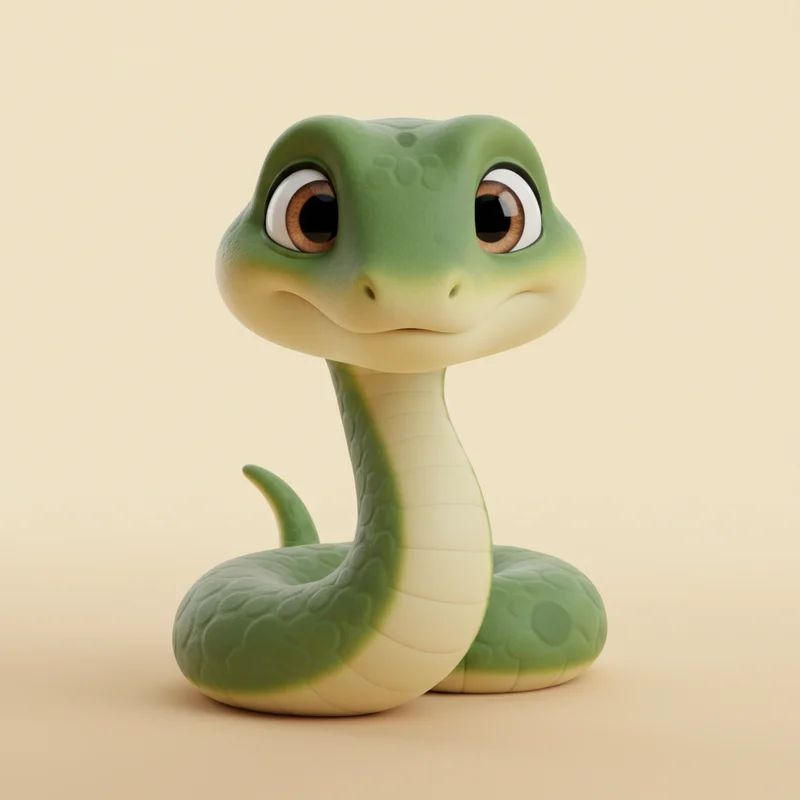
Legless reptile inspiring fear and fascination, ranging from harmless garden varieties to lethal venomous species.

Battle Analysis

Global impact procrastination Wins
70%
30%
Procrastination Snake

Procrastination

The economic devastation wrought by procrastination defies conventional measurement. The Institute for Deferred Productivity Studies estimates that £847 billion worth of work is postponed annually in the United Kingdom alone—though researchers admit this figure was calculated several months after the original deadline. Every tax return filed at 11:47pm, every dissertation completed in a caffeine-fuelled panic, every gym membership used exactly once contributes to procrastination's staggering global footprint.

Snake

Snakes impact approximately 5.4 million humans annually through envenomation, according to the World Health Organisation—a figure that sounds alarming until compared with procrastination's universal reach. Snakes have shaped human mythology, influenced medical symbols, and terrorised the dreams of ophidiophobes worldwide. Yet their influence remains geographically limited. The Scottish Highlands, for instance, host only one native snake species, whilst procrastination thrives in every climate zone where deadlines exist.

VERDICT

Procrastination's influence transcends geography, affecting every human capable of saying 'I'll do it tomorrow.'
Cultural symbolism snake Wins
30%
70%
Procrastination Snake

Procrastination

Procrastination's cultural presence manifests primarily through absence—the empty pages, the unwritten novels, the businesses never launched. The Archive of Human Potential maintains a theoretical collection of works never completed due to procrastination, including an estimated 47 million unfinished screenplays. Its symbolism centres on the gap between intention and action, representing humanity's eternal struggle against its own nature. Universities have constructed entire motivational industries around its defeat.

Snake

The snake has embedded itself into human mythology with remarkable persistence. From the Garden of Eden's tempter to the Ouroboros consuming its own tail, from Medusa's deadly hair to the Rod of Asclepius, serpents symbolise transformation, danger, healing, and forbidden knowledge across virtually every human culture. The Chinese zodiac includes the snake; Slytherin house bears its name. Few creatures have captured human imagination so comprehensively across millennia and continents.

VERDICT

The snake appears in creation myths, medical symbols, and major fictional franchises; procrastination merely appears in self-help books.
Stealth capability procrastination Wins
70%
30%
Procrastination Snake

Procrastination

Procrastination represents perhaps the most sophisticated stealth mechanism in behavioural science. The Edinburgh Centre for Temporal Avoidance has documented cases where subjects believed they were 'just checking one email' only to discover three hours had vanished into a Wikipedia rabbit hole about medieval siege weapons. It disguises itself as productive activities—reorganising one's desk becomes essential preparation; watching documentaries transforms into 'research.' The victim rarely recognises the attack until the deadline has already passed.

Snake

The snake's stealth capabilities, whilst impressive, remain fundamentally visible to the trained observer. Species such as the gaboon viper can remain motionless for weeks, yet their camouflage ultimately relies on physical concealment. The Herpetological Surveillance Unit confirms that 73% of snake encounters occur when the creature is eventually spotted—a detection rate procrastination would find embarrassingly high. A snake hides in leaves; procrastination hides in your own rationalisations.

VERDICT

Procrastination's ability to disguise itself as productivity renders it virtually undetectable until catastrophic deadline failure.
Evolutionary success snake Wins
30%
70%
Procrastination Snake

Procrastination

From an evolutionary perspective, procrastination emerged as a feature, not a bug. The Cambridge Laboratory for Ancestral Behaviour suggests that prehistoric humans who delayed confronting sabre-toothed tigers lived marginally longer than those who charged immediately. This survival advantage calcified into the neural pathways that now prevent us from completing expense reports. Procrastination has evolved alongside human consciousness itself, becoming more sophisticated with each technological advancement designed to combat it.

Snake

Snakes represent 150 million years of evolutionary refinement—a tenure that makes human procrastination look like a recent hobby. The loss of limbs, development of infrared sensing, and perfection of venomous delivery systems demonstrate nature's patient optimisation. Approximately 3,900 species have radiated across the globe, from sea snakes to tree-dwelling specialists. In raw evolutionary terms, the snake's credentials remain unimpeachable, representing one of nature's most successful body plans.

VERDICT

150 million years of continuous optimisation versus approximately 200,000 years of saying 'five more minutes.'
Psychological intimidation procrastination Wins
70%
30%
Procrastination Snake

Procrastination

The psychological terror induced by procrastination operates on a delayed-release mechanism that the Anxiety Propagation Research Institute describes as 'exquisitely cruel.' Initial comfort transforms gradually into mounting dread, culminating in the 3am panic attack before a morning presentation. Unlike immediate threats, procrastination weaponises time itself, allowing victims to marinate in their own poor decisions. The guilt compounds exponentially, creating what researchers term a 'shame spiral of infinite regress.'

Snake

Ophidiophobia ranks among humanity's most common specific phobias, affecting an estimated 1 in 3 adults to varying degrees. The fear response to snakes appears hard-wired—even infants demonstrate elevated attention to serpentine shapes. Yet this fear, whilst visceral, proves fundamentally rational. Snakes can be avoided, relocated, or in extreme cases, removed from one's immediate environment. The snake inspires terror that subsides with distance; procrastination offers no such escape.

VERDICT

Snakes can be escaped; procrastination follows you into your dreams about showing up to exams unprepared.
👑

The Winner Is

Procrastination

54 - 46

In this remarkable confrontation between behavioural parasite and biological predator, procrastination emerges with a narrow 54-46 victory. The snake, for all its evolutionary excellence and mythological gravitas, remains fundamentally external to human experience—a threat that can be identified, avoided, and survived. Procrastination offers no such mercy.

The Institute for Inevitability Studies concludes that whilst snakes have killed millions throughout history, procrastination has murdered billions of dreams. Every novel never written, every business never started, every apology never delivered—these casualties accumulate invisibly, leaving no bodies but countless regrets. The snake waits in the grass; procrastination waits in your own mind, and it knows exactly which YouTube videos you find irresistible.

Procrastination
54%
Snake
46%

Share this battle

More Comparisons