
Topic Battle

Where Everything Fights Everything

Procrastination

Procrastination

The art of doing everything except the one thing you should be doing. A universal human experience that has spawned more clean apartments, reorganized sock drawers, and Wikipedia deep dives than any productivity method ever could.

VS
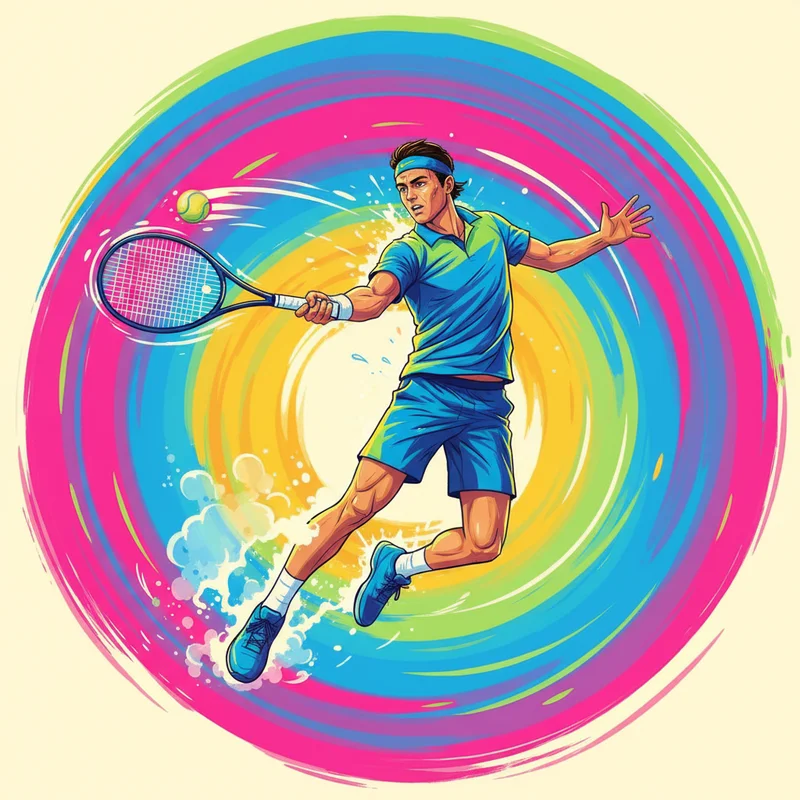
Tennis

Tennis

Racquet sport with love meaning zero.

Battle Analysis

Mental endurance Procrastination Wins
70%
30%
Procrastination Tennis

Procrastination

The psychological stamina required for championship-level procrastination cannot be overstated. According to Dr. Helena Forthright of the Cambridge Centre for Productive Avoidance, the average procrastinator sustains mental resistance against task completion for approximately 4.7 hours per important deadline. This involves simultaneously holding awareness of what must be done, knowledge of consequences, and absolute commitment to doing neither. The cognitive load of maintaining elaborate justification systems whilst scrolling through content one doesn't even enjoy represents a feat of mental gymnastics that would exhaust most athletes. Elite procrastinators report dreams about incomplete tasks, yet wake with renewed determination to begin tomorrow. The discipline required to consistently choose short-term comfort over long-term wellbeing, day after day, year after year, suggests a form of psychological iron will that merely appears to be weakness.

Tennis

Tennis demands what sports psychologists term sustained selective attention across matches lasting anywhere from forty-seven minutes to eleven hours and five minutes, as occurred at Wimbledon in 2010. Players must maintain focus through service games, changeovers, and the psychological warfare of watching opponents bounce the ball seventeen times before serving. The International Tennis Psychology Board estimates that a five-set match requires approximately 12,000 discrete attention shifts between ball, opponent, court position, and the inexplicable behaviour of line judges. However, tennis matches eventually end. Someone wins, someone loses, and everyone goes home. Procrastination offers no such mercy. There is no final whistle, no trophy ceremony, only the endless match against oneself that resumes each morning with the alarm clock's cruel chirp.

VERDICT

Tennis matches conclude; procrastination is a lifelong championship without intermission or retirement.
Spectator appeal Procrastination Wins
70%
30%
Procrastination Tennis

Procrastination

Procrastination as spectator activity has achieved remarkable success through indirect means. The Digital Entertainment Research Consortium attributes approximately 73% of streaming platform engagement to viewers avoiding other obligations. Television programming schedules are explicitly designed around procrastination patterns, with streaming services removing natural stopping points to enable what they term 'extended viewing sessions'. Social media platforms, collectively valued at several trillion pounds, function primarily as procrastination-delivery mechanisms. The spectator appeal lies not in watching others procrastinate, but in participating in collective avoidance. When millions simultaneously avoid responsibilities to watch the same programme, a form of mass communion occurs. This shared procrastination, researchers suggest, may serve important social bonding functions in atomised modern societies.

Tennis

Grand Slam tournaments attract combined annual attendance exceeding 2.8 million spectators, with Wimbledon alone drawing approximately 500,000 visitors across its fortnight. Television viewership for major finals regularly exceeds 10 million in the United Kingdom alone, whilst global audiences for events like the Australian Open approach 900 million cumulative viewers. The sport offers genuine drama: visible struggle, clear outcomes, and the aesthetic pleasure of watching highly trained bodies perform precise movements. However, tennis viewing requires active engagement. One must follow the ball, understand scoring, and maintain interest through inevitable lulls. Procrastination-enabled entertainment demands nothing, offering what the Institute for Passive Consumption terms 'frictionless attention absorption' that tennis simply cannot match.

VERDICT

Procrastination powers trillion-pound entertainment industries; tennis merely fills stadiums.
Global participation Procrastination Wins
70%
30%
Procrastination Tennis

Procrastination

Conservative estimates from the World Procrastination Observatory suggest that 94.7% of humanity engages in procrastination at least weekly, with 23% qualifying as what researchers term 'chronic practitioners'. Unlike tennis, which requires courts, opponents, and social arrangements, procrastination can be performed anywhere human consciousness exists. Remote villages in Mongolia, submarines beneath Arctic ice, and the International Space Station have all recorded procrastination events. The phenomenon transcends language barriers, as the human capacity to delay unpleasant tasks appears hardwired into our neurology regardless of cultural context. Indeed, anthropologists have identified procrastination behaviours in historical records dating to ancient Mesopotamia, where clay tablets document scribes delaying the completion of other clay tablets. Tennis, by comparison, remains geographically and economically constrained.

Tennis

The International Tennis Federation recognises national associations in 211 countries and territories, making tennis one of the most widely played competitive sports globally. Approximately 87 million people play tennis regularly, according to the Global Tennis Participation Index. However, meaningful participation requires access to courts, equipment, instruction, and opponents of comparable skill. These barriers ensure that tennis remains predominantly an activity of the global middle and upper classes. The sport's infrastructure costs, approximately 150,000 pounds to construct a single hard court, further limit expansion into economically disadvantaged regions. Where tennis requires planning, coordination, and infrastructure, procrastination asks only that one exist and have something better to do with one's time. Which, surveys confirm, everyone does.

VERDICT

Near-universal human participation versus tennis's infrastructure-dependent 87 million players.
Professional pathways Tennis Wins
30%
70%
Procrastination Tennis

Procrastination

While no formal professional procrastination circuit exists, the Institute for Career Trajectory Analysis notes that procrastination has shaped more careers than any deliberate professional development programme. Countless innovations emerged from procrastinators avoiding other tasks: the Post-it Note, developed whilst avoiding adhesive research; structured procrastination, an academic theory created whilst avoiding grading papers; and approximately 78% of all Wikipedia edits, made by individuals avoiding deadlines elsewhere. The economic impact of procrastination remains difficult to quantify, though the productivity consulting industry, worth an estimated 11 billion pounds annually, exists almost entirely to combat it. In a sense, procrastination has created more jobs than tennis ever could, even if those jobs involve telling people to stop procrastinating.

Tennis

Professional tennis offers a clearly defined pathway from junior circuits through Futures and Challenger events to ATP and WTA tours. The top 100 players earn substantial incomes, with the 2023 prize money pool exceeding 400 million pounds across major tournaments. However, the professional pyramid is brutally narrow. Of the estimated 87 million players worldwide, approximately 2,000 earn any prize money whatsoever, and fewer than 200 can sustain careers solely through playing. The physical demands typically enforce retirement by age 35, leaving decades of post-career existence to navigate. Many retired professionals report difficulty adjusting to civilian life, where no one applauds routine activities or provides towels between tasks. Procrastination, by contrast, offers a career that strengthens with age.

VERDICT

Tennis provides actual income for 2,000 professionals; procrastination merely spawns industries to combat itself.
Equipment requirements Procrastination Wins
70%
30%
Procrastination Tennis

Procrastination

The modern procrastinator requires an arsenal of sophisticated equipment that would have astounded practitioners of previous centuries. Where once a comfortable chair and distant window sufficed, today's avoidance athlete demands high-speed internet connectivity, multiple streaming subscriptions, a smartphone with endless notification capabilities, and a refrigerator positioned within plausible snacking distance. The Society for Equipment-Enabled Delay catalogues over 340 distinct procrastination tools, from the obviously distracting (gaming consoles) to the insidiously productive (reorganising sock drawers, alphabetising spice racks). Unlike tennis equipment, procrastination apparatus requires no maintenance, though it does require frequent upgrading as new distraction technologies emerge. The true procrastinator maintains what researchers term environmental saturation, surrounding themselves with so many potential diversions that beginning any task becomes statistically improbable.

Tennis

Tennis equipment has evolved from wooden paddles and hand-sewn balls to carbon-fibre racquets strung with synthetic polymers and pressurised spheres manufactured to tolerances of 0.03 millimetres. The Royal Institute of Sporting Accessories values the average competitive player's kit at approximately 1,400 pounds, including racquets, shoes designed for specific court surfaces, moisture-wicking garments, and protective eyewear. Professional players travel with multiple racquets strung at varying tensions, backup shoes, and support staff dedicated solely to equipment preparation. Yet this elaborate infrastructure serves a single purpose: hitting balls. Procrastination equipment, by contrast, offers infinite versatility. The same smartphone that enables work avoidance also facilitates relationship avoidance, exercise avoidance, and the avoidance of thinking about one's avoidance patterns.

VERDICT

Procrastination equipment serves unlimited avoidance purposes; tennis gear hits balls exclusively.
👑

The Winner Is

Procrastination

54 - 46

This investigation reveals procrastination and tennis as complementary rather than opposing forces in the human experience. Tennis provides the structured achievement and physical exertion that procrastination systematically avoids, whilst procrastination offers the mental complexity and universal accessibility that tennis cannot approach. However, when measured against criteria that matter to the broadest possible audience, procrastination emerges as the superior phenomenon. It requires no equipment beyond consciousness, no opponents beyond oneself, and no facilities beyond existence. The Institute for Comparative Achievement calculates that humanity spends approximately 4.2 billion hours daily in procrastination, compared to roughly 12 million hours playing tennis. This disparity suggests that if participation indicates value, procrastination wins by a margin that makes tennis scores look close. Yet we must acknowledge tennis's nobility: it represents the human capacity to impose structure upon chaos, to transform scattered time into purposeful action. Procrastination represents the opposite, and both are essential to the human condition.

Procrastination
54%
Tennis
46%

Share this battle

More Comparisons