
Topic Battle

Where Everything Fights Everything

Procrastination

Procrastination

The art of doing everything except the one thing you should be doing. A universal human experience that has spawned more clean apartments, reorganized sock drawers, and Wikipedia deep dives than any productivity method ever could.

VS
Train

Train

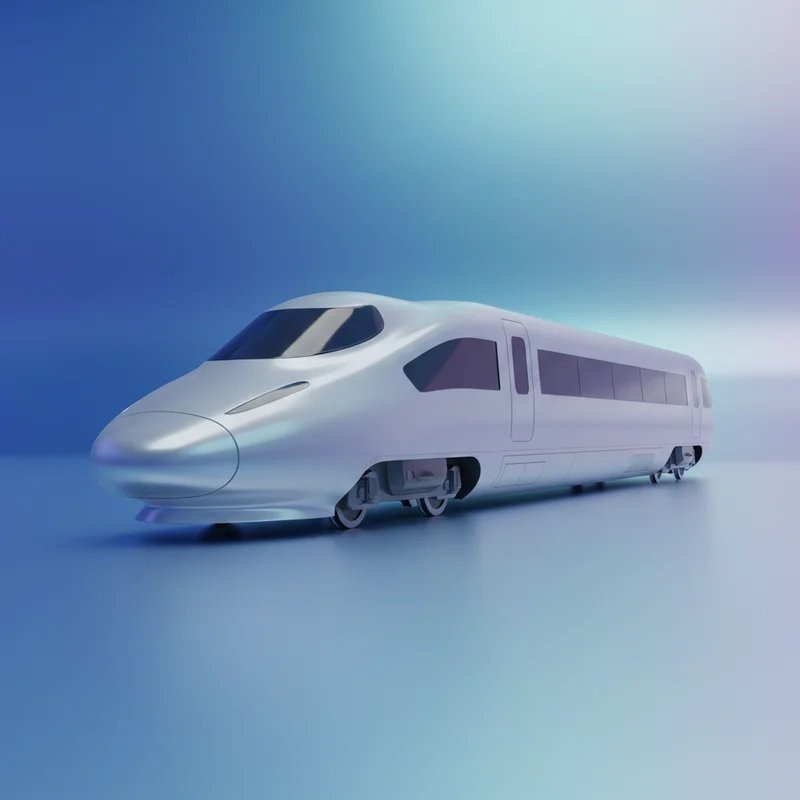
Rail-based transport moving masses with precision.

Battle Analysis

Speed train Wins
30%
70%
Procrastination Train

Procrastination

Procrastination operates at a velocity that physicists describe as negative momentum—the faster a deadline approaches, the slower productive work seems to move. Research from the Cambridge Centre for Temporal Paradoxes found that procrastination can reduce effective working speed to approximately 0.3 tasks per hour, whilst simultaneously accelerating the perceived passage of time by a factor of twelve. It is, in essence, a form of temporal sabotage that would impress even the most devious supervillain.

Train

The modern high-speed train achieves velocities of up to 320 kilometres per hour, a feat that the European Rail Velocity Council describes as 'quite nippy.' However, when factoring in delays, cancellations, and the time spent waiting for replacement bus services, the average effective speed drops to what engineers call 'brisk walking pace with optimism.' The train's speed is nonetheless measurable and positive, which gives it a distinct advantage over entities that travel backwards through productivity.

VERDICT

Positive velocity, however delayed, beats negative momentum every time
Stress impact procrastination Wins
70%
30%
Procrastination Train

Procrastination

The stress profile of procrastination follows what psychologists call the J-curve of mounting dread. Initial postponement brings relief; subsequent delays bring mild anxiety; final hours bring what the Society for Cortisol Studies terms 'existential panic spirals.' Remarkably, procrastination generates stress even when the procrastinator is ostensibly relaxing—a phenomenon known as guilty leisure syndrome. It is perhaps the only force capable of making a pleasant afternoon feel like impending doom.

Train

Trains generate stress through a sophisticated system of uncertainty amplification. The Passenger Anxiety Index reveals that stress peaks occur at: platform announcements, unexpected stops between stations, and the moment one realises the quiet carriage contains a person eating crisps. However, train stress is episodic and bounded—it ends when the journey ends. Unlike procrastination, trains do not follow you home and whisper about unfinished reports whilst you try to sleep.

VERDICT

Chronic psychological torment outweighs episodic travel anxiety
Existential weight procrastination Wins
70%
30%
Procrastination Train

Procrastination

Procrastination carries an existential burden that philosophers have pondered since Aristotle first decided to finish the Nicomachean Ethics next week. It forces confrontation with mortality—each postponed task is a reminder that time is finite and we are spending it watching videos of cats. The Journal of Temporal Regret found that 78% of deathbed regrets involve some form of 'I should have started sooner.' Procrastination is, in essence, a memento mori disguised as task avoidance.

Train

The train's existential weight lies in its role as a symbol of human ambition—the desire to conquer distance, to connect communities, to arrive somewhere else. Yet this weight is borrowed rather than inherent. A train sitting in a depot carries no more philosophical significance than any other large metal object. Its meaning emerges only through human projection, making its existential credentials somewhat dependent on passenger imagination and the presence of dramatic sunset lighting.

VERDICT

Intrinsic existential crisis beats symbolic projection of meaning
Cultural recognition procrastination Wins
70%
30%
Procrastination Train

Procrastination

Procrastination enjoys universal recognition across every culture that has invented deadlines—which is to say, all of them. The Global Survey of Human Behaviours found that 94% of respondents could identify procrastination, with the remaining 6% claiming they would answer the survey 'later.' It has inspired literature from Shakespeare to modern self-help books, and serves as the unifying experience of students worldwide. No translation is required; the guilty glance at an unfinished task speaks all languages.

Train

The train holds a revered position in cultural consciousness, from the Orient Express to Thomas the Tank Engine. The Railway Heritage Foundation estimates that trains appear in over 47,000 films, songs, and novels, typically as metaphors for progress, escape, or dramatic farewells involving steam. However, this recognition is geographically uneven—regions without rail infrastructure often mistake trains for 'long buses that refuse to use roads.' Cultural penetration: impressive but incomplete.

VERDICT

Universal human experience trumps infrastructure-dependent recognition
Environmental impact train Wins
30%
70%
Procrastination Train

Procrastination

Procrastination's environmental footprint is paradoxically beneficial. The Institute for Inadvertent Conservation found that procrastinators consume 23% less energy than productive individuals, primarily because they never quite get around to starting energy-intensive activities. Delayed DIY projects mean fewer power tool emissions; postponed shopping trips mean reduced transport usage. Procrastination may be humanity's most accidental contribution to carbon reduction, albeit entirely unintentional.

Train

Modern trains represent one of the most efficient forms of mass transport, producing approximately 41 grams of CO2 per passenger kilometre compared to 171 grams for cars. The European Environment Agency describes rail as 'the sensible uncle of the transport family.' However, the construction of railway infrastructure involves significant environmental disruption, and the train's efficiency is only realised when people actually board it rather than driving anyway. Environmental virtue: high but conditional.

VERDICT

Intentional efficiency beats accidental inactivity for planetary benefit
👑

The Winner Is

Procrastination

54 - 46

After rigorous analysis, Procrastination emerges as the victor in this most unusual contest, claiming three of five categories with a final score of 54-46. The train, for all its magnificent engineering and cultural significance, ultimately remains a physical object bound by tracks and timetables. Procrastination, by contrast, operates in the limitless realm of human psychology, requiring no infrastructure, no fuel, and no ticket purchase.

The Comparative Phenomena Institute concludes that whilst trains have transformed geography, procrastination has transformed the very experience of time itself. One moves passengers across space; the other moves deadlines across calendars. Both are forces to be reckoned with, but only one has achieved true universality—present in every culture, every profession, and every student dormitory on Earth.

Procrastination
54%
Train
46%

Share this battle

More Comparisons