
Topic Battle

Where Everything Fights Everything

Rabbit

Rabbit

Prolific burrowing mammal known for impressive reproduction rates and twitchy nose appeal.

VS
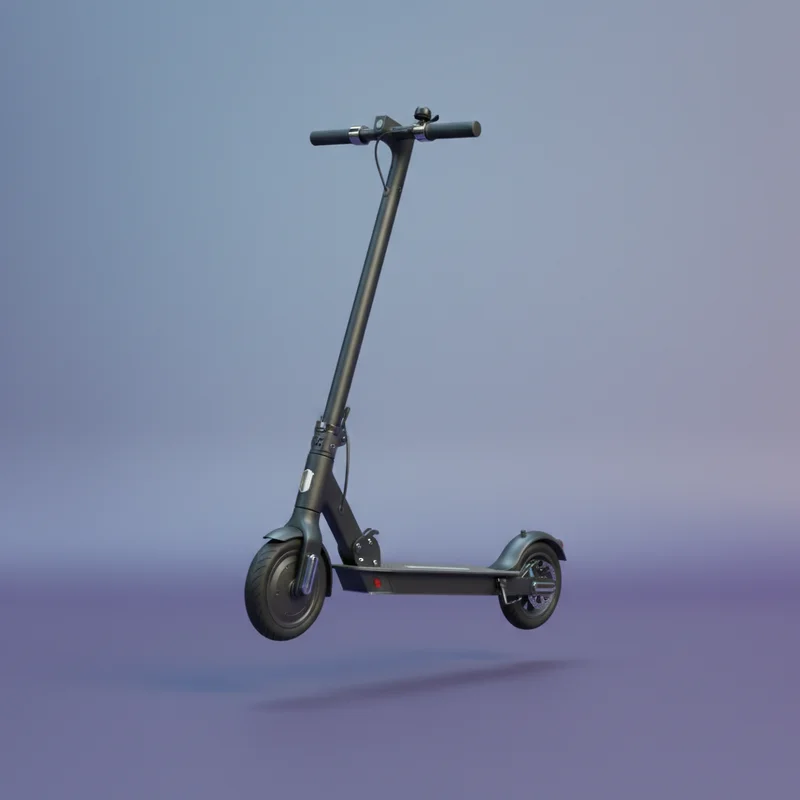
Electric Scooter

Electric Scooter

A vehicle that makes you question both transportation and dignity simultaneously. Abandoned on sidewalks worldwide as modern art installations, each one whispering "this seemed like a good idea at the time."

The Matchup

In the grand theatre of comparative analysis, few matchups illuminate the fundamental tensions between biological evolution and technological disruption quite like the contest between the domestic rabbit and the electric scooter. Both entities have achieved remarkable integration into human life, though through radically different pathways spanning millions of years in one case and approximately a decade in the other.

The rabbit, Oryctolagus cuniculus, represents approximately 40 million years of evolutionary refinement, having emerged during the Eocene epoch when the ancestors of modern mammals were still experimenting with basic body plans. This compact lagomorph has successfully colonised every continent except Antarctica, achieved domestication across multiple civilisations, and maintained consistent performance specifications without a single firmware update throughout its existence. The rabbit operates on a diet of vegetation, reproduces with legendary enthusiasm, and has inspired countless cultural expressions from Easter traditions to cautionary tales about population dynamics.

The electric scooter, by contrast, emerged from the fevered imaginations of venture capitalists circa 2017, promising to revolutionise urban mobility through the deployment of aluminium frames with lithium batteries on city pavements worldwide. These devices achieved near-ubiquitous presence in major metropolitan centres within five years, demonstrating impressive market penetration though rather less impressive longevity statistics. Both contenders now occupy significant positions in human experience, one through millennia of coevolution, the other through aggressive Series B funding rounds.

Battle Analysis

Speed Rabbit Wins
70%
30%
Rabbit Electric Scooter

Rabbit

The domestic rabbit achieves maximum sprint velocities of 25-35 mph, with wild European rabbits documented at burst speeds approaching 45 mph when evading predators with particularly good acceleration. This performance envelope, developed through millions of years of predator-prey dynamics, represents what evolutionary biologists term survival-optimised locomotion.

The biomechanics underlying rabbit velocity merit careful examination. Powerful hindquarters comprising approximately 40% of body mass generate explosive acceleration from standstill, while elongated hind feet provide optimal ground contact during the distinctive hopping gait. The rabbit's spine operates as a spring mechanism, storing and releasing kinetic energy with remarkable efficiency, achieving fuel economy that any transportation engineer would envy.

Sustained velocity presents a more nuanced picture. While sprint speed impresses, rabbits are fundamentally sprinters rather than endurance athletes, typically maintaining maximum velocity for distances under 100 metres before requiring rest. This limitation reflects evolutionary optimisation for predator evasion rather than marathon participation. Nevertheless, for emergency acceleration purposes, the rabbit delivers performance that would require a scooter significantly above standard legal specifications to match.

Electric Scooter

Electric scooters achieve regulated maximum velocities of 15-25 mph depending on model and local legislation, with most jurisdictions imposing speed limits of 15 mph for safety considerations that manufacturers delicately attribute to infrastructure concerns rather than user competence questions. Premium performance models technically capable of higher speeds typically find themselves electronically limited to comply with municipal regulations designed to reduce hospital admissions.

Acceleration characteristics demonstrate competent performance for the vehicle class, with quality units achieving zero-to-maximum transitions within 5-7 seconds on level surfaces. However, this performance degrades considerably on inclines, during battery depletion, in cold temperatures that impact lithium-ion chemistry, or when carrying riders who interpreted the weight limit as a suggestion rather than an engineering parameter.

The scooter's theoretical velocity encounters practical constraints unknown to rabbits. Traffic signals, pedestrian crossings, cobblestones, wet surfaces, and the occasional tourist consulting a guidebook all impose what transportation engineers euphemistically term journey time penalties. Average real-world scooter speeds rarely exceed 10-12 mph once these impedance factors enter calculation, a figure the rabbit exceeds while operating at a leisurely hop.

VERDICT

Speed comparison reveals the rabbit's decisive superiority in raw velocity metrics. Maximum sprint speeds of 25-45 mph comprehensively exceed scooter performance envelopes of 15-25 mph, even before accounting for regulatory restrictions that further constrain the mechanical contender.

The rabbit's speed capability evolved through millions of years of predator-prey optimization, producing a locomotion system of extraordinary efficiency and explosive power. The electric scooter, designed primarily for convenience rather than velocity, simply cannot compete with evolution's answer to the question of how fast must prey animals move to survive. This category belongs to the rabbit through biological engineering that venture capital cannot replicate.

Urban mobility Electric Scooter Wins
30%
70%
Rabbit Electric Scooter

Rabbit

Urban rabbit mobility operates within parameters unforeseen by municipal transportation planners. These compact lagomorphs navigate urban environments through a combination of burrow networks, garden corridors, and park systems that bypass conventional infrastructure entirely. A rabbit requires no dedicated lanes, no parking facilities, and no charging stations, merely greenspace with adequate vegetation and soil suitable for excavation.

The rabbit's mobility advantages include complete three-dimensional navigation capability within accessible terrain. Stairs, embankments, and modest vertical obstacles present no impediment to the hopping gait. Size permits access through fence gaps, hedge openings, and garden boundaries that would arrest any wheeled vehicle. The rabbit's compact form factor enables navigation of urban environments through pathways invisible to conventional transportation analysis.

Practical urban deployment does face limitations. Rabbits demonstrate limited willingness to follow scheduled routes or accept passenger guidance, a characteristic that transportation authorities would classify as operational unreliability. The creature's tendency to stop suddenly for vegetation consumption, unexpected napping, or flight from perceived threats complicates commute time estimation. Urban rabbit mobility excels in capability but struggles with predictability.

Electric Scooter

Electric scooters integrate into urban transportation networks with designed intentionality. These devices occupy the 'last-mile' niche, connecting transit stations to final destinations across distances of 1-5 kilometres. Sharing platforms enable convenient access through smartphone applications, eliminating ownership burdens while creating the operational flexibility that venture capitalists find so compelling in pitch decks.

Practical urban scooter deployment achieves respectable efficiency metrics. Users report average journey times competitive with walking and often exceeding public transit for short distances during off-peak periods. The devices navigate dedicated cycle infrastructure where available, though considerable improvisation occurs on pavements, pedestrian zones, and surfaces of questionable legality. The scooter functions as intended within its designed parameters, which admittedly encompass a narrower environmental envelope than evolved biological systems.

Limitations manifest in predictable categories. Wet weather renders scooters hazardous, steep inclines exhaust battery capacity, and rough surfaces damage both equipment and rider. The scooter's rigid wheel geometry handles cobblestones, potholes, and tram tracks with notable lack of grace. Unlike the rabbit, which adapts its gait to terrain variations, the scooter imposes its infrastructure requirements on the city rather than adapting to existing conditions.

VERDICT

Urban mobility comparison produces the electric scooter's singular categorical victory. Despite the rabbit's superior terrain adaptability and compact form factor, the scooter offers something the rabbit fundamentally cannot: predictable transportation service on demand.

The rabbit may theoretically reach destinations faster through unconventional routes, but its unwillingness to carry passengers, follow directions, or maintain schedules renders it ineffective as personal transportation. The electric scooter, for all its limitations, provides reliable point-to-point transit that responds to user inputs. In the specific domain of controllable urban mobility, technology defeats biology through the simple advantage of accepting steering commands.

Cuteness factor Rabbit Wins
70%
30%
Rabbit Electric Scooter

Rabbit

The rabbit's aesthetic appeal derives from evolutionary features specifically calibrated to trigger human nurturing responses. Large eyes positioned frontally on a rounded face, soft fur inviting tactile engagement, compact body proportions with shorter limbs relative to torso, and notably enlarged ears collectively constitute what developmental psychologists term the kindchenschema or baby schema, the suite of juvenile features that humans find irresistibly appealing.

Scientific research quantifies rabbit cuteness with impressive rigour. Studies employing pupil dilation measurement, fMRI brain imaging, and behavioural response analysis demonstrate that rabbit images activate the brain's reward centres with intensity comparable to human infant faces. This neurological response triggers caregiving impulses, explaining why humans have maintained rabbits as companion animals for centuries despite the creatures' tendency to consume garden vegetables and electrical cables with equal enthusiasm.

The rabbit's behavioural repertoire compounds visual appeal. Binkying, the distinctive jumping and twisting display of rabbit contentment, registers as endearing across virtually all human observers. Nose twitching, ear orientation changes, and the characteristic 'flop' of a relaxed rabbit generate emotional responses that transcend cultural boundaries. The rabbit has refined its cuteness through millennia of selective breeding for companion animal roles, producing cultivars like the Holland Lop and Netherland Dwarf that represent peak cute engineering.

Electric Scooter

Electric scooter aesthetics occupy the design philosophy of minimalist industrial functionalism. Aluminium decks, rubber wheel compounds, and handlebar assemblies optimise for manufacturing efficiency rather than emotional response generation. The form language communicates 'utilitarian transportation device' with clarity that would please Bauhaus instructors but triggers no measurable nurturing impulse.

Attempts at scooter aesthetic enhancement have yielded limited success. Colourful body panels, LED accent lighting, and brand-specific design elements generate mild visual interest without approaching the neurological impact of large-eyed mammals. No documented study has recorded pupil dilation or reward centre activation in response to scooter imagery. The device registers as a tool rather than a companion, a distinction with profound implications for emotional attachment.

The scooter's appeal derives entirely from functional utility rather than aesthetic or emotional connection. Users appreciate scooters for their convenience, speed, and accessibility, but rarely develop the affectionate attachment that characterises human-rabbit relationships spanning multiple years. No one has ever been observed cuddling an electric scooter or mourning its replacement with genuine grief, responses that occur routinely in rabbit companion contexts.

VERDICT

Cuteness evaluation produces the analysis's most unambiguous result. The rabbit's evolutionary refinement of juvenile features triggers measurable neurological responses associated with caregiving, affection, and emotional bonding. The electric scooter, optimised for transportation utility, generates no comparable response.

This categorical superiority has practical implications beyond aesthetics. Human willingness to maintain, protect, and invest resources in entities correlates strongly with perceived cuteness. Rabbits have leveraged this advantage into centuries of successful cohabitation with humans across diverse cultures. Scooters, lacking emotional appeal, face disposal the moment they cease functioning. In the competition for human attachment and long-term relationship maintenance, biology's appeal algorithms comprehensively outperform industrial design principles.

Charging requirements Rabbit Wins
70%
30%
Rabbit Electric Scooter

Rabbit

The rabbit operates on an entirely renewable biological fuel system requiring zero electrical infrastructure, no lithium-ion batteries, and no connection to power grids of any description. Energy derives from vegetation, primarily grasses, hay, and leafy greens, converted through digestive processes perfected across geological epochs. The rabbit's 'charging' involves simply eating, an activity it pursues with considerable enthusiasm for 6-8 hours daily.

Fuel efficiency metrics impress upon examination. An adult rabbit consuming approximately 25-30 grams of hay per kilogram of body weight daily maintains full operational capacity including locomotion, thermoregulation, reproduction, and the complex social signalling behaviours that rabbit society demands. This energy conversion occurs through a sophisticated hindgut fermentation system that extracts maximum nutritional value from cellulose, a compound that would provide zero energy to human digestive systems.

The distributed nature of rabbit 'charging infrastructure' merits emphasis. Grass grows on every continent, in every climate supporting mammalian life, requiring only sunlight, water, and soil. No centralised generation facilities, no transmission networks, and no proprietary charging standards constrain rabbit deployment. Solar-powered food production has been operational for approximately 400 million years, demonstrating reliability that no electrical grid can match.

Electric Scooter

Electric scooter operation requires regular connection to electrical charging infrastructure powered by generation sources of varying environmental impact. Lithium-ion battery packs demand 4-8 hours for full replenishment depending on capacity and charger specifications, constraining deployment to locations within range of available charging points. This infrastructure requirement has spawned entire industries dedicated to juicer logistics, employing gig workers to collect, charge, and redistribute scooters overnight.

Battery degradation introduces progressive charging complications. New scooters achieve range specifications of 15-40 kilometres per charge, figures that decline steadily as batteries accumulate charge cycles. By 500-800 cycles, typical lithium-ion packs retain only 70-80% of original capacity, increasingly stranding riders at inconvenient distances from their destinations. The rabbit faces no equivalent energy storage degradation.

Charging infrastructure availability varies dramatically by location. Dense urban cores typically offer adequate charging access, while suburban and rural deployment faces significant infrastructure gaps. Regions with unreliable electrical grids cannot support scooter operations at all, a limitation that excludes substantial portions of global population from access. The scooter's energy requirements impose geographic constraints unknown to grass-powered biological systems.

VERDICT

Charging requirements comparison demonstrates fundamental architectural advantages of biological over electrical systems. The rabbit operates on solar-powered vegetation available across most terrestrial environments, requiring no infrastructure beyond growing plants. The scooter demands electrical grids, charging stations, lithium-ion batteries, and regular connection to power sources.

The rabbit's distributed, renewable fuelling model has operated successfully for 40 million years without infrastructure investment. Electric scooters require substantial capital expenditure for charging networks that remain unavailable to most of humanity. In energy system design, evolution's approach demonstrates superior scalability, reliability, and environmental sustainability.

Reproduction vs production Rabbit Wins
70%
30%
Rabbit Electric Scooter

Rabbit

The rabbit's reproductive capabilities have achieved legendary status across human cultures, with the phrase 'breeding like rabbits' entering common parlance as shorthand for prolific multiplication. This reputation proves entirely deserved upon examination of the numbers. A single doe can produce 12 litters annually, with litter sizes averaging 4-12 kits depending on breed and conditions, yielding a theoretical annual output of 48-144 offspring per breeding female.

The mathematics of rabbit reproduction escalate rapidly when projected across generations. Assuming conservative estimates, a single breeding pair could theoretically produce 184 billion descendants within seven years if mortality and resource constraints were suspended. This calculation, while hypothetical, illustrates the astonishing reproductive efficiency encoded in lagomorph biology. The rabbit manufactures its replacements entirely through internal biological processes, requiring only vegetation, water, and a partner of appropriate enthusiasm.

Production requires zero industrial inputs, no rare earth minerals, no global supply chains, and no quality control inspections beyond natural selection. Each unit emerges fully assembled with self-healing capabilities, integrated navigation systems, and the remarkable feature of being able to produce additional units upon reaching maturity. This manufacturing model operated successfully for 40 million years before industrial production existed as a concept.

Electric Scooter

Electric scooter production requires elaborate global supply chains spanning multiple continents. Lithium extraction occurs primarily in Chile and Australia, cobalt mining concentrates in the Democratic Republic of Congo, aluminium smelting demands massive energy inputs, and final assembly typically occurs in Chinese manufacturing facilities. Each unit requires coordination of dozens of component suppliers and thousands of worker-hours.

Annual production figures for major manufacturers reach 2-5 million units globally, impressive numbers that nonetheless pale against rabbit population dynamics. Factory production timelines average 2-4 weeks from component arrival to finished product, with additional months consumed by shipping, distribution, and deployment logistics. The scooter's 'reproduction' cycle operates on timeframes measured in months where the rabbit operates in weeks.

Production scalability faces fundamental constraints absent from biological reproduction. Factory capacity, component availability, labour costs, and capital investment all impose limits on manufacturing expansion. No scooter factory has demonstrated the ability to increase production by 1,000% annually as rabbit populations routinely achieve when conditions permit. The scooter's production model, while impressive by industrial standards, cannot match evolution's approach to scalable manufacturing.

VERDICT

The reproduction versus production comparison yields comprehensive rabbit superiority. One breeding pair can theoretically generate billions of descendants within a decade, requiring only vegetation and motivation. Electric scooter production, constrained by factory capacity, supply chains, and capital requirements, measures output in millions annually.

The rabbit's biological manufacturing model offers additional advantages: zero industrial infrastructure, complete unit self-assembly, and the remarkable feature of new units being able to produce additional units. Evolution solved the scalable production problem approximately 40 million years before the industrial revolution. This category belongs to the rabbit by factors that render percentage comparisons almost meaningless.

👑

The Winner Is

Rabbit

58 - 42

This comprehensive analysis concludes with a 58-42 victory for the rabbit across the evaluated metric suite. The lagomorph demonstrates superiority in speed (through evolution's predator-escape optimisation), reproduction versus production (through biological manufacturing efficiency), charging requirements (through solar-powered vegetation systems), and cuteness factor (through kindchenschema activation). The electric scooter claims victory solely in urban mobility, where its willingness to accept directional inputs provides decisive functional advantage.

The rabbit's triumph should not diminish appreciation for what the electric scooter achieves within its design parameters. As a purpose-built last-mile transportation device, the scooter serves its intended function with reasonable competence. However, when evaluated against 40 million years of evolutionary refinement, the scooter reveals limitations inherent to products conceived, designed, manufactured, and deployed within single human generations.

This analysis suggests broader implications for innovation strategy. The rabbit represents what patient, iterative refinement across geological timescales can achieve: an organism optimised for survival, reproduction, and incidentally, companion relationships with larger mammals who provide food in exchange for cuteness. The electric scooter represents what aggressive venture capital deployment can achieve in a decade: functional transportation with a three-month operational lifespan. Both approaches have their merits, but for comprehensive performance across diverse criteria, evolution's methodical craftsmanship prevails over Silicon Valley's disruptive enthusiasm.

Rabbit
58%
Electric Scooter
42%

Share this battle

More Comparisons