
Topic Battle

Where Everything Fights Everything

Rabbit

Rabbit

Prolific burrowing mammal known for impressive reproduction rates and twitchy nose appeal.

VS
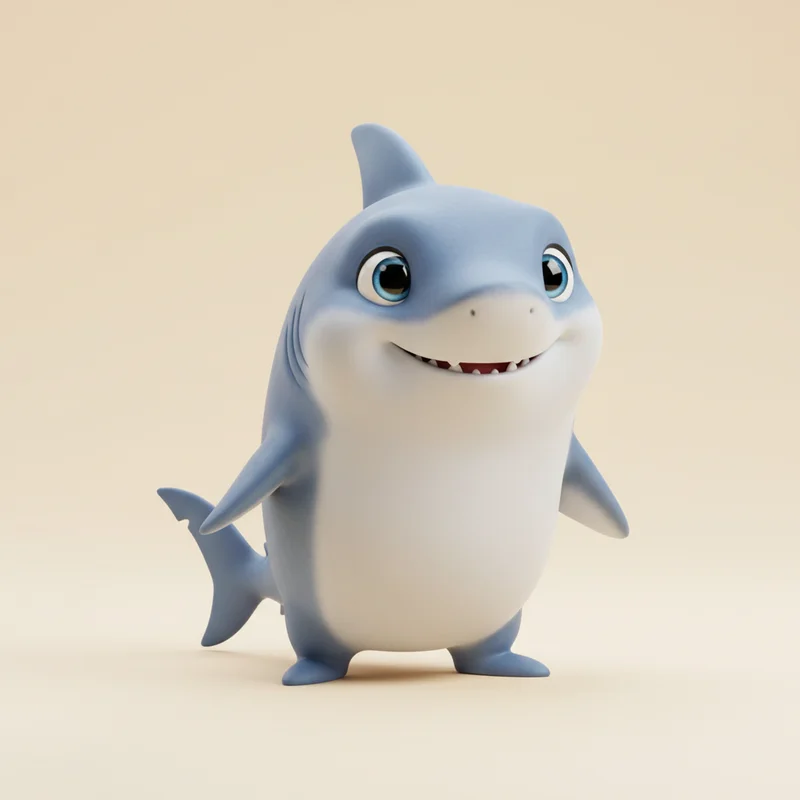
Shark

Shark

Apex ocean predator with 450 million years of evolutionary refinement and unfair movie villain reputation.

Battle Analysis

Survival instinct shark Wins
30%
70%
Rabbit Shark

Rabbit

The rabbit's survival instinct manifests as hypervigilance approaching neurosis. With eyes positioned for nearly 360-degree vision, ears capable of independent rotation, and hind legs engineered for explosive acceleration, rabbits exist in a state of perpetual flight readiness. Their freeze response, whilst occasionally fatal in oncoming traffic, demonstrates sophisticated predator-response calibration. Warrens feature multiple escape routes. Thumping hind legs communicate danger across colonies. The rabbit does not fight; it relocates with prejudice, a survival strategy that has proven remarkably effective across millennia of predation pressure.

Shark

The shark's survival instinct operates from a fundamentally different philosophical position: apex predators need not flee. Most shark species have no natural predators beyond humans and larger sharks. Their survival instincts accordingly prioritise threat assessment over escape. When endangered, sharks typically respond with aggression rather than retreat. This confidence, refined over geological epochs, has served them well against natural threats but renders them catastrophically vulnerable to industrial fishing. An instinct that never evolved responses to nets and longlines now drives species toward extinction with 100 million sharks killed annually.

VERDICT

Apex predator confidence represents evolved certainty of survival, though modern threats challenge this assessment.
Predatory capability shark Wins
30%
70%
Rabbit Shark

Rabbit

The rabbit's predatory capabilities are, to employ technical terminology, effectively non-existent. As obligate herbivores, rabbits hunt nothing more threatening than particularly robust vegetation. Their teeth, whilst formidable against carrots and garden cabbages, have never claimed a vertebrate victim. The closest rabbits approach to predation is the consumption of their own caecotrophs, nutrient-rich droppings requiring a second digestive pass. This is less predation than committed recycling. In the ledger of things killed by rabbits, the column remains resolutely empty of sentient entries.

Shark

The shark represents predation elevated to architectural principle. Equipped with up to 3,000 teeth arranged in conveyor-belt rows, electroreceptive organs capable of detecting heartbeats from metres away, and a lateral line system tracking water displacement with microscopic precision, sharks are essentially swimming death sensors. The great white generates 1.8 tonnes of bite force, sufficient to sever marine mammals in single strikes. Over 450 million years, sharks have refined predation to such perfection that evolution has found little cause for amendment. They are, quite simply, what hunting looks like when given geological timeframes to practise.

VERDICT

450 million years of refined apex predation decisively outclasses vegetable consumption.
Cultural significance rabbit Wins
70%
30%
Rabbit Shark

Rabbit

The rabbit occupies a remarkably diverse position in human cultural consciousness. From the Easter Bunny distributing chocolate eggs through logistically unclear means to the White Rabbit leading Alice into philosophical absurdity, rabbits permeate Western mythology. Watership Down elevated lagomorph existence to epic tragedy. Playboy's rabbit logo became one of the most recognised symbols of the 20th century. In Chinese astrology, the Rabbit year represents prosperity and luck. The creature serves simultaneously as children's pet, magician's prop, laboratory subject, and protein source, demonstrating remarkable cultural versatility.

Shark

The shark commands cultural space through concentrated terror rather than versatility. Jaws fundamentally restructured the film industry whilst simultaneously devastating beach tourism revenues. Shark symbolism tends toward the singular: danger, predation, ruthless efficiency. Loan sharks, card sharks, and corporate sharks all borrow the creature's connotations of merciless pursuit. Yet this very specificity limits cultural range. One cannot employ a shark as a symbol of innocence, fertility, or whimsy. The creature is culturally typecast as antagonist, powerful but narratively constrained to villain roles.

VERDICT

Cultural versatility across positive and neutral contexts outweighs one-dimensional predatory symbolism.
Reproductive strategy rabbit Wins
70%
30%
Rabbit Shark

Rabbit

The rabbit's reproductive capabilities border on the mathematically obscene. A single breeding pair can theoretically produce 184,597,433,860 descendants within seven years, assuming optimal conditions and no predation. Does between 3 and 12 kits per litter, gestating for a mere 30 days before immediately returning to reproductive readiness. This strategy has proven so effective that rabbits introduced to Australia in 1859 had reached an estimated 10 billion individuals by the 1920s, outpacing every control measure humanity could devise. The rabbit does not merely reproduce; it overwhelms reality with offspring.

Shark

The shark's reproductive approach represents the opposite philosophical extreme: quality over quantity. Many species produce fewer than a dozen pups annually, with some requiring two years of gestation. The sand tiger shark practices intrauterine cannibalism, wherein embryos consume their siblings, ensuring only the strongest emerge. This strategy of investing heavily in few offspring has sustained shark populations for hundreds of millions of years, yet renders them catastrophically vulnerable to overfishing. When a rabbit population crashes, it rebounds within seasons; shark recovery is measured in decades.

VERDICT

Mathematical abundance as survival strategy outperforms slow reproduction in adaptability and resilience.
Environmental adaptability rabbit Wins
70%
30%
Rabbit Shark

Rabbit

The rabbit's environmental portfolio reads like a colonial expansion manifest. Originally native to the Iberian Peninsula, rabbits now thrive on every continent except Antarctica. They have adapted to deserts, grasslands, forests, mountains, and suburban gardens with equal enthusiasm. When introduced to new environments, rabbits do not merely survive; they transform ecosystems, often catastrophically. Their burrowing restructures soil composition; their grazing alters vegetation patterns. The European rabbit has been declared one of the world's 100 worst invasive species, a distinction requiring remarkable adaptive flexibility.

Shark

Sharks demonstrate adaptability within strictly aquatic parameters. Species range from tropical reefs to Arctic waters, from ocean surfaces to abyssal depths exceeding 3,000 metres. The bull shark's osmoregulatory capabilities permit freshwater penetration, appearing in rivers hundreds of kilometres from the sea. Yet this adaptability remains fundamentally constrained by medium. Sharks cannot colonise terrestrial environments, limiting their planetary coverage to approximately 71% of Earth's surface. This is substantial but represents an absolute ceiling that rabbits have long since exceeded through multi-continental distribution.

VERDICT

Six-continent terrestrial colonisation demonstrates superior adaptability to water-locked oceanic distribution.
👑

The Winner Is

Rabbit

52 - 48

This examination has illuminated two radically divergent approaches to the fundamental problem of continued existence. The shark, that ancient cartilaginous apex predator, has survived five mass extinctions through predatory perfection, commanding ocean ecosystems with teeth and terror for nearly half a billion years. It wins decisively in predation and survival instinct, representing what dominance looks like when evolution has nothing left to improve. Yet the rabbit, that seemingly defenceless bundle of fur and anxiety, has achieved something arguably more impressive: global terrestrial dominance through sheer reproductive mathematics. Where the shark perfected the art of killing, the rabbit perfected the art of not quite dying out. In an age of human-driven extinction, the rabbit's strategy of cultural integration, reproductive resilience, and environmental adaptability may prove the more prescient evolutionary gambit.

Rabbit
52%
Shark
48%

Share this battle

More Comparisons