
Topic Battle

Where Everything Fights Everything

Rabbit

Rabbit

Prolific burrowing mammal known for impressive reproduction rates and twitchy nose appeal.

VS
Tesla

Tesla

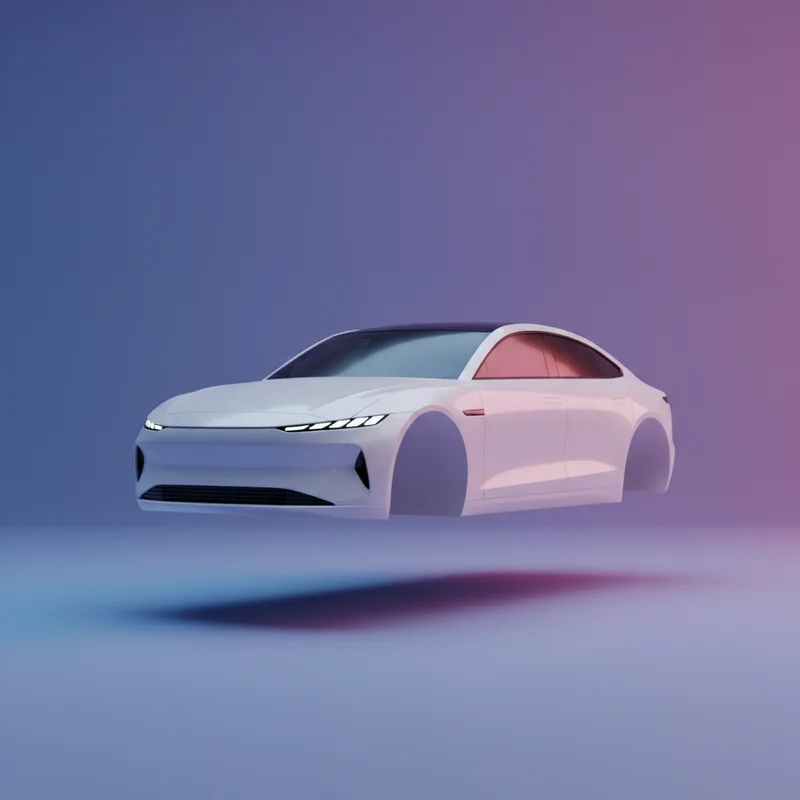
Electric vehicle manufacturer disrupting the automotive industry.

Battle Analysis

Cultural impact rabbit Wins
70%
30%
Rabbit Tesla

Rabbit

The rabbit has infiltrated human culture with remarkable thoroughness. From the Easter Bunny delivering chocolate to children across Christendom to Bugs Bunny outsmarting hunters for eight decades, the creature occupies privileged cultural territory. Peter Rabbit has sold over 45 million copies, establishing the animal as a literary icon. The phrase 'breeding like rabbits' has entered common parlance as metaphor for rapid multiplication. Lewis Carroll deployed the White Rabbit to lure Alice into Wonderland, whilst the rabbit's foot remains humanity's most portable superstition. In Chinese zodiac tradition, the Year of the Rabbit promises peace and prosperity to billions of adherents.

Tesla

Tesla has achieved cultural significance remarkable for corporate adolescence. The brand symbolises technological optimism, environmental consciousness, and the disruptive potential of Silicon Valley applied to industrial manufacturing. Elon Musk's celebrity has rendered Tesla inseparable from debates about billionaire influence, Mars colonisation, and social media conduct. Stock performance has created both millionaires and cautionary tales about speculative investing. Yet Tesla's cultural penetration remains demographically constrained—concentrated among wealthy, technologically-engaged populations in developed economies. The company inspires devotion and derision in roughly equal measure, polarising public opinion in ways the rabbit has never managed.

VERDICT

Rabbits have embedded themselves in global mythology, literature, and superstition across millennia; Tesla's cultural presence remains limited to wealthy demographics.
Acceleration and speed tesla Wins
30%
70%
Rabbit Tesla

Rabbit

The rabbit's acceleration capabilities represent a masterwork of evolutionary engineering. From a standing start, a healthy cottontail can reach 70 km/h within seconds, powered entirely by renewable vegetation. The creature's hindquarters contain muscle fibres optimised for explosive power, achieving what engineers term burst locomotion without requiring a single software update. More remarkably, this performance remains consistent across the animal's lifespan, degrading only with advanced age rather than battery cycle counts. The rabbit requires no charging infrastructure, no supercharger network, and can refuel by simply pausing to nibble whatever greenery presents itself. Top speed is achieved through legs that weigh mere grams yet generate forces exceeding four times body weight.

Tesla

Tesla has made acceleration its primary marketing proposition. The Model S Plaid achieves 0-100 km/h in approximately 2.1 seconds, placing it among the fastest accelerating production vehicles in automotive history. This performance emerges from three electric motors generating over 1,000 horsepower, a figure that would have seemed hallucinatory to engineers a mere decade ago. Yet this capability comes encased in 2,200 kilograms of metal, glass, and battery cells—a mass that would support approximately 1,000 rabbits. The Tesla's top speed of 322 km/h exceeds rabbit capabilities by a comfortable margin, though few owners will ever experience velocities beyond legal limits on public roads.

VERDICT

Tesla's acceleration and top speed metrics exceed rabbit capabilities by orders of magnitude, despite requiring substantially more resources.
Reproduction and growth rabbit Wins
70%
30%
Rabbit Tesla

Rabbit

The rabbit's reproductive strategy borders on the mathematically absurd. A single doe can produce up to 12 litters annually, with each litter containing 4-12 kits. This exponential growth potential inspired Fibonacci's famous sequence. Under ideal conditions, one breeding pair could theoretically produce 184 billion descendants within seven years—a figure that exceeds Tesla's most optimistic production projections by approximately 183 billion units. The rabbit achieves this proliferation using only grass, water, and hormones, requiring no factory construction, supply chain management, or quarterly earnings calls. Each new rabbit emerges fully functional within weeks, requiring no dealer preparation or delivery logistics.

Tesla

Tesla's production growth, whilst impressive by automotive standards, pales against lagomorph fecundity. The company produced approximately 1.8 million vehicles in 2023, requiring gigafactories spanning multiple continents, supply chains touching dozens of nations, and a workforce exceeding 100,000 employees. Each vehicle requires approximately 30,000 components sourced from suppliers worldwide. Production scaling has proven torturous, with Elon Musk famously describing the process as 'production hell'. Model launches face delays measured in years rather than weeks, and expanding capacity requires billions in capital expenditure rather than simply providing adequate nutrition.

VERDICT

Rabbits achieve exponential population growth using only vegetation; Tesla requires billions in capital and global supply chains for modest scaling.
Maintenance requirements rabbit Wins
70%
30%
Rabbit Tesla

Rabbit

Rabbit maintenance demands fall within parameters accessible to virtually any caretaker. Dietary requirements consist of hay, fresh vegetables, and water—commodities available at any grocery establishment. Veterinary costs average $50-200 annually for healthy specimens, covering vaccinations and routine examinations. The rabbit performs its own grooming, temperature regulation, and waste management with minimal human intervention. No software updates download unexpectedly at 3am; no service appointments require scheduling months in advance. When components fail, the rabbit either repairs itself through natural healing processes or, in severe cases, can be replaced entirely for under $50 from most breeders.

Tesla

Tesla ownership involves maintenance considerations that would perplex previous generations. Whilst electric powertrains eliminate oil changes and reduce brake wear, Tesla-specific repairs often require authorised service centres with months-long waiting lists. Battery replacement costs range from $12,000-22,000, representing a potential expense that exceeds many vehicles' total value. Insurance premiums run 15-25% above comparable combustion vehicles due to repair complexity. Software updates, whilst adding features, occasionally introduce unexpected behaviours. The company's resistance to independent repair shops has spawned right-to-repair legislation battles across multiple jurisdictions.

VERDICT

Rabbit maintenance costs pennies daily and requires no appointments; Tesla service demands authorised centres and five-figure battery replacements.
Environmental sustainability rabbit Wins
70%
30%
Rabbit Tesla

Rabbit

The rabbit operates as a remarkably efficient biological machine. Its diet consists entirely of renewable plant matter, requiring no mining operations or international shipping. Waste products return directly to soil as fertiliser, completing a closed-loop nutrient cycle that predates human civilisation. Carbon footprint per rabbit-kilometre travelled approaches zero when measured against fossil fuel baselines. The creature's fur provides insulation without synthetic materials, and end-of-life disposal presents no toxic waste concerns—indeed, the rabbit returns entirely to the ecosystem through natural decomposition or, more frequently, through consumption by predators. The species has maintained this sustainable existence for millions of years without depleting a single mineral deposit.

Tesla

Tesla's environmental narrative requires careful examination. Battery production demands lithium from Chilean deserts and Australian mines, cobalt from Congolese operations with documented human rights concerns, and nickel from processing facilities producing substantial toxic waste. Manufacturing a single Tesla generates approximately 10-15 tonnes of CO2 before the vehicle travels its first kilometre. The environmental payback period—when a Tesla achieves net carbon benefit over efficient combustion alternatives—spans 50,000-80,000 kilometres. Yet in operation, electric vehicles eliminate tailpipe emissions in urban environments, addressing the air quality crisis that claims 4.2 million lives annually according to WHO estimates.

VERDICT

Rabbits operate within closed-loop ecosystems requiring no mining; Tesla's environmental benefits require decades of driving to offset manufacturing impacts.
👑

The Winner Is

Rabbit

52 - 48

This investigation reveals an unexpected contest between evolutionary perfection and industrial ambition. Tesla represents genuine achievement in sustainable transportation, having compressed the automotive industry's electric transition by decades through sheer engineering determination. Yet the rabbit, operating on nothing more than grass and instinct, demonstrates capabilities that elude the most advanced manufacturing: true sustainability, exponential growth without capital expenditure, and global distribution achieved without a single press release. The electric vehicle demands mining operations across continents, charging infrastructure spanning nations, and price points excluding most of humanity. The rabbit asks only for vegetation and a warren, yet has managed to colonise every continent except Antarctica and embed itself in the mythological foundations of civilisation. When measured against criteria that matter across evolutionary timescales rather than quarterly earnings reports, the ancient must prevail over the aspirational. Final score: Rabbit 52, Tesla 48.

Rabbit
52%
Tesla
48%

Share this battle

More Comparisons