Where Everything Fights Everything

Rubber Duck vs Electric Car

😜 Just for fun — a tongue-in-cheek, gloriously unscientific showdown.

Rubber Duck

Rubber Duck

A debugging tool for programmers and bathtub companion for everyone else. This hollow yellow bird has solved more software bugs than most senior engineers. Also squeaks.

VS
Electric Car

Electric Car

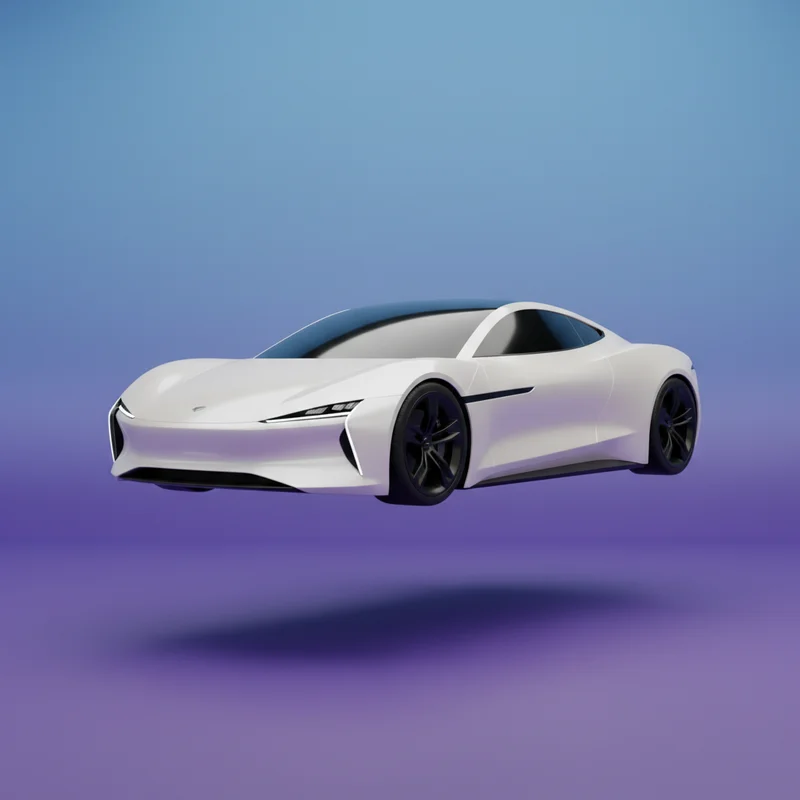
Zero-emission vehicle quietly revolutionizing transportation.

Battle Analysis

Reliability Rubber Duck Wins · 70%
70%
30%
Rubber Duck Electric Car

Rubber Duck

In matters of reliability, the rubber duck approaches philosophical perfection. Its functional requirements consist entirely of floating and being yellow, tasks it accomplishes with unwavering consistency. There exist no failure modes beyond physical destruction, no software glitches, no recall notices for faulty flotation algorithms.

The duck's mean time between failures extends effectively to infinity under normal operating conditions. Squeeze it, and air emerges with a satisfying squeak. Release it, and buoyancy is restored. This operational simplicity represents engineering at its most elegant.

Historical specimens have survived decades in attics and charity shops, emerging to perform their duties with undiminished competence. The duck does not depreciate; it merely acquires character.

Electric Car

The electric car's reliability profile presents a fascinating dichotomy. Its drivetrain, with far fewer moving parts than internal combustion equivalents, demonstrates remarkable mechanical longevity. Electric motors may operate for hundreds of thousands of miles without significant degradation.

However, the vehicle exists as a complex integrated system where software governs nearly every function. Over-the-air updates can improve performance but occasionally introduce unexpected behaviours. Battery degradation, whilst slower than pessimists predicted, remains an inevitability that affects range and resale value.

The charging infrastructure adds another variable entirely outside the vehicle's control. A flat battery on a country road, kilometres from the nearest charging point, represents a reliability failure regardless of the car's mechanical condition.

VERDICT

The duck's engineering simplicity delivers a reliability coefficient the complex electric car cannot match despite superior drivetrain longevity.
Adaptability Electric Car Wins · 65%
35%
65%
Rubber Duck Electric Car

Rubber Duck

The rubber duck demonstrates unexpected versatility within its apparent constraints. Beyond bathtime companionship, specimens have served as door stops, stress relief devices, antenna toppers, and the aforementioned programming debugging partners. The Friendly Floatees incident proved they could survive years at sea, contributing to oceanographic current mapping.

Variations proliferate: pirate ducks, devil ducks, ducks dressed as various professions and historical figures. This infinite customisability represents adaptation through aesthetic rather than functional modification. The core platform remains constant whilst surface presentation evolves.

Yet fundamental limitations persist. The duck cannot transport passengers, generate electricity, or perform any task requiring energy input beyond human intervention.

Electric Car

The electric car's adaptability manifests through continuous technological evolution. Software updates can transform vehicle characteristics overnight, improving acceleration, extending range, or adding entirely new capabilities like autonomous driving features.

Platform flexibility allows manufacturers to produce sedans, SUVs, trucks, and commercial vehicles from shared architectures. Bidirectional charging enables the car to serve as mobile power station during grid emergencies. Vehicle-to-home systems can power residences for days during blackouts.

The electric car adapts not merely to consumer preferences but to entirely new use cases unforeseen at purchase. This represents adaptability of a fundamentally different order than aesthetic variation.

VERDICT

The electric car's software-defined nature and platform versatility enable continuous functional evolution beyond the duck's cosmetic adaptations.
Cultural impact Rubber Duck Wins · 65%
65%
35%
Rubber Duck Electric Car

Rubber Duck

Few objects have achieved the cultural penetration of the rubber duck. From Ernie's beloved companion on Sesame Street to the 28,800 specimens that escaped a cargo ship in 1992 to become unlikely oceanographic research tools, the duck has embedded itself into collective consciousness with remarkable efficiency.

The phenomenon of giant rubber duck installations by artist Florentinus Hofman, floating majestically in harbours from Hong Kong to Pittsburgh, demonstrates the object's capacity for artistic appropriation. Computer programmers have adopted it as a debugging companion, explaining code to an inanimate yellow bird in what has become known as 'rubber duck debugging'.

The duck transcends demographics, appealing equally to infants experiencing their first bath and to adults seeking nostalgic comfort. Its cultural universality remains largely unmatched.

Electric Car

The electric car has achieved something extraordinary: it has made environmental responsibility aspirational. Tesla's cultivation of technological mystique transformed vehicle ownership from mundane transportation into identity statement, a declaration of values rendered in aluminium and lithium-ion.

The ripple effects extend far beyond individual consumers. The electric car has reshaped entire industries, forced century-old automotive manufacturers to abandon their core competencies, and prompted nations to announce the prohibition of combustion engines within decades.

Yet cultural impact requires time to mature. The electric car remains predominantly a phenomenon of affluent nations, its cultural penetration limited by economic accessibility. The duck, requiring no wealth to appreciate, has achieved something closer to true universality.

VERDICT

The duck's century of cultural integration and cross-demographic appeal surpasses the electric car's influential but economically bounded impact.
Aesthetic appeal Rubber Duck Wins · 65%
65%
35%
Rubber Duck Electric Car

Rubber Duck

The rubber duck has achieved what industrial designers term iconic status. Its form is instantly recognisable, culturally transcendent, and emotionally resonant. The classic yellow colouration triggers associations with warmth, sunshine, and childhood security. The proportions satisfy something primal in human aesthetic preferences.

Artists and designers consistently return to the duck as subject and medium. Its simplicity provides a canvas for infinite interpretation whilst its essential 'duckness' remains inviolate. This balance between recognition and variation represents the pinnacle of object design.

The duck requires no styling updates, no annual model refreshes. Its aesthetic achieved timeless perfection and requires no improvement, merely occasional colour variations for seasonal marketing.

Electric Car

Electric vehicle design has produced genuinely beautiful machines. Freed from the packaging constraints of combustion engines, designers have created proportions and surfaces previously impossible. The Tesla Model S redefined automotive elegance; the Porsche Taycan demonstrated that performance heritage could survive electrification.

Yet the category suffers from aesthetic fragmentation. Some manufacturers pursue aggressive futurism, others retro-modern nostalgia, still others minimalist Scandinavian restraint. No singular aesthetic has emerged to define the electric car as a category.

Furthermore, fashion governs automotive design in ways inapplicable to the humble duck. Today's striking silhouette becomes tomorrow's dated relic, a cycle of obsolescence built into the product category itself.

VERDICT

The duck's timeless iconic form transcends fashion cycles that inevitably date even the most striking automotive designs.
Environmental impact Electric Car Wins · 62%
38%
62%
Rubber Duck Electric Car

Rubber Duck

The environmental credentials of the rubber duck present a complex paradox. Traditionally manufactured from polyvinyl chloride (PVC), this bathtime companion carries a rather troubling petrochemical heritage. Modern production facilities release volatile organic compounds, and the duck's eventual fate in landfill sites speaks to a persistence that outlasts civilisations.

However, one must acknowledge the duck's remarkable operational efficiency. Once manufactured, it requires precisely zero energy input to perform its primary function. No charging, no fuel, no maintenance beyond the occasional squeeze to expel accumulated bathwater. The carbon footprint per hour of entertainment approaches the theoretical minimum.

Furthermore, the rise of eco-conscious alternatives using natural rubber and biodegradable materials suggests an evolutionary adaptation currently underway within the species.

Electric Car

The electric car positions itself as humanity's great green hope, the technological messiah arriving to absolve us of our combustion sins. Zero tailpipe emissions represent an undeniable advancement, particularly for urban air quality where nitrogen dioxide concentrations have plagued populations for generations.

Yet the full lifecycle analysis reveals uncomfortable truths. Battery production demands lithium, cobalt, and rare earth elements, extracted through mining operations of considerable environmental consequence. The electricity itself must originate somewhere, and in many grids, that somewhere involves coal-fired power stations.

Nevertheless, the trajectory proves encouraging. As renewable energy proliferates and battery recycling matures, the electric vehicle's environmental advantage compounds over time. The duck, conversely, remains static in its ecological positioning.

VERDICT

Despite manufacturing concerns, the electric car's potential for systemic environmental transformation outweighs the duck's passive neutrality.
👑

The Winner Is

Rubber Duck

Takes 3 of 5 rounds

This confrontation between bathroom companion and automotive revolution reveals the dual nature of innovation itself. The rubber duck represents perfection through simplicity, a design so resolved that improvement becomes impossible, only variation. The electric car embodies progress through complexity, continuous evolution towards an ever-receding horizon of possibility.

The Rubber Duck claims victory by three rounds to two, triumphing decisively in cultural impact, reliability, and aesthetic appeal — the categories where constancy, universality, and timeless form matter most. The electric car fought back admirably in environmental impact and adaptability, where its trajectory and technological versatility shine brightest. Yet in the end, the duck's century of cultural integration, its philosophical reliability, and its iconic permanence proved the stronger hand. Not every revolution is measured in kilowatt-hours.

Share this battle

More Comparisons