
Rubber Duck
The standard rubber duck demonstrates remarkable resilience within its operational parameters. Modern specimens, typically manufactured from PVC or vinyl, can withstand repeated submersion, temperature fluctuations between 0 and 60 degrees Celsius, and the enthusiastic handling of small children for periods exceeding a decade.
The famous Friendly Floatees incident of 1992 proved conclusively that rubber ducks can survive years of ocean exposure, washing ashore on multiple continents with their structural integrity largely intact. However, the duck remains vulnerable to UV degradation, sharp objects, and determined canines. Its durability, whilst commendable, operates firmly within the boundaries of synthetic polymer science.
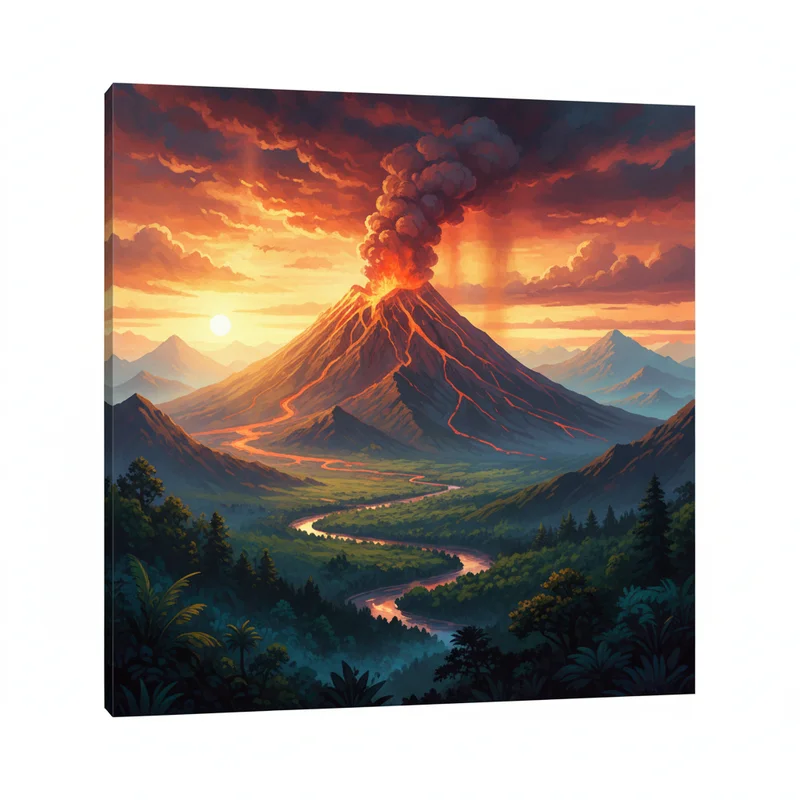
Volcano
A volcano represents permanence on a geological timescale. The Hawaiian volcanic chain has been continuously active for approximately 70 million years. Olympus Mons on Mars, the solar system's largest volcano, has existed for billions of years with minimal change to its fundamental structure. This is durability that transcends human comprehension.
Even extinct volcanoes persist as landscape features for millions of years, their eroded forms serving as monuments to ancient tectonic activity. Whilst individual eruptions are ephemeral, the volcanic system itself represents one of the most enduring features any planet can produce. Against such timescales, the rubber duck's decade of service appears momentary indeed.