
Seal
The seal's relationship with slipperiness represents millions of years of evolutionary refinement. The hydrodynamic efficiency of pinniped body design enables seals to achieve underwater velocities of up to 35 kilometres per hour whilst maintaining extraordinary manoeuvrability. This capability derives from a combination of factors: streamlined body morphology, flexible spine articulation, and critically, a remarkably low coefficient of friction against water.
Seal fur demonstrates fascinating properties when analysed at the microscopic level. Guard hairs lie flat against the body when wet, creating a smooth surface that minimises drag. Additionally, seals possess specialised sebaceous glands that produce oils maintaining coat condition and water resistance. Research published in the Journal of Experimental Biology measured the drag coefficient of a swimming grey seal at 0.0038, approaching theoretical minimums for biological organisms.
On land, the seal's slipperiness manifests differently but no less impressively. Their ability to navigate icy terrain whilst hauled out represents an adaptation to environments where conventional locomotion proves challenging. The seal essentially converts its aquatic slipperiness into a terrestrial advantage, sliding efficiently across ice sheets with an economy of movement that land-dwelling mammals cannot replicate.
Avocado
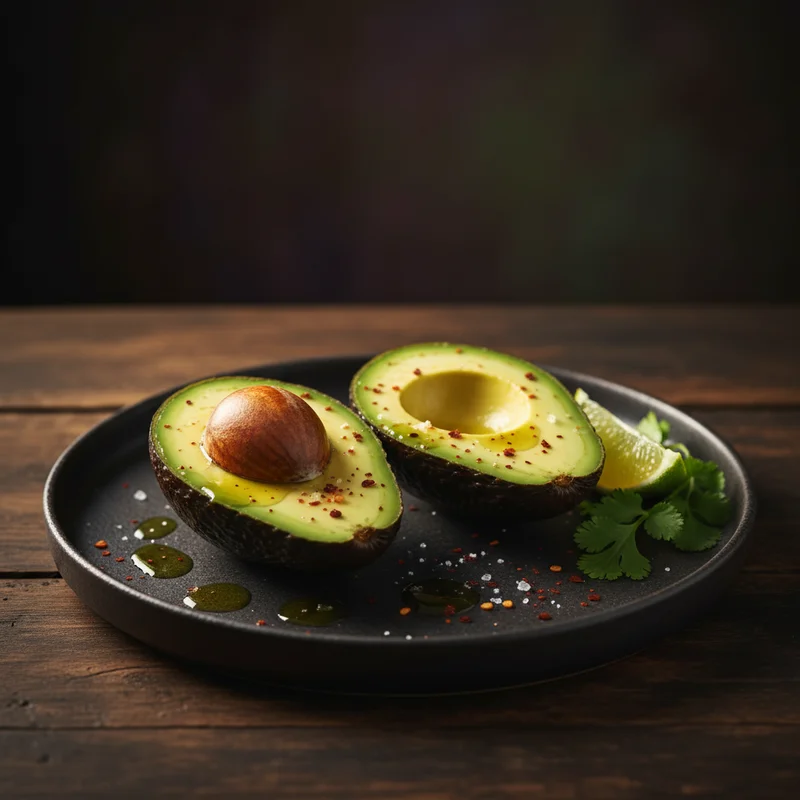
The avocado presents a compelling case study in conditional slipperiness. In its unripe state, the fruit offers minimal slip factor, with the flesh maintaining a firm, almost waxy consistency that resists deformation. However, upon achieving optimal ripeness, the avocado transforms into what food scientists describe as a 'colloidal lipid matrix' of extraordinary lubricating properties.
The oleic acid content of ripe avocado flesh creates a natural emulsion that exhibits classic non-Newtonian fluid behaviour. Under shear stress, the material flows readily, accounting for its ease of spreading on toast and its notorious tendency to evacuate rapidly from tacos upon initial bite pressure. The coefficient of friction for ripe avocado against ceramic surfaces has been measured at approximately 0.15, placing it among the slipperiest common foodstuffs.
The avocado skin, conversely, provides remarkable grip. Its textured surface, colloquially described as 'alligator skin' in the Hass variety, offers friction coefficients exceeding 0.6 against human skin. This creates an interesting duality: the avocado is simultaneously grippy and slippery depending upon which surface one engages. Such versatility speaks to the fruit's evolutionary success across diverse ecological niches.